Quantcast
Channel: temperature | Battery Guide
Viewing all 365 articles
Browse latest View live

GREENLIANT DELIVERS ULTRA-FAST SPEEDS WITH NVME M.2 ARMOURDRIVE SSDS

$
0
0

Greenliant has started sampling its NVMe M.2 ArmourDrive™ solid state drive (SSD) modules to customers requiring high-performance, high-capacity removable data storage that can withstand extreme environments. The new industrial temperature (-40°C to +85°C) 88 PX Series NVMe M.2 ArmourDrive SSDs use 3-bits-per-cell (TLC) 3D NAND flash memory and are built in the widely used 2242 and 2280 form factors. See NVMe M.2 ArmourDrive product information at http://bit.ly/NVMe-M2-SSD.

GREENLIANT DELIVERS ULTRA-FAST SPEEDS WITH NVME M.2 ARMOURDRIVE SSDS

88 PX Series NVMe ArmourDrive SSDs provide high performance and low latency for high transactional and business critical applications. NVMe is a highly scalable protocol optimized for efficient data transport over PCIe for storage on NAND flash. Small form factor, power efficient M.2 2242 products support the PCIe Gen3x2 interface and can reach up to 1,550/950 MB/s sequential read/write performance. Offered with hardware encryption and DRAM, M.2 2280 products support the PCIe Gen3x4 interface and can reach up to 3,470/3,000 MB/s sequential read/write performance. These versatile NVMe M.2 ArmourDrive form factors are ideal for space-constrained, embedded and enterprise systems in cloud computing, broadcasting, industrial gaming, factory automation, networking and security.

Benefits of 88 PX Series NVMe M.2 ArmourDrive SSDs include:

  • Ultra-High Performance: Reaches up to 3,470/3,000 MB/s read/write
  • Wide Range of Capacities: Available in 2242 form factor (64 GB, 128 GB, 256 GB, 512 GB) and
    2280 form factor (240 GB, 480 GB, 960 GB, 1.92 TB)
  • Industrial Temperature: Operates between -40 and +85 degrees Celsius
  • Built-in ECC: Uses advanced bit error detection and correction optimized for 3D NAND
  • Advanced Flash Management: Extends SSD longevity using dynamic and static wear leveling
  • Data Security: Supports AES-256 / TCG OPAL encryption (2280) and Secure Erase

“Greenliant delivers ultra-high performance and a wide range of capacities with its industrial NVMe M.2 ArmourDrive PX Series,” said Arthur Kroyan, vice president of business development and marketing, Greenliant. “Complementing Greenliant’s broad selection of SATA M.2 products, these highly reliable NVMe M.2 SSDs give embedded system designers even more options for data-intensive applications.”

Read more: GREENLIANT DELIVERS ULTRA-FAST SPEEDS WITH NVME M.2 ARMOURDRIVE SSDS

The post GREENLIANT DELIVERS ULTRA-FAST SPEEDS WITH NVME M.2 ARMOURDRIVE SSDS appeared first on PIC Microcontroller.

APOLLO LAKE PICO-ITX SBC SUPPLIES MINI-PCIE AND M.2 EXPANSION

$
0
0

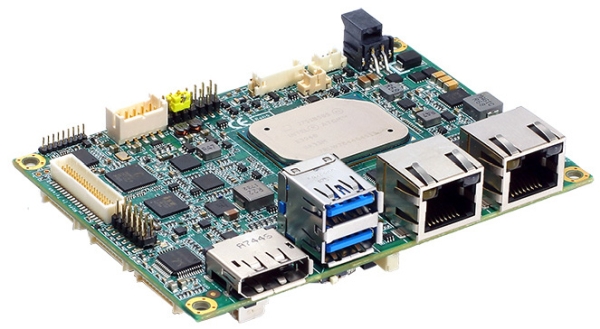
Axiomtek – a world-renowned leader relentlessly devoted in the research, development and manufacture of series of innovative and reliable industrial computer products of high efficiency – is pleased to introduce the PICO319, a low power yet powerful fanless Pico-ITX SBC powered by the onboard Intel® Atom® x5-E3940 quad-core processor (code name: Apollo Lake). The noise-free pico-ITX motherboard offers combinations of ruggedness, high computing capabilities and enhanced graphics capability in an extremely compact size of only 100 x 72 mm. Moreover, the board features 12V DC power supply input with AT Auto Power On function. It brings a solid and standardized platform for industrial automation, transportation and retail applications.

APOLLO LAKE PICO-ITX SBC SUPPLIES MINI-PCIE AND M.2 EXPANSION

The tiny 2.5-inch embedded board PICO319 comes with one 204-pin DDR3L-1867 SO-DIMM socket for up to 8GB of system memory. A dual-display capability is available through DisplayPort and 18/24-bit single/dual channel LVDS ports. For extensive storage needs, this compact embedded motherboard has one M.2 Key B slot (22 x 42 mm or 30 x 42 mm) for SATA or PCIe x2 SSD card and one half-size PCI Express Mini Card slot in support of mSATA.

The PICO319’s fanless and ultra-compact design allows easy installation in space-constraint environments and more flexible product designs. The 2.5” embedded board provides various expansion interfaces within its limited dimensions including an M.2 Key B slot for a cellular module and a half-size PCIe Mini Card slot for a wireless module, which offers diversity and flexibility for application integration. In addition, the board comes with two Gigabit Ethernet ports with Intel® Ethernet Controller I211-AT in support of Wake-on-LAN and PXE Boot ROM,” said Michelle Mi, a product manager of Product PM Division at Axiomtek. “ Axiomtek’s PICO319 can operate under wide temperature settings ranging from -40 to 70°C, making it an ideal solution for use in rugged and harsh environments.

Read more: APOLLO LAKE PICO-ITX SBC SUPPLIES MINI-PCIE AND M.2 EXPANSION

The post APOLLO LAKE PICO-ITX SBC SUPPLIES MINI-PCIE AND M.2 EXPANSION appeared first on PIC Microcontroller.

AXIOMTEK INTRODUCES POWERFUL, SCALABLE PICO-ITX SBC FOR INDUSTRIAL IOT APPLICATIONS – PICO51R

$
0
0

Axiomtek – a world-renowned leader relentlessly devoted in the research, development and manufacture of series of innovative and reliable industrial computer products of high efficiency – is introducing the PICO51R, an ultra-compact 2.5-inch pico-ITX motherboard powered by the 7th generation Intel® Core™ i7/i5/i3 or Celeron® processor (code name: Kaby Lake). With the onboard CPU attached on the rear side of the board, the PICO51R can aid the heat-extraction process to make fanless design possible and make system integration fast. The pico-ITX embedded board also provides practical expansion interfaces within its limited dimensions including one M.2 Key E slot for wireless modules and one M.2 key B slot for storage cards. The compact-sized rugged PICO51R is the perfect platform for industrial automation applications requiring a small form factor to fit in space-limited environments.

AXIOMTEK INTRODUCES POWERFUL, SCALABLE PICO-ITX SBC FOR INDUSTRIAL IOT APPLICATIONS – PICO51R

Axiomtek’s PICO51R with high flexibility and expansion possibilities offers diversity and flexibility for system integration. This powerful 2.5-inch Pico-ITX embedded motherboard is designed for minimum maintenance and maximum ruggedness,” said Michelle Mi, a product manager of ECSE Division at Axiomtek. “In addition to two USB 3.0 (USB 3.1 Gen1) ports in support of industrial cameras for machine vision applications, the PICO51R also comes with an M.2 Key E slot for wireless communication capabilities and two Gigabit Ethernet ports for mass data transmission or LAN port teaming functions.

The Intel® Core™-based PICO51R supports one 260-pin DDR4-2133 SO-DIMM for up to 16GB of system memory. Moreover, the pico-ITX single board computer utilizes Intel® HD graphics engine to bring a true high definition visual experience with dual display configurations through DisplayPort and 18/24-bit single/dual channel LVDS. In addition, this industrial motherboard can withstand a wide operating temperature range from -20°C to +60°C (-4°F to 140°F) for use in rugged and harsh environments.

Read more: AXIOMTEK INTRODUCES POWERFUL, SCALABLE PICO-ITX SBC FOR INDUSTRIAL IOT APPLICATIONS – PICO51R

The post AXIOMTEK INTRODUCES POWERFUL, SCALABLE PICO-ITX SBC FOR INDUSTRIAL IOT APPLICATIONS – PICO51R appeared first on PIC Microcontroller.

LOW-POWER 3.5” SBC WITH NXP ARM® CORTEX-A53 I.MX 8M PROCESSOR

$
0
0

IBASE Technology, a world leading manufacturer of industrial PCs and embedded computing systems, has announced the new IBR210 3.5-inch single board computer featuring NXP’s dual or quad core Arm Cortex-A53 i.MX 8M processors in 1.3GHz and 1.5GHz CPU frequencies. The i.MX 8M application processors are built with advance media processing, allowing IBR210 to deliver 4K HDMI content with HDR and run a dual-channel FHD LVDS display. The board is targeted at multiple signage displays at airports, train and bus stations, and shopping malls, as well as HMI passenger information applications.

LOW-POWER 3.5” SBC WITH NXP ARM® CORTEX-A53 I.MX 8M PROCESSOR

The IBR210 provides industry-leading multimedia processing for a wide range of IoT applications, with flexible memory options and high-speed interfaces. Measuring 102 x 147mm, the SBC features soldered 3GB LPDDR4system memory on board and 8GB to 64GB eMMC flash memory, and rich I/O connectivity including one GbE RJ45, two USB 3.0, a USB OTG, an HDMI, a serial port and an SD socket. Also supported are two USB 3.0 ports from internal headers, M.2 Key-E and mPCIe expansion, a power input of 12V~24VDC via a DC-in jack and a -40C~85C wide operating temperature range.

Specifications Listed For The IBR210 Include:

  • Processor — NXP i.MX8M Dual or Quad (2x or 4x Cortex-A53 @ up to 1.5GHz); Vivante GC7000Lite GPU; VPU; Cortex-M4F @ 266MHz
  • Memory/storage:
    • 3GB LPDDR4 RAM soldered
    • 8GB to 64GB eMMC
    • MicroSD slot
  • Networking/wireless — 10/100/1000 Ethernet port
  • Media I/O:
    • HDMI 2.0a port for up to 4k@60 with HDR
    • Dual-channel LVDS (via FHD)
    • MIPI-DSI header
    • 2x MIPI-CSI headers
    • Audio I/O header
    • Backlight support (3/5/12V @ 1A)
  • Other I/O:
    • 2x USB 3.0 host ports
    • 2x USB 3.0 headers
    • Micro-USB 2.0 OTG port
    • RS-232/422/485 DB9 COM port
    • 3x 2-wire UART headers (1x for debug)
    • I2C header
    • 8x GPIO
  • Expansion:
    • M.2 E-key 2230 slot (USB, SDIO, UART, PCIe)
    • Mini-PCIe slot with SIM socket
  • Other features — Watchdog; 3x LEDs
  • Power — 12-24V DC input; power button
  • Operating temperature — 0 to 70°C; optional -40 to 85°C; 10%~90% (non-condensing) humidity resistance
  • Dimensions — 147 x 102mm (3.5-inch)
  • Operating system — Yocto v2.5 and Android 9 BSPs with Linux Kernel 4.14.62.

Read more: LOW-POWER 3.5” SBC WITH NXP ARM® CORTEX-A53 I.MX 8M PROCESSOR

The post LOW-POWER 3.5” SBC WITH NXP ARM® CORTEX-A53 I.MX 8M PROCESSOR appeared first on PIC Microcontroller.

AXIOMTEK’S NEW 10.4″ RUGGED AND VERSATILE VEHICLE-MOUNTED TOUCH PANEL COMPUTER – GOT610-837

$
0
0

Axiomtek – a world-renowned leader relentlessly devoted in the research, development and manufacture of series of innovative and reliable industrial computer products of high efficiency – is pleased to introduce the GOT610-837, an ultra-rugged 10.4″ vehicle-mounted touch panel computer for logistics and manufacturing applications. The feature-rich vehicle-mounted terminal is powered by the quad-core Intel® Atom® processor E3845. The all-in-one touch panel PC has a full IP65-rated aluminum front bezel for protection from water and dust ingress and features class 5M3 (EN 60721-3-5) and MIL-STD 810F certification for vibration and shock tolerance. The 10.4-inch transportation solution-ready GOT610-837 is designed to fit seamlessly into forklifts and other warehouse vehicles to improve operational efficiencies.

AXIOMTEK’S NEW 10.4″ RUGGED AND VERSATILE VEHICLE-MOUNTED TOUCH PANEL COMPUTER – GOT610-837

The GOT610-837 has a 10.4-inch XGA TFT LCD display with high brightness LED backlight and 500 nits of brightness. It offers two touchscreen options: 5-wire resistive touch or projected capacitive multi-touch. Its auto-dimming function allows operators to easily read the information under different light conditions. The rugged touch panel computer also has user-friendly programmable function keys on the front panel for the operators to easily control brightness, volume and LCD on/off access.

The GOT610-837 features the onboard DDR3 memory of up to 8GB; in addition, it has 16GB flash onboard and one mSATA for storage. With the fanless and ultra-slim design, the 10.4-inch vehicle-mounted terminal can be easily deployed in any space-limited environments. The Intel® Atom®-based touch panel PC is built to withstand harsh operating environments with an extended temperature range from -30°C to +55°C. It also supports a wide range power input of 9V to 60V DC that makes it suitable for harsh industrial applications. Furthermore, the 10.4″ all-in-one touch panel PC supports various mounting such as wall mount, VESA mount, arm mount and desktop stand for mounting in forklifts, clamp trucks, yard mules, cranes, and more.

Read more: AXIOMTEK’S NEW 10.4″ RUGGED AND VERSATILE VEHICLE-MOUNTED TOUCH PANEL COMPUTER – GOT610-837

The post AXIOMTEK’S NEW 10.4″ RUGGED AND VERSATILE VEHICLE-MOUNTED TOUCH PANEL COMPUTER – GOT610-837 appeared first on PIC Microcontroller.
THERMAL DIODE INFRARED SENSOR IDENTIFY TYPES OF HEAT SOURCES

$
0
0

Mitsubishi Electric has developed a thermal sensor able to accurately distinguishes between humans and other heat sources, for the identification of specific human behaviour, such as walking, running or raising hands. by Julien Happich @ www.eenewseurope.com

THERMAL DIODE INFRARED SENSOR IDENTIFY TYPES OF HEAT SOURCES

Designed with a high pixel count (80×32 pixels) for security and smart building applications, the Mitsubishi Electric Diode InfraRed sensor (MelDIR) relies on thermal diode infrared sensor technology the company developed for the Advanced Land Observing Satellite-2 “DAICHI-2” (ALOS-2).

Compared to today’s 16×16 pixel thermopile sensors, the device offers 10 times higher pixel resolution and five times higher thermal resolution at 100mK, or 0.1 degree Celsius. Each thermal diode (or sensor pixel) is supported by microfabricated legs that convey energy efficiently without releasing heat, enabling more pixels to be used for increased resolution.

Electrical noise is minimized by mounting the thermal diodes and high-spec amplifiers close to each other on the same chip, helping to maintain accuracy and achieve high thermal resolution. The detailed infrared images make it possible to distinguish between humans and other heat sources as well as to identify specific behaviour.

Measuring 19.5×13.5×9.5mm, the device comes in a package 80 percent smaller than that of existing sensors, it boasts a 78º x 29º field of view and has a detectable temperature range of -5 to +60ºC. Mitsubishi Electric used a proprietary chip-scale packaging and vacuum-sealing technology to ensure the sensor is vacuum sealed (without using conventional ceramic package) to avoid heat radiation and achieve high thermal resolution.

Read more: THERMAL DIODE INFRARED SENSOR IDENTIFY TYPES OF HEAT SOURCES

The post THERMAL DIODE INFRARED SENSOR IDENTIFY TYPES OF HEAT SOURCES appeared first on PIC Microcontroller.

COMMELL UNVEILED 3.5″ SBC LE-37N BASED ON WHISKEY LAKE-U PROCESSORS

$
0
0

Taiwan Commate Computer Inc.(COMMELL), the worldwide leader of Industrial Single Board Computers, unveiled LE-37N 3.5 inch embedded mini-board based on Intel® 8th Gen. FCBGA1528 “Whiskey Lake” Core™ i7 U-series Mobile processor. The “Whiskey” PC is claimed to deliver better performance than a PC base on previous embedded U-series processors- enabled by 4 instead of 2 cores plus an overall improved microarchitecture.  The 8th Gen. Core™ i7 U-series Mobile processor for IoT applications are feature rich delivering high performance per watt.

COMMELL UNVEILED 3.5″ SBC LE-37N BASED ON WHISKEY LAKE-U PROCESSORS

The LE-37N mobile 3.5 inch mini-board is designed for the 8th generation Intel® Core™ i7-8665UE  processor. The Core™ i7 part has a 1.7GHz base clock with 8MB cache and a 4.4GHz max turbo frequency, It offers long-life availability. The LE-37N features two DDR4-2400 SO-DIMM slots for up to 32GB of memory. The platform is based on Intel® Generation 9.5 HD Graphics GPU, Displays can be connected via 1 LVDS, 1 HDMI and one DP port, up to three displays can be controlled simultaneously.

Specifications Listed For The LE-37N Include:

  • Processor — Intel 8th Gen “Whiskey Lake” U-series (FCBGA1528 package) with Intel Gen 9.5 HD Graphics (24 EU); defaults to Core i7-8565UE with 4x octa-threaded cores @ 1.7GHz (4.4GHz Turbo); 8MB cache; 15W TDP (configurable TDP of 12.5W to 25W)
  • Memory — up to 32GB of 2400MHz DDR4 via dual sockets
  • Storage:
    • 2x SATA 3.0 with RAID 0,1 and Intel Rapid Storage Technology
    • mSATA available via mini-PCIe (see farther below)
  • Networking — 2x Gigabit Ethernet ports (Intel I210-AT and 1219LM with AMT 12.0)
  • Display/media:
    • HDMI port
    • LVDS (18/24-bit, single/dual channel)
    • DVI
    • DisplayPort or choice of VGA header or second LVDS
    • LCD inverter
    • Triple display support
    • Realtek ALC262 HD audio mic-in, line-out
  • Other I/O:
    • 4x USB 3.1 Gen 2 host ports
    • 4x USB 2.0 interfaces
    • RS232 DB9 port
    • 1x RS-232, 2x RS232/422/485
    • 8-bit GPIO
    • PS/2, SMBus
  • Expansion:
    • Mini-PCIe slot with mSATA support
    • M.2 E-key 2230 slot for WiFi/Bluetooth
  • Other features – Watchdog; RTC with battery; cooling fan
  • Power — 9-24V DC
  • Operating temperatures — 0 to 60°C
  • Dimensions — 146 x 101mm (“3.5-inch form factor”)
  • Operating system — Linux or Windows

Read more: COMMELL UNVEILED 3.5″ SBC LE-37N BASED ON WHISKEY LAKE-U PROCESSORS

The post COMMELL UNVEILED 3.5″ SBC LE-37N BASED ON WHISKEY LAKE-U PROCESSORS appeared first on PIC Microcontroller.
HIGH THERMAL RESOLUTION, HIGH FRAME RATE, LOW COST THERMAL INSPECTION CAMERA

$
0
0

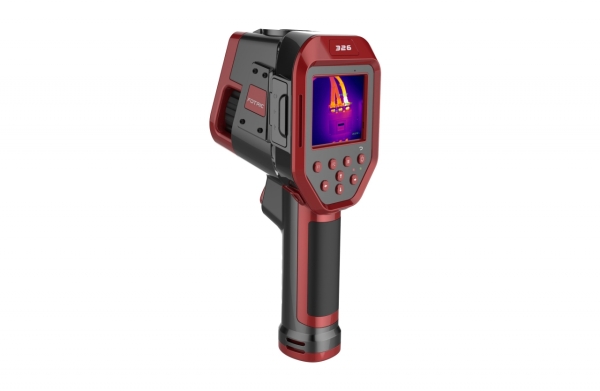
The Fotric 326 provides high quality radiometric images full of detailed thermal information in a handheld pistol-grip camera for investigative analysis

HIGH THERMAL RESOLUTION, HIGH FRAME RATE, LOW COST THERMAL INSPECTION CAMERA

Saelig Company, Inc. (www.saelig.com) has introduced the FOTRIC 326 Thermal Imaging Camera – a rugged, durable, accurate, and portable handheld heat investigation device, designed for a wide range of equipment and infrastructure thermal diagnostic tasks.  The 326 has a large aperture f1.0 IR lens for taking superior quality radiometric thermal images for professional use. The Fotric 326 has a –20degC to +650degC(-4degF to 1,202degF) measurement range to cover a wide variety of applications, especially when inspecting high-temperature objects.  It offers an accuracy rating of ±2degC or ±2%, and a thermal sensitivity of 0.06degC (60mK).  The Fotric 326’s thermal imager has a resolution of 384×288 to provide high quality, large radiometric images full of detailed thermal information.  The adjustable focus lens facilitates precision imaging for objects of interest. The Fotric 326’s frame rate is 30Hz, faster than the 9Hz of many other thermal cameras. This gives smoother thermal images of rapidly changing thermal targets.

The 326 can produce a visible light image in addition to the thermal image, and allows picture-on-picture fusion of the two images to enable accurate problem location.  User-defined temperature thresholds, audible and visual alarms of above/below temperature threshold, and adjustable focus make this a valuable thermal tool in an engineer’s arsenal.

The Fotric 326 has a useful built-in laser pointer to show exactly where the camera is pointed.  Voice recording allows notes about the image to be saved audibly rather than handwritten. The audio message is saved with the thermal image and can be retrieved during post-processing.

Read more: HIGH THERMAL RESOLUTION, HIGH FRAME RATE, LOW COST THERMAL INSPECTION CAMERA

The post HIGH THERMAL RESOLUTION, HIGH FRAME RATE, LOW COST THERMAL INSPECTION CAMERA appeared first on PIC Microcontroller.


CL-SOM-IMX8X – A MINIATURE SYSTEM-ON-MODULE BASED ON NXP I.MX8X SOC

$
0
0

CompuLab introduces CL-SOM-iMX8X – a miniature System-on-Module built around the NXP i.MX8X System-on-Chip family.

CL-SOM-IMX8X – A MINIATURE SYSTEM-ON-MODULE BASED ON NXP I.MX8X SOC

High performance, powerful graphics and extensive connectivity make CL-SOM-iMX8X an excellent solution for a very wide range of applications such as industrial HMI, building control, image processing systems, IoT gateways, medical devices and metering systems.

CL-SOM-iMX8X has been designed to bring out the full I/O capabilities of the highly versatile i.MX8X SoC. Peripheral interfaces include PCI Express, dual Gigabit Ethernet, USB ports, 4 UARTs, 3 CAN-FD ports and 96 GPIOs. Display connectivity is supported with two independent LVDS / MIPI-DSI interfaces. In addition, CL-SOM-iMX8X extends the i.MX8X I/O even further with on-board 802.11ac WiFi, Bluetooth 4.2 and 3 additional USB ports.

CL-SOM-iMX8X is offered with full industrial temperature range of -40C to 85C.

Software Support

CL-SOM-iMX8X is provided with a full BSP and ready-to-run images for the Linux operating system. The CL-SOM-iMX8X BSP includes Linux kernel 4.14, Yocto Project SDK and U-Boot boot-loader.

Evaluation And Design Suppor

To facilitate streamlined and rapid product development, CL-SOM-iMX8X is supported with the SB-iMX8X carrier-board and EVAL-iMX8X evaluation kit.

SB-iMX8X carrier-board has been designed for CL-SOM-iMX8X evaluation and application development. SB-iMX8X schematics, bill of materials and layout are available to be used as a reference design for a wide range of industrial use cases.

The EVAL-iMX8X eval-kit offered at $395, includes CL-SOM-iMX8X and SB-iMX8X hardware set, an optional LCD panel, PSU, cables and a technical support contract.

Feature Highlights

  • Up to 4GB LPDDR4 and 64GB eMMC
  • 2x MIPI-DSI / LVDS, up-to 1080p60
  • 2x GbE, WiFi 802.11ac, BT 4.2
  • mini-PCIe, 3x USB2.0, 2x CAN, RS485

Price And Availability

CL-SOM-iMX8X is available now through CompuLab’s worldwide distribution channels and through direct sales (www.compulab.com).

Read more: CL-SOM-IMX8X – A MINIATURE SYSTEM-ON-MODULE BASED ON NXP I.MX8X SOC

The post CL-SOM-IMX8X – A MINIATURE SYSTEM-ON-MODULE BASED ON NXP I.MX8X SOC appeared first on PIC Microcontroller.
QIANLI LC-IRP01 THERMAL/VISIBLE MICROSCOPE FOR PCB REPAIR

$
0
0

The QianLi’s 160×120 thermal imaging sensor and 1920×1080 visible sensor combine to make a powerful circuit board repair tool, especially helpful in finding overheating or short-circuit issues.

QIANLI LC-IRP01 THERMAL VISIBLE MICROSCOPE FOR PCB REPAIR

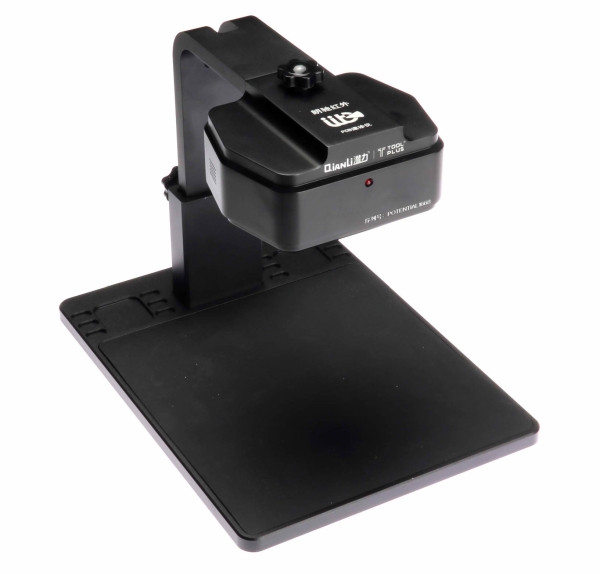
Saelig Co. Inc. has introduced the QianLi LC-IRP01 Thermal Imaging Camera, a diagnostic tool for PCBs which displays heat images to help identify damaged or malfunctioning components or short-circuits.  The QianLi LC-IRP01 Thermal Microscope contains two imagers, one for visible wavelengths and one for infrared heat images.  These images can be combined on a PC display to quickly identify problem areas. Searching for missing, incorrect or charred components, bad solder joints, and solder bridges becomes much easier with this powerful thermal microscope.

The QianLi Thermal Imaging Camera consists of three parts: the detection head with both an infrared camera and a visible wavelength camera, an adjustable stand, and the powerful computer analysis software.  This thermal detection device can display a visible light image, an infrared thermal image, or a visible/infrared superimposed image. This unique combination quickly shows the location of suspect chips or short circuits by switching between both images via the keyboard’s space bar.

Visual inspection with the QianLi’s 1920×1080 sensor is a valuable tool in PCB debug activities, but the addition of160×120 thermal imaging is especially helpful in finding overheating issues.  Rather than using a thermocouple to find the temperature of an individual component, the QianLi displays all of the board temperatures at once.  Looking for solder whiskers or bridges between pads or solder joints is especially challenging between the pins of fine-pitch SMD chips without significant magnification, and this device offers 800x digital zooming.  If the problem is a short circuit, it will be plainly visible on the PC as an anomalous heat spot when power is briefly applied.

Read more: QIANLI LC-IRP01 THERMAL/VISIBLE MICROSCOPE FOR PCB REPAIR

The post QIANLI LC-IRP01 THERMAL/VISIBLE MICROSCOPE FOR PCB REPAIR appeared first on PIC Microcontroller.

SIMPLIFIED DEVELOPMENT OF CELLULAR IOT PROTOTYPES IS NOW POSSIBLE IN JUST A FEW DAYS

$
0
0

Based on Nordic’s industry-leading nRF9160 SiP multimode LTE-M/NB-IoT module with GPS, which uniquely supports Arm TrustZone Internet-grade encryption and security, the battery-powered Nordic Thingy:91 is a simplified rapid prototyping platform designed specifically for cellular IoT. It includes a full asset tracking sample application, an exhaustive list of nine sensors, ‘straight-out-of-the-box’ operation, and support for a full range of complementary short-range wireless technologies including Bluetooth 5 and NFC courtesy of Nordic’s flagship nRF52840 SoC.

SIMPLIFIED DEVELOPMENT OF CELLULAR IOT PROTOTYPES IS NOW POSSIBLE IN JUST A FEW DAYS

Nordic Semiconductor announces the introduction of the ‘Thingy:91’ rapid cellular IoT prototyping platform which is certified for global, low-power, long-range LTE-M/NB-IoT applications, has unique Arm TrustZone security, includes a full range of sensors (see below), plus embedded support courtesy of a Nordic nRF52840 advanced multiprotocol System-on-Chip (SoC) for complementary ultra low power short-range wireless technologies such as Bluetooth®5, Thread, Zigbee, and ANT.

A Nano (4FF) eSIM card from iBasis preloaded with 10MB of data is bundled with the Thingy:91 to enable automatic, instant, out-of-the-box cellular LTE-M and NB-IoT connectivity and roaming in a long and growing list of countries with cellular IoT networks.

A prime application for the Thingy:91 is asset tracking, especially as it ships with a full sample asset-tracking application in place. This could take the form of shipping containers where individual items within the container can be tracked via short-range Bluetooth 5 (e.g. location within container and temperature for cold storage goods), with the container itself and any important changes in the status of its contents tracked remotely via long-range cellular wireless technology.

Read more: SIMPLIFIED DEVELOPMENT OF CELLULAR IOT PROTOTYPES IS NOW POSSIBLE IN JUST A FEW DAYS

The post SIMPLIFIED DEVELOPMENT OF CELLULAR IOT PROTOTYPES IS NOW POSSIBLE IN JUST A FEW DAYS appeared first on PIC Microcontroller.

FUEL GAUGES OFFER HIGHEST LEVEL OF BATTERY PROTECTION

$
0
0

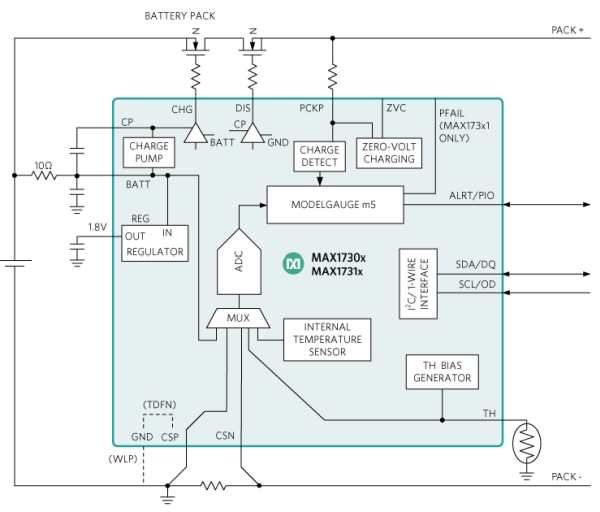
Maxim’s MAX17301 and the MAX17311 1-cell fuel gauge devices allow fine tuning of voltage and current thresholds based on various temperature zones with a low quiescent current of 24μA

FUEL GAUGES OFFER HIGHEST LEVEL OF BATTERY PROTECTION

Maxim Integrated Products has developed a 1-cell battery fuel gauge that can provide counterfeit and cloning protection with low quiescent current.

The configurable setting in the MAX17301 and the MAX17311 allow fine tuning of voltage and current thresholds based on various temperature zones. These ICs also offer a first-of-its-kind secondary protection scheme in case the primary protection fails. This secondary protection scheme permanently disables the battery by overriding a secondary protector or blowing a fuse in severe fault conditions.

All the devices in the fuel gauge family are equipped with Maxim’s patented ModelGauge m5 EZ algorithm that delivers highest state-of-charge (SOC) accuracy that eliminates the need for battery characterization. These fuel gauges also have a quiescent current (IQ) of 24μA with the FETs enabled and 18µA in hibernate, up to 80 percent lower than the nearest competitor,

The devices also include SHA-256 authentication to safeguard the systems from counterfeit batteries.

Conventional battery protectors monitor voltage and current, and in some cases include temperature monitoring. These options make the system vulnerable to unexpected crashes because battery state-of-charge (SOC) isn’t factored in when triggering an undervoltage cut-off decision. There is a need for a simple, compact solution that protects from unsafe charging conditions that can lead to extensive battery damage including over-voltage, short circuit, over/under temperature and more.

While system and battery designers continue to push the limits of capacity-constrained batteries in order to provide the longest possible run-time without damaging the cell, there are few highly-configurable solutions that are still simple to implement. Designers are also looking for a way to protect the system by ensuring that only genuine batteries are used, which can eliminate unexpected shutdowns and crashes caused by potentially unsafe, counterfeit batteries.

Read more: FUEL GAUGES OFFER HIGHEST LEVEL OF BATTERY PROTECTION

The post FUEL GAUGES OFFER HIGHEST LEVEL OF BATTERY PROTECTION appeared first on PIC Microcontroller.

NEW KONTRON COME-M4AL10 (E2) MODULE

$
0
0

The COMe-m4AL10 (E2) is ideally suited for use in industrial IoT and Industry 4.0 applications

NEW KONTRON COME-M4AL10 (E2) MODULE

Kontron has introduced its new COMe-m4AL10 (E2) module. The module is available with either Intel Atom®, Intel® Pentium® or Intel® Celeron® processors of the latest 5th generation. With dimensions of only 84 mm x 55 mm, it is an ideal solution for space-limited applications; furthermore the E2 version is designed for use in the industrial temperature range from -40°C to +85°C. Thanks to its large number of interfaces, significantly improved computing power and excellent performance-per-watt ratio, the COMe-m4AL10 (E2) is ideally suited for use in industrial IoT and Industry 4.0 applications. Medical imaging, autonomous vehicles, surveillance and security devices benefit as well from the powerful, yet extremely small modules. Thanks to the industrial-grade-by-design versions – specified for industrial temperature operation – and the long term availability, the new COMe-m4AL10 (E2) meets the special requirements of applications in transportation as well as defence markets.

The COMe-m4AL10 (E2) will be available in five different processor versions, as DualCore or QuadCore processors. Together with the COMe-mAL10 (E2), which supports DDR3L ECC memory, Kontron now offers a broad range of module solutions for every possible customer requirement.

The COMe-m4AL10 (E2) supports up to 16 GB LPDDR4 memory down and two independent displays: 1x DP++ (DP/HDMI/DVI) 4096×2160@60Hz and 1x Single Channel LVDS with DPtoLVDS (eDP on request) 3840×2160@30Hz. The module comes with storage options for two SATA II 300 Mbps interfaces and on request with additional eMMC memory (up to 128 GB MLC). In addition to having two serial ports, it provides two superfast USB 3.0 interfaces, up to eight USB 2.0, Gigabit Ethernet, as well as four PCI-Express® Gen2 lanes for customer specific expansions.

Read more: NEW KONTRON COME-M4AL10 (E2) MODULE

The post NEW KONTRON COME-M4AL10 (E2) MODULE appeared first on PIC Microcontroller.

VENTANA GW5913 SINGLE BOARD COMPUTER

$
0
0

A miniature 35x100mm single board computer with Mini-PCIe, 802.3at GbE Ethernet, Nano-SIM and Peripheral I/O

VENTANA GW5913 SINGLE BOARD COMPUTER

The GW5913 is a member of the Gateworks 5th generation Ventana family of single board computers targeted for small embedded applications such as IoT Gateways, Man Portable Units (MPUs), Unmanned Aerial Vehicles (UAV) equipment, digital signage, and robotics. The GW5913 features the Freescale™ i.MX6 Dual Core ARM ® Cortex™-A9 SoC processor operating at 800MHz, 512Mbytes of DDR3-800 DRAM, and 256Mbytes of System Flash. A Mini-PCIe expansion socket with nanoSIM support can be used for 802.11abgn radios, 4G/3G/CATM1 cellular modems and other PCI Express peripherals. A 20 pin header supports Digital I/O, Analog Input, TTL Serial, I2C and USB 2.0. The Gateworks System Controller provides embedded features such as real time clock, voltage and temperature monitor, serial EEPROM, programmable pushbutton switch, and advanced power management with programmable board shut-down and wake-up for remote sensor applications. A wide-range DC input power supply provides up to 8W of power to the Mini-PCIe socket for supporting the latest high-power radios. Power is applied through a dedicated connector or an Ethernet jack in an active 802.3af/at Power over Ethernet architecture. OpenWrt and Ubuntu BSPs are supported.

Features

  • Freescale ™ i.MX6 800MHz Dual Core ARM ® Cortex™-A9 SoC Processor
  • 512MB DDR3-800 SDRAM Memory and 256MB Flash System Memory
  • High-Power Gen 2 Mini-PCIe Socket with USB 2.0 and nanoSIM
  • GbE Ethernet Port
  • Digital I/O & Analog Expansion
  • TTL Serial Expansion
  • I2C Expansion
  • USB 2.0 Expansion
  • Real Time Clock with Battery Backup
  • Voltage and Temperature Monitor
  • Serial Configuration EEPROM
  • Programmable Watchdog Timer
  • Optional u-blox GPS Receiver with MMCX or U.FL Antenna Connector
  • 8 to 60VDC Input Voltage Range
  • Power Through Dedicated Connector or Ethernet with 802.3af/at Active PoE
  • 2W@25 ° C Typical Operating Power
  • 8W Available for Mini-PCIe Socket
  • Reverse Voltage Protection
  • -40 ° C to +85 ° C Operating Temperature
  • OpenWrt and Ubuntu Board Support Packages
  • 1 Year Warranty

Read more: VENTANA GW5913 SINGLE BOARD COMPUTER

The post VENTANA GW5913 SINGLE BOARD COMPUTER appeared first on PIC Microcontroller.
Interfacing DHT11 with PIC16F877A for Temperature and Humidity Measurement

$
0
0

Temperature and Humidity measurement is often useful in many applications like Home Automation, Environment Monitoring, Weather station, etc. The most popularly used Temperature sensor next to LM35 is the DHT11, we have previously built many DHT11 Projects by interfacing it with Arduino, with Raspberry Pi and many other development boards. In this article, we will learn how to interface this DHT11 with PIC16F87A which is an 8-bit PIC Microcontroller. We will use this microcontroller to read the values of Temperature and Humidity using DHT11 and display it on an LCD display. If you are completely new with using PIC microcontrollers you can make use of our PIC tutorial series to learn how to program and use PIC microcontroller, that being said, let’s get started.

Interfacing DHT11 with PIC16F877A for Temperature and Humidity Measurement

DHT11 – Specification and Working

The DHT11 sensor is available either in module form or in sensor form. In this tutorial we are using the sensor, the only difference between the both is that in module form the sensor has a filtering capacitor and a pull-up resistor attached to the output pin of the sensor. So if you are using the module you need not add them externally. The DHT11 in sensor form is shown below.

DHT11 – Specification and Working

The DHT11 sensor comes with a blue or white color casing. Inside this casing, we have two important components that help us to sense the relative humidity and temperature. The first component is a pair of electrodes; the electrical resistance between these two electrodes is decided by a moisture-holding substrate. So the measured resistance is inversely proportional to the relative humidity of the environment. Higher the relative humidity lower will be the value of resistance and vice versa.  Also, note that Relative humidity is different from actual humidity. Relative humidity measures the water content in the air relative to the temperature in the air.

The other component is a surface mounted NTC Thermistor. The term NTC stands for the Negative temperature coefficient, for the increase in temperature the value of resistance will decrease. The output of the sensor is factory calibrated and hence as a programmer we need not worry about calibrating the sensor. The output of the sensor given by 1-Wire communication, let’s see the pin and connection diagram of this sensor.

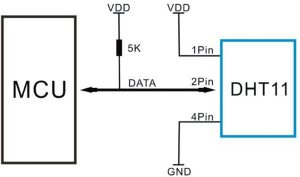
DHT11-Pin-and-Connection

The product is in a 4pin single row package. 1st pin is connected across the VDD and the 4th pin is connected across the GND. The 2nd pin is the data pin, used for communication purposes. This data pin needs a pull-up resistor of 5k. However, others pull up resistors such as 4.7k to the 10k can also be used. The 3rd pin is not connected with anything. So it is ignored.

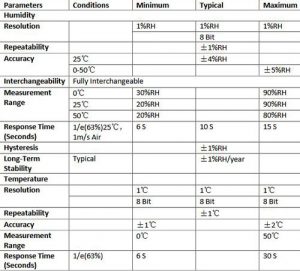
The datasheet provides technical specifications as well as interfacing information that can be seen in the below table-

Table-for-Temperature-and-Humadity

The above table is showing Temperature and Humidity measurement range and accuracy. It can measure temperature from 0-50 degrees Celsius with an accuracy of +/- 2-degree Celsius and relative humidity from 20-90%RH with an accuracy of +/- 5%RH. The detail specification can be seen in the below table.

Temperature-and-Humidity-measurement-Table

Communicating with DHT11 Sensor

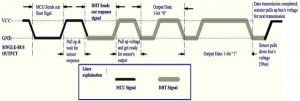
As mentioned earlier, in order to read the data from DHT11 with PIC we have to use PIC one wire Communication protocol. The details on how to perform this can be understood from the interfacing diagram of DHT 11 which can be found in its datasheet, the same is given below.

Communicating with DHT11 Sensor

DHT11 needs a start signal from the MCU to start the communication. Therefore, every time the MCU needs to send a start signal to the DHT11 Sensor to request it to send the values of temperature and humidity. After completing the start signal, the DHT11 sends a response signal which includes the temperature and humidity information. The data communication is done by the single bus data communication protocol. The full data length is 40bit and the sensor sends higher data bit first.

Source: Interfacing DHT11 with PIC16F877A for Temperature and Humidity Measurement

The post Interfacing DHT11 with PIC16F877A for Temperature and Humidity Measurement appeared first on PIC Microcontroller.


NEW CONVECTION REFLOW OVEN FOR SOLDERING WITH 6 HEATING ZONES

$
0
0

NEW CONVECTION REFLOW OVEN FOR SOLDERING WITH 6 HEATING ZONES

Neoden USA, a distributor of Neoden products in the US, is pleased to announce the launch of their new desktop reflow ovenNeoden IN6. The reflow oven is equipped with 6 heating zones, 3 of them are located at the top and the other 3 are located at the bottom. The multiple zones will provide a superior soldering performance.

Neoden IN6 comes with a full hot-air convection system that will circulate the hot air inside the heating area using multiple offload zone cooling fans. Because the air doesn’t just stay at the top of the oven, each electronic component will be soldered evenly.

The IN6 has about 49 KGs and small dimensions (1020507350mm), that makes it an innovative and compact reflow oven.

This model was developed in-house by Neoden’s staff. About 115 members worked side by side in multiple areas such as hardware assembly, cutting and testing. Each individual part was tested separately until it reached the expected output.

The IN6 provides uniform temperature profiling across the entire printed circuit board for enhanced SMT process control. With temperatures up to 300ºC/572ºF, the IN6 reflow oven is capable of lead-free soldering.

The IN6 can store up to 16 programmable profiles that can be stored inside of the machine, and can be converted from Celsius to Farenheit without any hassle.

Neoden IN6 is using the latest technology of dynamic warming-up control system that provides stable temperatures. It comes with a built-in soldering smoke filtering system, which do not require any other smoke tube anymore.

Read more: NEW CONVECTION REFLOW OVEN FOR SOLDERING WITH 6 HEATING ZONES

The post NEW CONVECTION REFLOW OVEN FOR SOLDERING WITH 6 HEATING ZONES appeared first on PIC Microcontroller.
3.5-INCH SBC AND EMBEDDED PC FEATURE WHISKEY LAKE-UE

$
0
0

3.5-INCH SBC AND EMBEDDED PC FEATURE WHISKEY LAKE-UE

Vecow Co., Ltd., a team of embedded expert, today announced the launch of EMBC-3000 3.5” SBC and SPC-5200 Slim Fanless System. Powered by the 8th Gen Intel® Core U-Series (Whiskey Lake) platform, EMBC-3000 and SPC-5200 feature outstanding performance, compact design, system-oriented integration and industrial-grade reliability, aiming at embedded solutions for Intelligent control, machine vision, In-vehicle computing, factory automation, gaming, AGV/AGR and any Industrial 4.0 and AIoT applications.

Based on the 8th Gen Intel® Core™ U-series processor that delivers power-efficient performance in a 15 Watt and high connectivity, Vecow EMBC-3000 and SPC-5200 offer DDR4 2400MHz SO-DIMM with up to 32GB memory and versatile I/O capabilities including 4 USB 3.1 Gen 2 with 10Gbps data transfer, 4 COM RS-232/422/485, 16 isolated DIO, 1 SIM card socket, 2 Mini PCIe slot (8GT/s) and 2 SATA II (6G) ports. Running on Intel® UHD Graphics 620, Vecow EMBC-3000 supports up to triple independent displays with Displayport, DVI-D and dual channel 24-bit LVDS display interface. Designed for a low profile, with dimensions of 146mm x 102mm, EMBC-3000 offers full functions SUMIT A, B for expansion for 10GigE LANGigE LAN and PCIe slot for graphics cards, USB adaptor and video card connectivity.

With AIoT technology becoming widespread, Vecow EMBC-3000 and SPC-5200 support Intel® OpenVINO toolkit to fulfil requirements of AIoT applications. Also, these two products provide TPM 2.0, iAMT 12.0, Wake on LAN, and PXE for smart manageability. Thanks to the compact design, Vecow SPC-5200 offers optional 1U high rackmount, making it is ideal for space-limited applications. It supports 4 GigE LAN with 2 PoE, 9V to 48V power input, remote power switch and ignition control, delivering must-have features for in-vehicle computing applications. Vecow EMBC-3000 and SPC-5200 are designed for used in industrial applications. EMBC-3000 has proven reliable operation at temperature range from -40∘C to 85∘C, fanless, rugged SUMIT connection, EN50155 and EN50121-3-2 compliant.

We are so proud to bring Vecow EMBC-3000 3.5” SBC, along with SPC-5200 fanless embedded system, to the market.” said Hugh Hsu, Senior Product Manager, Embedded System & Platform Division at Vecow. “Two products are based on quad-core Intel® Whiskey Lake processor and deliver outstanding performance, flexibility and expandable functions. They meet requirements of modern embedded applications that have been revolving diverse and complex.”

“We are excited to introduce these two products to our customers and we will be exhibiting at CIIF 2019/IAS in September from 17 to 21, 2019 in China.” said Johnson Hsu, Great China Sales Director, Sales & Marketing Division at Vecow. “We can’t wait to presents SPC-5200 and EMBC-3000 to our partners and customers.

Read more: 3.5-INCH SBC AND EMBEDDED PC FEATURE WHISKEY LAKE-UE

The post 3.5-INCH SBC AND EMBEDDED PC FEATURE WHISKEY LAKE-UE appeared first on PIC Microcontroller.
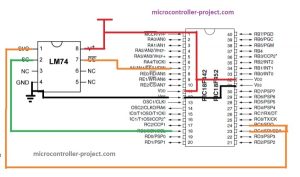
Measuring Temperature using LM74 temperature sensor by Texas Instruments and Pic18f452 Microcontroller

$
0
0

In this post i am going to interface LM74 temperature sensor with Pic18f452 microcontroller. LM74 is a temperature sensor by Texas Instruments. It comes with an SPI (Serial Peripheral Interface) interface. You can operate it in SPI (Serial Peripheral Interface) mode. A processor/microcontroller can read temperature reading from LM74 at any time. LM74 provides resolution of up to 0.0625 degree Centigrade. It can operate between -55 degree to +150 degree centigrade. It works only as slave in a system. When interfaced with processor / microcontroller in SPI mode it can only be a slave to a host.

I assume that you are already familiar with the SPI interface. If not then first took some tutorials on SPI (Serial Peripheral Interface) interface before going through this project.

Measuring Temperature using LM74 temperature sensor by Texas Instruments and Pic18f452 Microcontroller

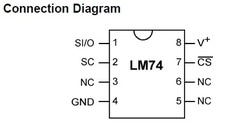
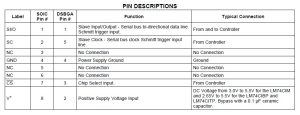
LM74 Temperature Sensor Pin Out

The only important pins are SI/O (Slave Input/Output) and SC (Slave Clock). CS is Chip select and its active low,  the sensor will not work if you don’t make CS Low(0). So make sure to make CS low before using the sensor.

LM74 Temperature Sensor Pin Out

SI/O is Slave input/output. All the commands, control signals and data, travels in and out of the sensor from this pin.Data is clocked out from the sensor on the falling edge of the serial clock (SC), while data is clocked in on the rising edge of SC. A complete transmit/receive communication will consist of 32 serial clocks. The first 16 clocks comprise the transmit phase of communication, while the second 16 clocks are the receive phase. SC is Slave clock. In SPI mode clock is essential to carry out the task. 

LM74 Temperature Sensor Registers

LM74 temperature sensor has three registers. All three registers are 16-bit wide.

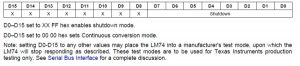
LM74 Temperature Sensor Configuration Register

Configuration register sets the LM74 in shutdown or continuous conversion mode. Continuous conversion means continuously convert the temperature. Its a 16-bit wide register. To enable shutdown mode or continuous conversion mode see the data bits configuration in the pic from datasheet below.
LM74 Temperature Sensor Configuration Register

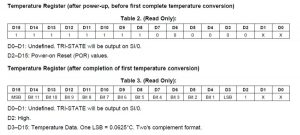
LM74 Temperature Register

LM74 measures temperature and places the equivalent digital value in the Temperature register. Now host can read  the temperature from temperature register. Its a 16-bit wide register. First 2 bits are void. Third bit is always high. Bits from 4 to 16 (DB3 to DB15) are data bits. Temperature digital values are stored in these DB3 to DB15 bits. 

Note: On first power up LM74 will output arbitrary data don’t worry its for the first time power up. Then its start working perfectly.

LM74 Temperature Register

LM74 Manufacturer’s Device ID Register

This register works only when LM74 is in shutdown mode. It outputs manufacture device ID. You don’t need to care about this register.
LM74 Manufacturer’s Device ID Register
LM74 temperature sensor Manufacturer’s Device ID Register
 

SPI communication with Pic8f452 Microcontroller

Four pins of Pic18f452 are dadicated for SPI communication. It is assumed that you are already familiar with the  SPI communication protocol and their is no need to explain these pins and their functions.
  • Serial Data Out (SDO) – RC5/SDO
  • Serial Data In (SDI) – RC4/SDI
  • Serial Clock (SCK) – RC3/SCK
  • Slave Select (SS) – RA5/SS

Three registers are associated with SPI communication. To carry out successful SPI communication we have to configure them correctly.

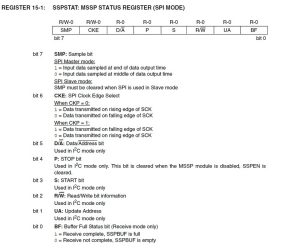
SSPSTAT SPI status register

Individual bits of register with their fuctions are below. I uploaded SSPSTAT=0x00 which means SPI in Master Mode, Data transmitted on falling clock.
 
SSPSTAT SPI status register

SSPCON1 SPI Control Register

Individual bits of register with their functions are below. I uploaded SSPCON1=0x20 which means Serial port not enabled and Clock=Fosc/4.
 
SSPCON1 SPI Control Register

SSPBUF (Serial Receive and Transmit Register)

This register is not directly accessible. The data which goes out and comes in is dropped in this register and user can pick data from this register.

Project Circuit Diagram

Project Circuit Diagram

LM74 temperature sensor by Texas instruments interfacing with Pic18f452 Microcontroller

Project Code

Project code is written in c language and is compiled in MP-Lab using high tech C compiler. Simulation is made in proteaus 8.0.
   
  #include <p18f452.h>
  #include <stdio.h>
  #define _XTAL_FREQ 4000000 //Frequency of Oscillator 4MHz
   
  #define RD5 LATDbits.LATD5 //Define as PORT D Pin 6
  #define RD5Tris TRISDbits.TRISD5 //Define as TRISD Pin 6
  #define RD6 LATDbits.LATD6 //Define as PORT D Pin 6
  #define RD6Tris TRISDbits.TRISD6 //Define as TRISD Pin 6
  #define RD7 LATDbits.LATD7 //Define as PORT D Pin 7
  #define RD7Tris TRISDbits.TRISD7 //Define as TRISD Pin 7
   
  #define SS LATAbits.LATA5 //Define as PORT A Pin 4 as SS Slave Select
  #define SSTris TRISAbits.TRISA5 //Define as TRISA Pin 4
   
  #define SDO LATCbits.LATC5 //Define as PORT C Pin 5 as Slave data out
  #define SDOTris TRISCbits.TRISC5 //Define as TRISC Pin 5
   
  #define SDI LATCbits.LATC4 //Define as PORT C Pin 4 as Slave data in
  #define SDITris TRISCbits.TRISC4 //Define as TRISC Pin 4
   
  #define SCK LATCbits.LATC3 //Define as PORT C Pin 3 as CLock
  #define SCKTris TRISCbits.TRISC3 //Define as TRISA Pin 3
   
  void delay(unsigned int time) //Time delay function
  {
  unsigned int i,j;
  for(i=0;i< time;i++)
  for(j=0;j< 5;j++);
  }
   
  //Function for sending values to the command register of LCD
  void lcdcmd(unsigned char value)
  {
  PORTB=value;
  RD6= 0; //register select-rs
  RD5 = 0; //read-write-rd
  RD7 = 1; //enable-e
  delay(50);
  RD7=0; //enable-e
  delay(50);
   
  }
  //Function for sending values to the data register of LCD
  void display(unsigned char value)
  {
  PORTB=value;
  RD6= 1; //register select-rs
  RD5= 0; //read-write-rd
  RD7= 1; //enable-e
  delay(500);
  RD7=0; //enable-e
  delay(50);
   
  }
  //function to initialize the registers and pins of LCD
  //always use with every lcd of hitachi
  void lcdint(void)
  {
  delay(15000);
  display(0x30);
  delay(4500);
  display(0x30);
  delay(300);
  display(0x30);
  delay(650);
  lcdcmd(0x38); //5×7 Font text will be displayed on lcd
  delay(50);
  lcdcmd(0x0C); //Display on Cursor off
  delay(50);
  lcdcmd(0x01); //Clear LCD (DDRAM)
  delay(50);
  lcdcmd(0x06); //Entry Mode
  delay(50);
  lcdcmd(0x80); //Put Cursor at first line first character space
  delay(50);
  }
   
  void main(){
  int i=0,j=0,k=0,count=0;
  float temp=0;
  char a,b,c;
  char t[]=Temp = ;
  unsigned int cc=0;
  TRISB=0x00; //Port B is used as output port
  RD5Tris=0; //Port-D bit 5 as output
  RD6Tris=0; //Port-D bit 6 as output
  RD7Tris=0; //Port-D bit 7 as output
   
  SSTris=0; //Slave select as output
  SDOTris=0; //SDO not used, Make it input
  SDITris=1; //SDI as input
  SCKTris=0; //Clock as Output
   
  lcdint(); //Initialize lcd
   
  SSPSTAT=0x00; //SPI in Master Mode, Data transmitted on falling clock
  SSPCON1=0x20; //Serial port not enabled, Clock=Fosc/4
  SS=1; //LM74 inactive
  SSPCON1bits.SSPEN = 1; // Enable the SPI
   
  while(1){
   
  SS=0; //LM74 Active
   
  SSPBUF=0x00; //Write Dummy data to Slave
  while(SSPSTATbits.BF!=0); //Poll Flag
   
   
  while(!SSPSTATbits.BF); //Poll Flag
  i=SSPBUF; //Save data sent from Slave
  SSPSTATbits.BF=0; //Reset Flag
   
  SSPBUF=0x00; //Write Dummy Data to Slave
  while(SSPSTATbits.BF!=0);//Poll Flag
   
   
  while(!SSPSTATbits.BF); //Poll Flag
  j=SSPBUF; //Save data sent from slave
  SS=1; //LM74 Deactivated
   
  while(t[count]!=\0){
  display(t[count]);
  count++;
  }
  count=0;
   
  k=(i<<8)|j;
   
  if(k<0){
  display();
  k=(int)(k^(-1));
  }
   
  k=k>>3;
   
  temp=(k*0.0625);
   
  a=temp/100;
  display(a+0x30);
  if(temp>100){
  temp=temp-100;
  }
  cc=(unsigned int)temp;
   
  b=temp/10;
  display(b+0x30);


  c=cc%10;
  display(c+0x30);
  display( );
  display(C);
  delay(10000);
  lcdcmd(1);
  }
  }
 
Download the Project files, folder includes the project code(Hex, C++) and simulation in Proteaus 8.0. If you have any questions regarding the post please leave your queries below in the comments section.
 

The post Measuring Temperature using LM74 temperature sensor by Texas Instruments and Pic18f452 Microcontroller appeared first on PIC Microcontroller.
FORTEC EXPANDS SBC TO PLUG-AND-PLAY TFT DISPLAY KIT

$
0
0

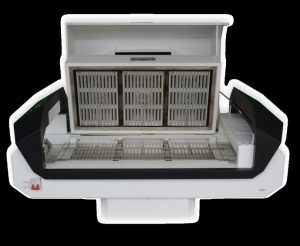
The supplier of complete solutions for display technology, power, and embedded systems, Fortec Electronik, now offers iBASE’s IB818, a single board computer (SBC) expanded to plug-and-play TFT display kit. According to the company, the iBASE IB818 single board computer already configured for display will help facilitate a quick and fast project start upon delivery. Users only need to plug it in and get started immediately.

FORTEC EXPANDS SBC TO PLUG-AND-PLAY TFT DISPLAY KIT

The iBASE IB818 which measures 102 x 147 mm (4” x 5.8”) is complemented with accessories such as display, cables, memory and SSD disk etc. Among its many features, the single board computer configured to initiate a fast project start includes an SBC display kit with Tiamma and AUO in diagonals from 7 to 24 inches, two SATA III interfaces, two Gigabit LAN (Intel I210IT PCI-E and I211AT PCI-E) for ethernet, an installed AMI BIOS chip, an Intel SoC integrated Gen9 18EUs graphics and, an HDMI 1.4b display and two 24-bit dual LVDS (18/24bit) interfaces for video output. The board is also configured to run on the Intel Celeron N3350 processor 4GB DDR3L RAM and has a 32GB mSATA SSD memory for external storage.

The 3.5-inch disk-size single-board computer expanded to a plug-and-play kit has four USB 3.0 onboard ports, two USB 2.0 ports via pin-header, one RS232/422/485 (jumperless selection) and three RS232 serial ports. It also has 2 mini slot types (2 Mini PCI-E, one full and one half-size), an H/W monitor and a watchdog timer of 256 levels. It is conditioned to operate on a wide temperature range and under a relative humidity of 90% (non-condensing at 60oC).

IB818 is widely applicable in various fields – the medical world, the industrial Internet of Things (IoT), the automation and factory space, with self-service machines and point-of-sale systems, measuring systems and even in the transport field. However, there would not be any scarcity or shortage in supply of this kit in the near future as iBASE has guaranteed a long term availability for the kit.

Read more: FORTEC EXPANDS SBC TO PLUG-AND-PLAY TFT DISPLAY KIT

The post FORTEC EXPANDS SBC TO PLUG-AND-PLAY TFT DISPLAY KIT appeared first on PIC Microcontroller.

THE BOXER-8300AI SERIES: POWERING AI@EDGE WITH INTEL® MOVIDIUS™ MYRIAD™ X

$
0
0

AAEON, the award winning industry leader in AI@Edge solutions, announces the launch of the BOXER-8300AI Series. Including the BOXER-8310AIBOXER-8320AI, and the BOXER-8330AI (Coming Q4 2019), this family of AI@Edge embedded box PCs power AI and edge computing thanks to the innovative Intel® Movidius™ Myriad™ X.

THE BOXER-8300AI SERIES POWERING AI@EDGE WITH INTEL® MOVIDIUS™ MYRIAD™ X

At the core of the BOXER-8300AI series is the innovative AI Core X module from AAEON. Each AI Core X module features the Intel® Movidius™ Myriad™ X VPU. The Intel® Movidius™ Myriad™ X provides high performance processing, with speeds up to 105 fps (80 fps typical) and 1 TOPS as a dedicated neural network. The BOXER-8300AI Series features improved thermal design, allowing the Intel® Movidius™ Myriad™ X to operate at higher temperatures without loss of performance.

The BOXER-8310AI offers users entry-level value and performance in a compact fanless system. Small enough to fit almost anywhere, this embedded AI@Edge system is powered by a choice of Intel® Pentium™ N4200 or Intel® Celeron™ N3350 processors with up to 8 GB of RAM. The BOXER-8310AI features one AI Core X module, providing users with processing capability to power AI solutions such as traffic monitoring, people counting, or even smart retail solutions. With its improved thermal design, the BOXER-8310AI can operate easily in temperatures from -20°C to as high as 55°C

The BOXER-8320AI brings the power of the 7th Generation Intel® Core™ i3 Mobile Processor as well as two AI Core X modules, offering processing speeds up to 210 fps (160 typical). The fanless BOXER-8320AI is built with a din-rail mount design and form factor, allowing it to easily integrate into any industrial space, or control cabinet. The advanced thermal design of the BOXER-8320AI allows it to operate in conditions from -20°C to 60°C. With the power of the Intel® Core™ i3 processor and two AI Core X modules, the BOXER-8320AI can be used in high-performance AI applications such as smart security, facial recognition, and more.

The BOXER-8300AI series offers users several advantages over other embedded AI@Edge systems. All BOXER-8300AI systems are compatible with the Intel® Distribution of OpenVINO toolkit, allowing users to run AI inferences on existing frameworks (such as TensorFlow or Caffe) or to create their own. The BOXER-8300AI supports expandable storage, supporting the full suite of Linux and Ubuntu. This also allows the BOXER-8300AI series to be expanded with support for wireless cards such as WiFi, 4G, or Bluetooth. Memory is also easy to replace and upgrade.

Read more: THE BOXER-8300AI SERIES: POWERING AI@EDGE WITH INTEL® MOVIDIUS™ MYRIAD™ X

The post THE BOXER-8300AI SERIES: POWERING AI@EDGE WITH INTEL® MOVIDIUS™ MYRIAD™ X appeared first on PIC Microcontroller.
Viewing all 365 articles
Browse latest View live


<script src="https://jsc.adskeeper.com/r/s/rssing.com.1596347.js" async> </script>