Quantcast
Channel: temperature | Battery Guide
Viewing all 365 articles
Browse latest View live

COMPACT AMD RYZEN™ SBC FEATURING FOUR INDEPENDENT 4K DISPLAYS

$
0
0

IBASE Technology Inc. (TPEx: 8050), a world leading provider of industrial computers and embedded computing solutions, releases the IB918 3.5-inch Disk-Size SBC based on the AMD Ryzen™ Embedded V1000/R1000 SoC. The IB918 allows system designers to create feature rich systems targeting panel PC, kiosk, POS, medical display and industrial applications.

COMPACT AMD RYZEN™ SBC FEATURING FOUR INDEPENDENT 4K DISPLAYS

Generating stunning 4K Ultra High-Definition resolution for sharper images provided by the integrated Vega GPU, IB918 can drive up to four independent displays via two HDMI (2.0a), a 24-bit dual channel LVDS and an eDP graphics output. It has two SO-DIMM sockets supporting fast data transfers with up to 32GB DDR4-2400 memory and ECC for data integrity. Flexible I/O connectivity and expansion ports come in the form of one USB 2.0, four USB 3.1, one SATA III, four COM, a 12V~24V DC input and two M.2 sockets (M/E Key).

The compact IB918 board comes with low power consumption AMD Ryzen™ APUs, namely the 64-bit quad-core V1605B (IB918F-1605) and the dual-core V1202B (IB918F-1202), R1606G (IB918F-1606G) and R1505G (IB918F-1505G). The models are equipped with an advanced TPM 2.0 chip, a high level of hardware-based security that enables cryptographic operations for access control and authentication to prevent phishing attacks and authorization value guesses on devices. Measuring 102 x 147mm, the SBC provides an optimal fan and heatsink cooling solution and supports an operating temperature range of 0°C to 60°C. The board supports both Windows 10 and Linux Ubuntu operating systems.

Read more: COMPACT AMD RYZEN™ SBC FEATURING FOUR INDEPENDENT 4K DISPLAYS

The post COMPACT AMD RYZEN™ SBC FEATURING FOUR INDEPENDENT 4K DISPLAYS appeared first on PIC Microcontroller.


THE EASY WAY TO CREATE SECURE IOT DEVICE CONNECTIONS TO AMAZON WEB SERVICES

$
0
0

Renesas Electronics’ new RX65N Cloud Kit provides a simple, application-ready platform for the development of IoT sensor devices which connect to the cloud via Amazon Web Services (AWS).

THE EASY WAY TO CREATE SECURE IOT DEVICE CONNECTIONS TO AMAZON WEB SERVICES

The kit features an RX65N microcontroller, on-board Wi-Fi® wireless connectivity, environmental, light and inertial sensors, and support for Amazon’s FreeRTOS real-time operating system.

Future Electronics is now offering RN65N Cloud Kits free to qualified customers. Apply today and get started quickly with your new cloud-connected product development.

The RX65N kit provides a ready-made, secure connection to AWS. In Renesas’ e2 studio IDE, developers can create IoT applications by configuring Amazon FreeRTOS, all the necessary drivers, and the network stack and component libraries.

The e2 studio IDE enables designers to develop IoT applications with powerful features, creating Amazon FreeRTOS projects from a GitHub directory and immediately building them.

In the IDE, they can also set up an Amazon FreeRTOS network stack and component libraries, such as Device Shadow, without requiring detailed knowledge of the system. They can embed additional functions based on Amazon FreeRTOS, such as USB connectivity and a file system, on an IoT endpoint device.

Features

  • 32-bit, 120MHz RX65N MCU
  • Silex Wi-Fi connectivity chipset on a Pmod module
  • Cloud Option Board with:
  • Two USB ports for serial communications and debugging
  • Digital light sensor for ambient/infrared light measurement
  • MEMS accelerometer/gyroscope
  • MEMS gas, temperature, humidity, and pressure sensor

Applications

  • Industrial automation
  • Building automation
  • Home appliances
  • Smart meters

Read more: THE EASY WAY TO CREATE SECURE IOT DEVICE CONNECTIONS TO AMAZON WEB SERVICES

The post THE EASY WAY TO CREATE SECURE IOT DEVICE CONNECTIONS TO AMAZON WEB SERVICES appeared first on PIC Microcontroller.

AXIOMTEK UNVEILS ADVANCED 4-SLOT INTEL® XEON® INDUSTRIAL SYSTEM FOR AIOT – IPC974-519-FL

$
0
0

4-slot Industrial System with LGA1151 Socket Intel® Xeon® E3 v5, 7th/6th Gen Intel® Core™ i7/i5/i3 & Celeron® Processor, Intel® C236/Q170, Front-access I/O, PCIe/PCI Slots.

AXIOMTEK UNVEILS ADVANCED 4-SLOT INTEL® XEON® INDUSTRIAL SYSTEM FOR AIOT – IPC974-519-FL

Axiomtek – a world-renowned leader relentlessly devoted in the research, development and manufacture of series of innovative and reliable industrial computer products of high efficiency – is pleased to announce the release of IPC974-519-FL, its newest 4-slot fanless industrial system. This robust IPC system provides edge computing capabilities for a wide variety of industrial AIoT applications, such as real-time control, data analysis, deep learning and automated optical inspection, making great strides to utilize an ideal solution. The industrial PC is powered by the high-performance Intel® Xeon® E3 v5, 7th/6th generation Intel® Core™ (codename: Kaby Lake/Skylake) or Celeron® processors with the Intel® C236 chipset or Q170 chipset. It also supports powerful NVIDIA® GPU with up to 300W TDP. In addition, the system has a wide operating temperature range of -10°C to +70°C with 0.5 m/s airflow and a wide range of 19V to 30V DC power input for harsh operating environments.

“The IPC974-519-FL has a flexible I/O window slot for ease of customization to meet the requirements of various applications. It has a choice of four different types of I/O modules – a four-port RS-232/422/485 module (AX93511); a four-port isolated RS-232/422/485 module (AX93516); a one-port GbE Ethernet, two-port USB 3.0 and two-port RS-232/422/485 module (AX93519); and a two-port isolated RS-232/422/485 and 8-in/8-out DIO module (AX93512). Additionally, it provides four high speed and full-size PCIe /PCI slots supporting the vision, motion, data acquisition and I/O cards. The AIoT industrial automation computer has an optional built-in power board which provides 300W power to add-in graphics card,” said Ivy Lee, a product manager of Product PM Division at Axiomtek. “To satisfy the wide temperature variations, it also offers an easy-to-install fan module to help dissipate heat generated within the system when high power consumption PCI/PCIe cards are installed.”

Axiomtek has combined this advanced 4-slot industrial system with Cognex VisionPro, the PC-based vision software from Cognex, to provide a first-class automated optical inspection solution. It also includes Intel® AMT 11.0 for easy remote management and Trusted Platform Module (TPM) 2.0 for optimum security. The highly versatile and reliable IPC974-519-FL is equipped with two easy-swappable 2.5″ HDDs with Intel® RAID 0,1,5 for extensive storage needs. It also comes with dual DDR4-2133 ECC/non-ECC SO-DIMM slots with up to 32GB system memory. The industrial computer features a wide choice of front-facing I/O connectors, including two LAN ports, four USB 3.0 ports, two USB 2.0 ports, one VGA, one HDMI, one 4-pin terminal block, and one audio (line-out). There is also a full-size PCI Express Mini Card slot with SIM slot (USB & PCIe interface) for 3G/4G, GPS, Wi-Fi, Bluetooth or other RF connections. Moreover, the IPC974-519-FL has two SMA type antenna holes.

Read more: AXIOMTEK UNVEILS ADVANCED 4-SLOT INTEL® XEON® INDUSTRIAL SYSTEM FOR AIOT – IPC974-519-FL

The post AXIOMTEK UNVEILS ADVANCED 4-SLOT INTEL® XEON® INDUSTRIAL SYSTEM FOR AIOT – IPC974-519-FL appeared first on PIC Microcontroller.
LITHIUM COIN CELL CHARGER FOR RECHARGEABLE COIN BATTERIES

$
0
0

This versatile charger has been designed to charge Lithium Coin Cell Rechargeable CR2016/CR2025/CR2032 Coin Batteries. Just insert the battery to the holder, and plug in to any USB port to recharge, D3 Power LED, D1 LED indicates the charge cycle. The board has been designed to use dual chips, either BQ21040 IC from Texas instruments or MCP73831 from Microchip however the board is tested with BQ21040 IC.

LITHIUM COIN CELL CHARGER FOR RECHARGEABLE COIN BATTERIES

Programmable Charge Current using External Resistor up to 800 mA (default set to 50mA), follow formula bellow to set the desired current.

An external resistor R2 is used to Program the Output Current (50 to 800 mA) and can be used as a current monitor.

RISET = KISET / IOUT

Where

  • IOUT is the desired fast charge current;
  • KISET is a gain factor found in the electrical specification (1)

For greater accuracy at lower currents, part of the sense FET is disabled to give better resolution. Figure 1 shows the transition from low current to higher current. Going from higher currents to low currents, there is hysteresis and the transition occurs around 0.15 A. 

For host monitoring, a pull-up resistor is used between the STATUS terminal and the VCC of the host and for a visual indication a resistor in series with an LED is connected between the STATUS terminal and a power source. First charge after Input supply applied LED will be ON and LED will be OFF when OVP/SLEEP condition.

BQ21040 – SINGLE-INPUT, SINGLE CELL LI-ION AND LI-POL BATTERY CHARGER

The bq21040 device is a highly integrated Li-Ion and Li-Pol linear battery charger device targeted at space limited portable applications. The device operates from either a USB port or AC adapter. The high input voltage range with input overvoltage protection supports low-cost unregulated adapters. The bq21040 has a single power output that charges the battery. A system load can be placed in parallel with the battery as long as the average system load does not keep the battery from charging fully during the 10 hour safety timer. The battery is charged in three phases: conditioning, constant current and constant voltage. In all charge phases, an internal control loop monitors the IC junction temperature and reduces the charge current if an internal temperature threshold is exceeded. The charger power stage and charge current sense functions are fully integrated. The charger function has high accuracy current and voltage regulation loops, charge status display, and charge termination.

The pre-charge current and termination current threshold are fixed to 20% and 10%, respectively. The fast charge current value is programmable through an external resistor.

FEATURES (BQ21040)

  • Supply Input 5V USB Port
  • 1% Charge Voltage Accuracy
  • 10% Charge Current Accuracy
  • Low Battery Leakage Current (1 μA)
  • Output Current Approx. 50mA
  • 2-V Li-Ion and Li-Pol Coin Battery CR2016/CR2025/CR2032
  • Over temperature Sensing Protection Through NTC
  • Fixed 10-Hour Safety Timer
  • Status Indication – Charging/Done
  • OUT Short-Circuit Protection and ISET Short Detection
  • 125°C Thermal Regulation; 150°C Thermal
  • Shutdown Protection

Read more: LITHIUM COIN CELL CHARGER FOR RECHARGEABLE COIN BATTERIES

The post LITHIUM COIN CELL CHARGER FOR RECHARGEABLE COIN BATTERIES appeared first on PIC Microcontroller.

AXIOMTEK’S ANNOUNCED FOUR-POE DIN-RAIL EDGE COMPUTER FOR IP VIDEO SURVEILLANCE – ICO320-83C

$
0
0

Axiomtek – a world-renowned leader relentlessly devoted in the research, development and manufacture of series of innovative and reliable industrial computer products of high efficiency – is proud to introduce the ICO320-83C, a fanless DIN-rail embedded system with four RJ-45 Gigabit PoE ports for facility monitoring systems, IP video surveillance, Access Point and intercoms. This endurable industrial IoT gateway has an IP40-rated heavy-duty aluminum extrusion and steel enclosure for use in harsh environments. It can operate under wide temperature ranging from -40°C to 70°C and withstand vibration up to 2G. It is powered by the high-performance Intel® Celeron® processor N3350 or Pentium® processor N4200 and has one DDR4-2133 SO-DIMM for up to 8 GB of system memory. Axiomtek’s outstanding ICO320-83C delivers high performance at a competitive price.

AXIOMTEK’S ANNOUNCED FOUR-POE DIN-RAIL EDGE COMPUTER FOR IP VIDEO SURVEILLANCE – ICO320-83C

The ICO320-83C offers complete expandability and full-featured I/O, including four RJ-45 Gigabit PoE ports or four RJ-45 LAN ports, two RS-232/422/485 ports, two USB 3.0 port, one VGA port, one CANbus 2.0 A/B port, and one 8-bit programmable DIO. It also offers one full-size PCI Express Mini Card slot (USB/PCIe) and one half-size PCI Express Mini Card slot (mSATA/USB/PCIe) for wireless modules. It has a SATA drive and half-size mSATA shared with PCI Express Mini Card slot for storage. The industrial-grade embedded platform is compatible with Windows® 10 IoT and Linux operating systems. To fulfill the requirement of remote monitoring at factory, the ICO320-83C supports Axiomtek’s exclusive AMS.AXView software. This reliable DIN-rail embedded system is certified with EN60950, CE and FCC. It offers an RTC battery onboard. It also supports a wide range 12 to 24 VDC terminal block power input with various power protections, including OVP, UVP, OCP, and RVP.

The DIN-rail mounting ICO320-83C is designed for easy setup and quick deployment for typical industrial applications, such as status monitoring, facility management and remote control of public utilities,” said Darren Wang, a product manager of Product PM Division at Axiomtek. ”Furthermore, it is a user-friendly gateway solution with four PoE ports that can save on total deployment costs including electrical power cabling cost and help reduce the product’s deployment time. Its ultra-lightweight and compact design is the answer for applications in space-constricting environments while its robust IP40-rated housing and wide operating temperature range ensures that it can operate reliably in a variety of extreme environments.

Advanced Features:

  • Cost-effective with fanless design
  • Intel® Celeron® processor N3350/Pentium® processor N4200 onboard
  • 4 RJ-45 Gigabit PoE ports
  • 8-bit programmable DIO for IoT gateway applications
  • Wide operating temperature range from -40°C to +70°C
  • 12 to 24 VDC wide range power input
  • OVP, UVP, OCP, RVP power protection
  • AXView intelligent remote monitoring software for Industrial IoT

Read more: AXIOMTEK’S ANNOUNCED FOUR-POE DIN-RAIL EDGE COMPUTER FOR IP VIDEO SURVEILLANCE – ICO320-83C

The post AXIOMTEK’S ANNOUNCED FOUR-POE DIN-RAIL EDGE COMPUTER FOR IP VIDEO SURVEILLANCE – ICO320-83C appeared first on PIC Microcontroller.
IN AND OUT WITH 10-MINUTE ELECTRICAL VEHICLE RECHARGE

$
0
0

Researchers at Penn State have developed a fast charging technique to charge a battery in in electric vehicle in just ten minutes. By Nick Flaherty @ www.eenewspower.com

IN AND OUT WITH 10-MINUTE ELECTRICAL VEHICLE RECHARGE

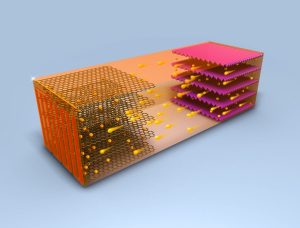
The fast charging technique uses a self-heating battery design to provide faster charging at 60ºC, while cooling the rest of the system to make sure that the battery doesn’t overheat.

We demonstrated that we can charge an electrical vehicle in ten minutes for a 200 to 300 mile range,” said Chao-Yang Wang, chair of mechanical engineering, professor of chemical engineering and professor of materials science and engineering, and director of the Electrochemical Engine Centre at Penn State. “And we can do this maintaining 2,500 charging cycles, or the equivalent of half a million miles of travel.

Charging lithium ion batteries at ambient temperatures is slow can can damage battery cells, as the lithium deposits in spikes on the surface of the carbon anode. This lithium plating reduces cell capacity, but also can cause electrical spikes and unsafe battery conditions. Batteries heated above the lithium plating threshold, whether by external or internal heating, do not exhibit lithium plating, so charging at higher temperatures would be more efficient, but long periods of high heat also degrade the batteries.

The self-heating battery uses a thin nickel foil with one end attached to the negative terminal and the other extending outside the cell to create a third terminal. A temperature sensor attached to a switch causes electrons to flow through the nickel foil to complete the circuit. This rapidly heats up the nickel foil through resistance heating and warms the inside of the battery.

Read more: IN AND OUT WITH 10-MINUTE ELECTRICAL VEHICLE RECHARGE

The post IN AND OUT WITH 10-MINUTE ELECTRICAL VEHICLE RECHARGE appeared first on PIC Microcontroller.

ENJOY SUPERIOR GRAPHIC OUTPUT AND LOW POWER USAGE WITH ENHANCED EBC 357X 3.5” BOARDS

$
0
0

NEXCOM is thrilled to reintroduce the SBC EBC 357X series with a revamped design that withstands adverse temperatures and economizes space with its upside-down CPU. The boards save costs by utilizing world-class Intel Atom® E39xx processors, which function as beautifully as i3s without sacrificing speed. Intended for those that desire simple and compact HMIs, the EBC 357X series is suitable for a variety of uses, such as industrial automation, building management systems, outdoor retail, and public infrastructure.

ENJOY SUPERIOR GRAPHIC OUTPUT AND LOW POWER USAGE WITH ENHANCED EBC 357X 3.5” BOARDS

Industrial and outdoor environments are subject to unpredictable and variable temperatures, requiring versatile and durable equipment. Wide-temperature embedded systems endure rigorous testing to ensure responsiveness regardless of operational conditions. The attractiveness of the EBC 357X series is that our systems consume low power while operating at a greater range of temperatures than competitors (-20°C~60°C fanless, -20°C~70°C with fan), making it a value-driven choice for disparate environments, including traffic control units, bus stop displays, machine vision systems, and industrial panel PCs.

The carefully selected Intel Atom® processors use low-power architecture to support immersive graphics and media. Capitalizing on these abilities, the EBC 357X series includes three different display outputs, allowing flexibility of presentation without sacrificing visual power. Up to 16GB of dual DDR3L/SO-DIMM memory also assists with quicker Ultra HD 4k video display while allowing simultaneous operation of multiple applications, which can be embedded. The SBCs are beneficial in controlling and monitoring manufacturing equipment as well as providing real-time information for transportation facilities.

Read more: ENJOY SUPERIOR GRAPHIC OUTPUT AND LOW POWER USAGE WITH ENHANCED EBC 357X 3.5” BOARDS

The post ENJOY SUPERIOR GRAPHIC OUTPUT AND LOW POWER USAGE WITH ENHANCED EBC 357X 3.5” BOARDS appeared first on PIC Microcontroller.

NANOPI R1S DUAL GIGABIT ETHERNET ROUTER COMES WITH 32-BIT OR 64-BIT ARM PROCESSOR

$
0
0

FriendlyELEC launched NanoPi R1 SBC & Gateway earlier this year with Allwinner H3 processor, two Ethernet ports, as well as WiFi and Bluetooth connectivity. The design makes use of both Ethernet on the processor, but that also means on Gigabit Ethernet port had to be combined with a Fast Ethernet processor.

NANOPI R1S DUAL GIGABIT ETHERNET ROUTER COMES WITH 32-BIT OR 64-BIT ARM PROCESSOR

The company has now added a USB to Gigabit Ethernet bridge to their latest NanoPi R1S board meaning it’s now a dual Gigabit Ethernet SBC, but with the caveat that the port behind the USB bridge is limited to USB 2.0 speed (480 Mbps), and with overhead the USB Ethernet bandwidth is around 330 Mbps.

There are two versions of the board, namely NanoPi R1S-H3 and R1S-H5 with respectively Allwinner H3 32-bit processor, and Allwinner H5 64-bit processor.

Apart from the different processors, both boards share the same PCBA and specifications:

  • SoC
    • NanoPi R1S-H3 – Allwinner H3 quad-core Arm Cortex-A7 processor @ up to 1.2GHz with Mali-400MP2 GPU
    • NanoPi R1S-H5 – Allwinner H5 quad-core Arm Cortex-A53 processor @ up to 1.2GHz with Mali-450MP GPU
  • System Memory – 512MB DDR3 RAM
  • Storage – MicroSD Slot, SPI flash footprint
  • Connectivity
    • 1x “true” Gigabit Ethernet (WAN)
    • 1x “USB 2.0” Gigabit Ethernet (LAN) up to around 330 Mbps
    • 802.11b/g/n WiFi 4 with IPX-I antenna connector
  • USB – 1x USB Type-A host port, 1x micro USB port
  • Debugging – 3-pin 2.54mm pitch header for serial console
  • Misc – 3x LEDs (WAN, LAN, SYS), K1 reset button, fan header
  • Power Supply – DC 5V/3A via micro USB port
  • Dimensions – 55.6 x 52mm
  • Temperature Range – -20℃ to 70℃

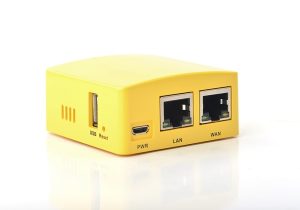
The company does not currently sell the barebone board , and instead, NanoPi R1S is sold as a router with a yellow enclosure (no other colors available) running either FriendlyWrt based on OpenWrt or FriendlyCore based on Ubuntu 18.04, both shipping with Linux 4.14.

You’ll find more technical details and links to the respective firmware files on the Wikis for R1S-H3 and R1S-H5 routers. Cooling is achieved with a heatsink that covers a large part of the board.

Read more: NANOPI R1S DUAL GIGABIT ETHERNET ROUTER COMES WITH 32-BIT OR 64-BIT ARM PROCESSOR

The post NANOPI R1S DUAL GIGABIT ETHERNET ROUTER COMES WITH 32-BIT OR 64-BIT ARM PROCESSOR appeared first on PIC Microcontroller.


ESP32MX-E, THE NEW CHIP ON THE BLOCK

$
0
0

There are a host of boards based around the ESP32, and also its follow up, the ESP8266. It’s noteworthy to witness how they have evolved from the simple breakout boards they were when the chip was released back in 2015 to something a lot more major. The latest of these boards is the esp32MX-E from Modtronix Engineering, which will be raising soon on Crowd Supply.

ESP32MX-E, THE NEW CHIP ON THE BLOCK

Measuring at 64.4 × 42 mm (2.54 × 1.65 inch), the board is designed based on an off the shelf ESP-WROOM-32 module. One interesting feature is its independent methods of powering the board; a USB-C connector, a 2.1 mm barrel connector, or via broken-out +V and GND pins, the board can be powered with a 4.5 to 16 V supply. The on-board USB connector also enables a serial console, and allows you to program the board. The board offers both Wi-Fi, and Bluetooth, enabled by the ESP32, and also an Ethernet jack. The board also features a Micro SD card slot, along with a user addressable LED and button. The ESP32 board is built around a dual-core 32-bit Tensilica’s Xtensa LX6 micro-processor which operates at either 160 or 240 MHz, equipped with 4MB of SPI Flash, and 520KB of SRAM.

The board also has a user-programmable STMicroelectronicSTM32F030F4 micro-controller. The micro-controller is a 32-bit Arm Cortex-M0 core operating at 48 MHz, with 256 KB of Flash and 32 KB of SRAM. The I²C I/O secondary processor expander handles the pins on the two expansion headers; the first has 2×7 pins, and the other has 2×10 pins with programmable pull-up and pull-down resistors on most inputs. We should note that not all of the pins are available when the SD card slot is in use.

The board will be released in two versions, but with different operating range. While both will have the same configurations, one will have an operating range of 0° C to 85° C, while the second, an ‘industrial’ version, will operate at temperatures down to -40° C. The board is aimed squarely towards the Internet of Things (IoT) and industry, and will be housed in anonymous black or grey boxes with numbers written in sharpie on the outside for easy identification from other boxes.

Read more: ESP32MX-E, THE NEW CHIP ON THE BLOCK

The post ESP32MX-E, THE NEW CHIP ON THE BLOCK appeared first on PIC Microcontroller.

EXCELON™ FERROELECTRIC-RAM (F-RAM™)

$
0
0

Cypress Semiconductor’s F-RAM is ideal for portable medical, wearable, IoT sensor, industrial, and automotive applications

EXCELON™ FERROELECTRIC-RAM (F-RAM™)

Cypress Semiconductor’s Excelon is next-generation Ferroelectric RAM (F-RAM) which delivers the industry’s lowest-power mission-critical nonvolatile memory by combining ultra-low-power operation with high-speed interfaces, instant nonvolatility, and unlimited read/write cycle endurance. This makes Excelon the ideal data-logging memory for portable medical, wearable, IoT sensor, industrial, and automotive applications.

Features

  • Up to 150x reduction in typical standby current (1 µA) and hibernate current (0.1 µA) compared to current F-RAMs
  • Greater than 10x increase in performance with the addition of a 108 MHz Quad SPI (QSPI) compared to competing SPI F-RAMs
  • Offers NoDelay™ writes to capture data instantly with no soak time requirement and without any additional components for power back-up
  • 2 Mb, 4 Mb, and 8 Mb density options
  • Operating voltage range: 1.71 V to 1.89 V and 1.80 V to 3.60 V
  • Commercial (0°C to +70°C), industrial (-40°C to +85°C), Auto-A (-40°C to +85°C), and Auto-E (-40°C to +125°C) temperature grades

Excelon-LP And Excelon-Ultra Individual Features

  • Multiple power-saving modes, including hibernate, deep power-down, and standby
  • Consume 200x less energy than EEPROM and 3,000x less energy than NOR Flash products
  • Read/write endurance of 1,000 trillion write cycles to log data every millisecond for more than 3,000 years
  • Introduce 8 Mb density F-RAM to meet the growing data-logging requirement in modern applications
  • Available in small footprint: 10 mm², 8-pin GQFN package

Excelon-Auto Individual Features

  • Captures data instantly with no soak time requirement and also no additional back-up components
  • Supports endurance cycling of 1,000 trillion write cycles to log data every µs for 20 years
  • Provides AEC-Q100-qualified and functional safety-compliant memory components

Read more: EXCELON™ FERROELECTRIC-RAM (F-RAM™)

The post EXCELON™ FERROELECTRIC-RAM (F-RAM™) appeared first on PIC Microcontroller.

COMPACT RYZEN V1000 SYSTEM STARTS AT $689 WITH PRE-LOADED UBUNTU

$
0
0

Simply NUC, the company behind several Intel NUC based SBCs like the Apollo Lake based NUC 8 Rugged, recently announced the launch of a new mini-computers codenamed; “Sequoia”.COMPACT RYZEN V1000 SYSTEM STARTS AT $689 WITH PRE-LOADED UBUNTU

The Sequoia is Simply NUC’s first AMD-powered mini computer and it is aimed at applications around AI, Edge Analytics, robotics, POS, digital signage and industrial IoT or computing, thanks to it’s rugged and robust build.

The Sequoia is built around AMD® Ryzen™ processors, which gives it the ability to run most of the popular operating systems including; Windows 10 and several Linux distros, giving developers the flexibility to develop the exact solution they require without compromises.

In terms of features, in order to accommodate the requirements for the plethora of applications for which the Sequoia can serve, and keep the Simply NUC’s tradition of providing all their Mini PCs with very extensive connectivity features, the Sequoia comes with two serial ports, two gigabit Ethernet ports (controlled using Intel’s i210-LM), two locking Mini Display Ports, Serial RS-232/Serial RS-485 video outputs, Wi-Fi 5 and Bluetooth 5, optional microSD card reader, and several USB 3.1 Gen 2 port. To give users additional connectivity options, the Mini PC also comes with three(3) M.2 slots through which things like a wireless-AC card, an LTE Modem and (or), an SSD storage device can be connected to the sequoia. To provide multiple mounting options, the chassis of the mini PC is designed to support DIN rail and VESA mounting plate, giving users a choice on how the device is installed.

The Sequoia was designed for reliable and long-lasting use in rugged environments, typical of industrial settings. It supports an automotive-grade power supply range (8 to 32Vdc) with a locking connector and is able to withstand a maximum relative humidity of 95% @ 40C and a wide operational temperature range of 0 to 60C. To enhance maintenance, the Sequoia also features a built-in health monitoring system which includes; a controllable fan, hardware monitoring and a watchdog timer.

Read more: COMPACT RYZEN V1000 SYSTEM STARTS AT $689 WITH PRE-LOADED UBUNTU

The post COMPACT RYZEN V1000 SYSTEM STARTS AT $689 WITH PRE-LOADED UBUNTU appeared first on PIC Microcontroller.

BOXER-8220AI: POWERING AI WITH NVIDIA JETSON NANO

$
0
0

AAEON, an award-winning developer of AI edge computing platforms, announces the BOXER-8220AI box PC powered by NVIDIA® Jetson Nano™. With the latest SoC from NVIDIA built for AI, the BOXER-8220AI offers stable, reliable performance at a price which is competitive and budget friendly.

BOXER-8220AI POWERING AI WITH NVIDIA JETSON NANO

The BOXER-8220AI is powered by the NVIDIA Jetson Nano, the latest in edge computing technology from NVIDIA. The Jetson Nano SoC combines the quad-core ARM® Cortex®-A57 MPCore processor with NVIDIA Maxwell™ GPU architecture featuring 128 NVIDIA CUDA® cores. This innovative design allows processing speeds up to 472 GFLOPs and is capable of operating multiple neural networks or processing several high-resolution images at the same time. The NVIDIA Jetson Nano also provides the BOXER-8220AI with 4GB RAM and 16 GB eMMC storage.

With the NVIDIA Jetson Nano, the BOXER-8220AI is able to provide both performance and price suitable for entry to mid-level deployment of AI and edge computing applications. With five Gigabit Ethernet ports, the BOXER-8220AI supports up to five input cameras or sensors, and four USB 3.0 ports allow even greater flexibility to integrate with projects.

The BOXER-8220AI is designed with AAEON’s dedication to providing rugged embedded PCs for industrial use. Its fanless design ensures long reliable operation, preventing dust or other contaminants from interfering with components. The BOXER-8220AI thermal design also allows the system to operate in temperatures from -20°C up to 60°C without a loss in performance, perfect for stable operation in almost every work environment.

As with all AAEON solutions, the BOXER-8220AI is backed by AAEON support, including AAEON OEM/ODM and Manufacturer services. Whether it’s configuring the OS, software support, or providing customized configurations, AAEON provide end-to-end support to help bring customer projects to life.

Read more: BOXER-8220AI: POWERING AI WITH NVIDIA JETSON NANO

The post BOXER-8220AI: POWERING AI WITH NVIDIA JETSON NANO appeared first on PIC Microcontroller.

PANASONIC INDUSTRY EUROPE PRESENTS NEW BLUETOOTH 5.0 LOW ENERGY MODULE PAN1740A

$
0
0

Panasonic Industry launches the successor of the PAN1740 Bluetooth module. The new PAN1740A is the optimized version, offering a quicker boot time and supporting up to eight connections to allow greater flexibility to create more advanced applications. It can be used as a standalone application processor or as a data pump in hosted systems. The device is optimized for remote control units (RCU) requiring support for voice commands and motion/gesture recognition.

PANASONIC INDUSTRY EUROPE PRESENTS NEW BLUETOOTH 5.0 LOW ENERGY MODULE PAN1740A

PAN1740 is the next generation Bluetooth Low Energy Module from Panasonic with reduced form factor, significantly lower power consumption and embedded Software Stack. The Singlemode Bluetooth Smart System-on-Chip module is optimized for low power, small size and low system cost products. It reduces external component count, development effort and time to market.

The Module is manufactured in a very small 9.0* 9.5* 1.8 mm3 SMD package with shielded case and chip antenna. The power consumption of only 4.9mA in Tx and Rx mode makes the use of coin cell batteries possible or reduces the needed battery capacity and cost of existing solution by at least 50%. It is qualified according to Bluetooth 4.2 standard. FCC, IC and CE approvals are under preparation. The PAN1740 comes with a complete software development platform, which includes a qualified Bluetooth Smart single-mode stack on chip. Multiple Bluetooth Smart profiles for consumer wellness, sport, fitness, security and proximity applications are supplied as standard, while additional customer profiles can be developed and added as needed.

Specifications

  • Single-mode Bluetooth Smart System-on-Chip
  • ARM CORTEX M0 CPU
  • Small 9.0 x 9.5 x 1.8 mm SMD package with antenna
  • Includes 16MHz and 32.768kHz crystal
  • Temperature Range from -40°C to +85°C
  • Power consumption 4.9mA Rx and Tx
  • Link budget 93dBm (Rx Sensitivity -93, Tx 0 dBm)

Read more: PANASONIC INDUSTRY EUROPE PRESENTS NEW BLUETOOTH 5.0 LOW ENERGY MODULE PAN1740A

The post PANASONIC INDUSTRY EUROPE PRESENTS NEW BLUETOOTH 5.0 LOW ENERGY MODULE PAN1740A appeared first on PIC Microcontroller.

I²CMINI – A TINY USB TO I²C BRIDGE THAT IS COMPATIBLE WITH I²CDRIVER

LORAWAN GATEWAY FOR THE INTERNET OF THINGS

$
0
0

With the UG85, ICP Germany launches an intelligent and compact indoor LoRaWAN gateway that can be expanded in many ways.

LORAWAN GATEWAY FOR THE INTERNET OF THINGS

The UG85 is offered with a 64-bit ARM Cortex A-53 with 800 MHz, 512MB DDR3 RAM and 8Gb eMMC flash memory. Eight LoRa channels based on the Semtech SX1301 chipset are available, which can be delivered in the frequency band for the respective target country. The UG85 supports version V1.0 Class A and C as well as V1.0.2 Class A and C and has a maximum range of 10km. A 10/100/1000 Base-T network connector, a serial RS-232 connector, a digital input and an output are available as standard.

The gateway functionality can optionally be extended by 3G/4G mobile radio with dual SIM slot and IEEE802.11 b/g/n/ac WiFi. GPS with an accuracy of less than 2.5 meters is also available as an optional extension. The UG85 supports a variety of network protocols, VPN tunnels, access authentication, firewall functionalities and management options. The serial port can be operated in transparent mode (TCP Client/Server, UDP), as Modbus Gateway (Modbus TCP on Modbus RTU) and as Modbus Master. The voltage input range of the UG85 is designed for the range from 9 to 48 volts DC. The typical consumption is 2.3 watts and under full load max. 6.5 watts.

Optionally, the PoE 802.3 af/at functionality can be added to the Ethernet connection and the UG85 can thus be expanded to a Powered Device. The housing is IP30 protected and particularly compact with 108x90x26 mm (L/W/H). Wall mounting or DIN rail mounting is easily possible. The UG85 is designed for operation in a temperature range from -40 °C to +70 °C. The UG85 can be operated in a temperature range from -40 °C to +70 °C.

From the sensor to the cloud, the UG85 offers system integrators a wide range of options for transferring their data to the cloud.

Specifications

  • Indoor LoRaWAN Gateway
  • Up to 8 simultaneous channels
  • Up to 10km range
  • Interfaces: Ethernet, WiFi, 3G/4G mobile communications
  • Compatible to LoRaWAN Class A and C
  • Integrated DI, DO, Serial Ports and GPS
  • Robust housing for indoor use

Read more: LORAWAN GATEWAY FOR THE INTERNET OF THINGS

The post LORAWAN GATEWAY FOR THE INTERNET OF THINGS appeared first on PIC Microcontroller.


8 GHZ SAMPLING OSCILLOSCOPE FOR EXPERIMENTS

$
0
0

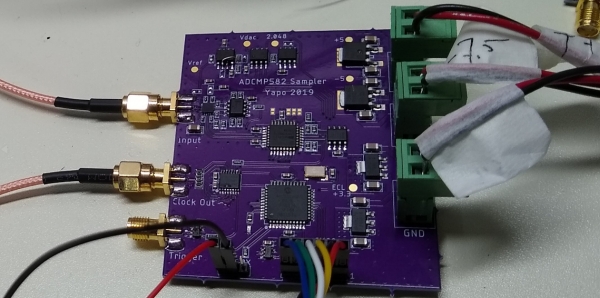
A basic open-source multi-GHz sampling oscilloscope for experimenters on a budget. Still a work-in-progress, with key pieces on separate PCBs, but showing bandwidths in the 7-8 GHz range with >= 100 GSa/s equivalent-time sampling, and around 500 k comparisons/second real time. So far.

8 GHZ SAMPLING OSCILLOSCOPE FOR EXPERIMENTS

Note: this writeup is somewhat out of date, as it doesn’t cover many results that I ended up discussing at Supercon 2019. Until I get a chance to update these pages, you can check out the video of my talk:

This project is the culmination of some of the experiments over on #The Rise and Fall of Pulses. It may or may not have been obvious what the goals of that project were, but this scope was one of  them. There are a handful of other designs in the pipeline as well at this stage, using various approaches to the GHz+ waveform sampling problem.

This particular project uses a latched comparator as a voltage sampler, specifically the ADCMP582 from Analog Devices. Built on SiGe, this $20 (single-quantity) comparator has a sampling aperture of 5 ps, and a typical front-end bandwidth of 8 GHz. This ultimately limits the bandwidth of the resulting instrument, but other factors in the current design reduce the system bandwidth into the 6 GHz range. Very preliminary tests estimate the rise time of the scope to between 50 and 70 ps, corresponding to between 7 and 5 GHz bandwidth, respectively. I’m calling it 6 GHz for now, and I expect it can be improved somewhat,

The basic idea is similar to a simple “toy” version I made on the other project with comparators I had on-hand at the time.

This project is a work-in-progress. Specifically, the first prototype that produced these results doesn’t have the capability to calibrate its own timebase, which experiences serious drift with temperature. I have a prototype of the timebase calibrator on another PCB, although the two have yet to be integrated. So, it’s not a scope you can just build and use quite yet.

Another thing that has yet to be integrated is an extended timebase that would allow you to capture longer sweeps. The first prototype is limited to sweeps of 10 ns, and while this is probably OK for many uses of a 6 GHz sampling oscilloscope, longer sweeps are sometimes very useful.

A word of caution: don’t get too excited about this project until you know the difference between a sampling oscilloscope and a real-time oscilloscope: they’re vastly different beasts, suited to different purposes, and behave in different ways. The ubiquity of cheap, real-time, (but low-bandwidth) digitizing scopes has created expectations that sampling scopes, or even analog scopes, can’t meet. For an introduction, you can check out this article on ElectronicDesign.

Read more: 8 GHZ SAMPLING OSCILLOSCOPE FOR EXPERIMENTS

The post 8 GHZ SAMPLING OSCILLOSCOPE FOR EXPERIMENTS appeared first on PIC Microcontroller.

AXIOMTEK’S I.MX 8M-BASED FANLESS EMBEDDED SYSTEM WITH E-MARK CERTIFICATION – AGENT336

$
0
0

Axiomtek – a world-renowned leader relentlessly devoted in the research, development and manufacture of series of innovative and reliable industrial computer products of high efficiency – is proud to launch the Agent336, its new RISC-based fanless embedded box PC certified with E-Mark for a variety of in-vehicle applications. The Agent336 measures only 164 x 118 x 44 mm and weight about 1.0kg. The cost-efficient embedded computer can withstand harsh operating environments with a wide operating temperature range of -40°C to +70°C and power input of 9 to 36V DC. This low power yet high-quality In-vehicle box computer is powered by the NXP i.MX 8M processor with the ARM® Cortex™-A53 microarchitecture and has a 3GB onboard LPDDR4 memory.

AXIOMTEK’S I.MX 8M-BASED FANLESS EMBEDDED SYSTEM WITH E-MARK CERTIFICATION – AGENT336

Axiomtek leverages its global expertise to provide complete product solutions for transportation applications. Our first-class transportation embedded box computers are easy to install and offer superior performance and reliability to thrive in harsh environments. Concerning the reliability and durability, the Agent336 comes with intelligent power management for ACC on/off delay, shutdown delay and over/under voltage protection. It runs on Linux (Yocto) and Android 8.1 operating systems. This IP40-rated RISC-based embedded gateway with strict certification is definitely the top choice for in-vehicle solutions, such as devices controller, fleet management, surveillance, and gateway.

“The Agent336 is an all-in-one, extremely small embedded box PC targeted at in-vehicle fields. It featuring tracking, monitoring and displaying functions in one system is well-suited for cold chain logistics and infotainment system, offering instant status reports, vehicle predictive maintenance and real-time vehicle dispatching and routing,” said Gordon Cho, a product manager of Embedded PM Division at Axiomtek. “This low power embedded platform features rich I/O interfaces with isolation protection to provide reliable system operation. For fleet management applications, the Agent336 offers flexible communication modules for 3G/4G, GPS and Wi-Fi connections. Moreover, when connecting to an LCD panel via HDMI, drivers can get visual information in time.”

The newest RISC-based Agent336 supports two RS-232/422/485 ports, one isolated DIO, one HDMI port, two USB 3.0 A-type ports, one console port, one Gigabit LAN port, one RTC battery, one reset button, and five antenna openings. One onboard 8GB eMMC and one Micro SD card socket are available for extensive storage needs. Additionally, the rugged embedded computer has high integration ability with two full-size PCI Express Mini Card slots and one SIM card, which makes it a professional embedded system for transportation applications.

Read more: AXIOMTEK’S I.MX 8M-BASED FANLESS EMBEDDED SYSTEM WITH E-MARK CERTIFICATION – AGENT336

The post AXIOMTEK’S I.MX 8M-BASED FANLESS EMBEDDED SYSTEM WITH E-MARK CERTIFICATION – AGENT336 appeared first on PIC Microcontroller.

ECONODUAL™ 3 WITH TRENCHSTOP™ IGBT7 FOR AN UNMATCHED 900 A POWER RATING

$
0
0

Infineon Technologies AG introduced the new IGBT7 chip for its well-known Easy housing platform in March. Now it is taking the state-of-the-art TRENCHSTOP™ IGBT7 to the arena of medium power: in the standard industry package EconoDUAL™ 3. In this chip technology, the 1200 V module provides a leading nominal current of 900 A enabling a 30 percent higher inverter output current for the same frame size compared with the former technology. While specific improvements of the module’s chip and housing directly aim at industrial drive applications, it can also be very well implemented in designs for commercial, construction and agricultural vehicles (CAV), servo drives, as well as solar and UPS inverters.

ECONODUAL™ 3 WITH TRENCHSTOP™ IGBT7 FOR AN UNMATCHED 900 A POWER RATING

Based on the new micro-pattern trench technology, the TRENCHSTOP IGBT7 chip performs with much lower static losses compared to the IGBT4. Its on-state voltage is reduced by up to 30 percent for the same chip area. This brings significant loss reduction in the application, especially for industrial drives, which usually operate at moderate switching frequencies. Additionally, the oscillation behavior and the controllability of the IGBT have been improved. The power modules feature a maximum allowed overload junction temperature of 175°C.

Another improvement concerns the freewheeling diode (FWD) which has also been optimized for drive applications. The forward voltage drop of the emitter-controlled 7 th generation diode (EC7) is now 100 mV lower than the forward voltage drop of the EC4 diode, with reduced oscillation tendency during diode turn-off.

Read more: ECONODUAL™ 3 WITH TRENCHSTOP™ IGBT7 FOR AN UNMATCHED 900 A POWER RATING

The post ECONODUAL™ 3 WITH TRENCHSTOP™ IGBT7 FOR AN UNMATCHED 900 A POWER RATING appeared first on PIC Microcontroller.

ULTRA-LOW DROPOUT LINEAR LED DRIVER FROM DIODES INCORPORATED EXTENDS LIGHTING STRIPS

$
0
0

Diodes Incorporated today announced the BCR430UW6 linear LED driver with ultra-low dropout voltage and constant current regulation between 5mA and 100mA. This combination allows more LEDs to be driven from a low supply voltage, making the BCR430UW6 suitable for applications that require multiple LEDs to operate together, such as signage illumination and architectural lighting for commercial and retail installations.

ULTRA-LOW DROPOUT LINEAR LED DRIVER FROM DIODES INCORPORATED EXTENDS LIGHTING STRIPS

The ultra-low dropout voltage of 115mV and low operating current of just 285μA provides a greater level of system efficiency and scope to drive more LEDs per string reliably. These factors are particularly important in applications where the characteristics of the lighting are essential to the user experience, such as signage and architectural illumination.

The device requires no external power transistors or capacitors, reducing the overall BoM cost and increasing system stability. Long-term reliability is also improved through the robust design, which is tolerant to overvoltage levels resulting from faults in the LEDs or supply transients. Integrated thermal protection limits the output current in the event of high operating temperatures, avoiding operational failure and maximizing the working lifetime of the LEDs.

Features

  • LED Current Tolerance of ±5% at 95mA Output Current
  • Thermal Protection Reduces LED Current at Elevated Temperature
  • Low Typical Saturation Voltage of 115mV at 50mA
  • 5mA to 100mA Adjustable LED Current with an External Resistor
  • 5V to 42V Supply Voltage
  • High Power 1W Dissipation in SOT26
  • No External Capacitors Required for Stable Operation
  • LED Dimming Using PWM
  • Parallel Devices to Increase Regulated Current

With an adjustable output current level between 5mA and 100mA, the BCR430UW6 can provide greater flexibility, allowing a single design to be used to drive various LED configurations. The output is highly stable, held at ±5% across temperature variations and supply voltage fluctuations. This stability delivers a uniform output lighting level under all operating conditions.

Read more: ULTRA-LOW DROPOUT LINEAR LED DRIVER FROM DIODES INCORPORATED EXTENDS LIGHTING STRIPS

The post ULTRA-LOW DROPOUT LINEAR LED DRIVER FROM DIODES INCORPORATED EXTENDS LIGHTING STRIPS appeared first on PIC Microcontroller.

MAXIM INTEGRATED MAX2270X ULTRA-HIGH CMTI ISOLATED GATE DRIVERS

$
0
0

Maxim MAX2270x Ultra-High CMTI Isolated Gate Drivers are single-channel isolated gate drivers with ultra-high common-mode transient immunity (CMTI) of 300kV/μs (typ). The devices are designed to drive silicon-carbide (SiC) or gallium-nitride (GaN) transistors in various inverter or motor control applications. All devices have integrated digital galvanic isolation using Maxim’s proprietary process technology. The devices feature variants with output options for gate driver common pin GNDB (MAX22700), Miller clamp (MAX22701), or adjustable under-voltage-lockout UVLO (MAX22702). Also, variants are offered as Differential (D versions) or Single-Ended (E versions) inputs. These devices transfer digital signals between circuits with different power domains. All of the devices feature isolation for a withstand voltage rating of 3kVRMS for 60 seconds.

MAXIM INTEGRATED MAX2270X ULTRA-HIGH CMTI ISOLATED GATE DRIVERS

Features

  • Matching propagation delay
    • 20ns minimum pulse width
    • 35ns propagation delay at room temperature
    • 2ns part-to-part propagation delay matching at room temperature
    • 5ns part-to-part propagation delay matching over -40°C to +125°C temperature range
  • Robust galvanic isolation
    • Withstands 3kVRMS for 60s (VISO)
    • Continuously withstands 848VRMS (VIOWM)
    • Withstands ±5kV surge between GNDA and VSSB with 1.2/50μs waveform
  • Precision UVLO
  • Options to support a broad range of applications
    • 3 Output options: GNDB, Miller Clamp, or Adjustable UVLO
    • 2 Input configurations: Single-Ended with Enable (E versions) or Differential (D versions)

All devices support a minimum pulse width of 20ns with a maximum pulse width distortion of 2ns. The part-to-part Propagation Delay is matched within 2ns (max) at +25°C ambient temperature, and 5ns (max) over the -40°C to +125°C operating temperature range. This feature reduces the power transistor’s dead time, thus improving overall efficiency. The MAX22700 and the MAX22702 have a maximum RDSON of 1.25Ω for the low-side driver, and the MAX22701 has an RDSON of 2.5Ω for the low-side driver. All devices have a maximum RDSON of 4.5Ω for the high-side driver.

Read more: MAXIM INTEGRATED MAX2270X ULTRA-HIGH CMTI ISOLATED GATE DRIVERS

The post MAXIM INTEGRATED MAX2270X ULTRA-HIGH CMTI ISOLATED GATE DRIVERS appeared first on PIC Microcontroller.

Viewing all 365 articles
Browse latest View live


<script src="https://jsc.adskeeper.com/r/s/rssing.com.1596347.js" async> </script>