Quantcast
Channel: temperature | Battery Guide
Viewing all 365 articles
Browse latest View live

ECONOMICAL SIGLENT SDS5000X 350MHZ-1GHZ OSCILLOSCOPES

$
0
0

Sampling at 5GSa/s with a standard record length of 250Mpts/channel, this series includes the first 1GHz oscilloscope made by Siglent.  The SDS5000X’s impressive waveform capture rate is up to 480,000 frames/sec with multiple powerful triggering modes.

ECONOMICAL SIGLENT SDS5000X 350MHZ-1GHZ OSCILLOSCOPES

Saelig Co. Inc. announces the new economical, high performance Siglent SDS5000X series of advanced digital storage oscilloscopes, which are available in 2 or 4 channel versions with bandwidths of 350MHz, 500MHz, and 1GHz– Siglent’s highest yet.  With a maximum sample rate of 5GSa/s, these premium scopes offer a maximum record length of 250Mpts to allow for deep memory investigation of glitches and infrequent events, and they also have the option of 16 digital channels for true mixed signal analysis. The SDS5000X series has a maximum waveform capture rate of up to 480,000wfm/s in Sequence Mode.  Visibility of waveforms is enhanced by a 256-level intensity-grading display function with a helpful color temperature display mode. The large 10.1’’ capacitive touch screen supports highly efficient multi-touch gestures, and a user-friendly single button feature for many commonly used functions.  This greatly enhances the operational ease of the SDS5000X series of instruments. An external mouse and keyboard can also be connected to add to their navigation and notation capabilities.

The SDS5000X’s innovative digital trigger system offers high sensitivity and low jitter, with multiple powerful trigger modes that include serial bus decode triggering, as well as edge, slope, pulse, window, runt, interval, dropout, pattern, qualified and video (HDTV supported). History waveform recording, Sequence acquisition, Search and Navigate functions all combine to allow extended waveform records to be captured, stored, and analyzed.

Read more: ECONOMICAL SIGLENT SDS5000X 350MHZ-1GHZ OSCILLOSCOPES

The post ECONOMICAL SIGLENT SDS5000X 350MHZ-1GHZ OSCILLOSCOPES appeared first on PIC Microcontroller.


Evaluate the Swiss precision for free!

$
0
0

Top-class calibrated humidity and temperature sensors Sensirion already gained many fans. Mainly thanks to a fact, that they´re not only “sensors” but a ready-made solution with a pre-amplifier, ADC and other circuits, which directly provide a final value in a digital form. That´s why it´s not necessary to solve input portion (noise, shielding, power supply, length of wires,…). Moreover, their long-term stability is verified in a praxis.

Evaluate the Swiss precision for free!

Features and usage of Sensirion sensors was introduced to you in many our articles. In the Sensirion portfolio can be found easily solderable types on a small PCB like for example SHT11(15) or SHT71 (75), as well as miniature types in SMT DFN packages like for example SHT21 (25) and also the new SHTC1. Small DFN package is practically impossible to solder manually, but it´s relatively easily manageable by means of a solder paste and a hot-air soldering station or ideally by a reflow in a hot-air oven.

Maybe, you´ve already noticed, that in many articles we also bring you a contest with a possibility to win free samples of a given component. We usually draw by lots 1-10 winners, which will directly receive free samples.

Still, if you´re seriously interested to try a given sample for a development of your (industrial) application, please contact us by e-mail. In many cases, we can provide you a given sample even if you wasn´t one of lucky winners of the contest.

Advantages / Features:

  1. miniature calibrated humidity and temperature sensors
  2. excellent price/ performance ratio
  3. excellent reliability and long-term stability
  4. 10-years industry proven technology
  5. extremely low power consumption
  6. high immunity to external disturbances (EMI/EMC)
READ  Building a Raspberry Pi Smart Home

For more detail: Evaluate the Swiss precision for free!

The post Evaluate the Swiss precision for free! appeared first on PIC Microcontroller.

KONTRON’S SMARC-SAMX8X FEATURES NXP I.MX8X LOW POWER SOC

$
0
0

Kontron has launched the “SMARC-sAMX8X” module with low power I.MX8X series processor. The SMARC module runs Linux on a dual- or quad Cortex-A35 i.MX8X SoC with up to 3GB LP-DDR4, up to 64GB eMMC, dual GbE controllers, and PCIe. Kontron’s SMARC-sAMX8X delivers NXP’s mid-range i.MX8X SoC package in an 82 x 50mm SMARC 2.0 form factor, just like Congatec’s Conga-SMX8X module. Other i.MX8X modules include a Qseven-based Conga-QMX8X COM announced at the same time as the Conga-SMX8X, plus Phytec’s phyCORE-i.MX 8X, Variscite’s VAR-SOM-MX8X, and the Toradex Colibri iMX8X and Digi ConnectCore 8X.

KONTRON’S SMARC-SAMX8X FEATURES NXP I.MX8X LOW POWER SOC

The I.MX8X SoC by NXP is clocked at 1.2GHz and it’s very power efficient. This SoC also includes a Cortex-M4 core for real-time duties. You have the following options to choose from: the quad-core i.MX8X QuadXPlus, the dual-core i.MX8 DualXPlus, and the dual-core i.MX8 DualX. All of the variants are available on the SMARC-sAMX8X module. The QuadXPlus and the DualX Plus model have 4-shader Vivante GT7000Lite GPU while the DualX has a 2-shader GT7000UltraLite GPU which is a low-performance and low-cost version.

The SMARC-sAMX8X module runs a Yocto project-based custom Linux flavor as many other I.MX8M do. It supports up to 64GB eMMC and sports with 3GB LP-DDR4 RAM while most of its competitors offer 2GB or 4GB. Though the downside is the lack of wireless option. Its -40 to 85°C operating temperature range is perfect for a lot of industrial applications, especially, when it’s designed for “networked terminal devices in industrial environments”.

Read more: KONTRON’S SMARC-SAMX8X FEATURES NXP I.MX8X LOW POWER SOC

The post KONTRON’S SMARC-SAMX8X FEATURES NXP I.MX8X LOW POWER SOC appeared first on PIC Microcontroller.

BLUEY, BLE DEVELOPMENT BOARD SUPPORTS NFC

$
0
0

are assistant tools that help engineers and enthusiasts to become familiarized with hardware development. They simplify the process of controlling and programming hardware, such as microcontrollers and microprocessors.

Electronut Labs, an embedded systems consulting company, had produced its new BLEdevelopment board “Bluey” with a set of useful sensors and NFC support.

BLUEY, BLE DEVELOPMENT BOARD SUPPORTS NFC 2

Bluey is an open source board that features the Nordic nRF52832 SoC which supports BLE and other proprietary wireless protocols. Bluey has built-in sensors that include temperature, humidity, ambient light and accelerometer sensors. Also, it supports NFC and comes with a built-in NFC PCB antenna.

BLUEY, BLE DEVELOPMENT BOARD SUPPORTS NFC 2

The nRF52832 SoC is a powerful, ultra-low power multiprotocol SoC suited for Bluetooth Low EnergyANT and 2.4GHz ultra low-power wireless applications. It is built around a 32-bit ARM Cortex™-M4F CPU with 512kB + 64kB RAM.

Bluey Specifications:

  • Nordic nRF52832 QFAA BLE SoC (512k Flash / 64k RAM)
  • TI HDC1010 Temperature/Humidity sensor
  • APDS-9300-020 ambient light sensor
  • ST Micro LSM6DS3 accelerometer
  • CREE RGB LED
  • CP2104 USB interface
  • 2 push buttons
  • Coin cell holder
  • Micro SD slot
  • 2.4 GHz PCB antenna
  • NFC PCB antenna

BLUEY, BLE DEVELOPMENT BOARD SUPPORTS NFC 2

Bluey can be programmed using the Nordic nRF5 SDK. You can upload the code with an external programmer such as the Nordic nRF52-DK, or the Black Magic Probe firmware on STM32F103 breakout. But, within the built-in OTA (over the air) bootloader, you can upload the code directly using a PC or a phone.

The sensors on the board require a minimum of 2.7 volts to function properly, and the maximum power is 6 volts. Bluey’s design offers three different ways to power it, all of them have a polarity protection:

  1. Using the 5V micro USB connector (which also gives you the option to print debug messages via UART).
  2. The + / – power supply pins which can take regular 2.54 mm header pins, a JST connector for a 3.7 V LiPo battery, or a 3.5 mm terminal block.
  3. A CR2032 coin cell for low power applications.
  4. You can use Bluey for a wide range of projects. The BLE part is ideal for IoT projects, or if you want to control something with your phone. The nRF52832 SoC has a powerful ARM Cortex-M4F CPU, so you can use this board for general purpose microcontroller projects as well.

Bluey is available for $29 for international customers from Tindie store. Indian customers can purchase it from Instamojo store. There are also discounts for bulk purchases. For more information about the board visit its github repository, where you will find a full guide to start and a bunch of demo projects.

Source: BLUEY, BLE DEVELOPMENT BOARD SUPPORTS NFC

The post BLUEY, BLE DEVELOPMENT BOARD SUPPORTS NFC appeared first on PIC Microcontroller.

DIY Internet connected smart humidifier

$
0
0

I worked on creating a Internet connected last week using my open source WiFi relay project as platform. We observe quite dry air at our house, I suspect this is due to the fact that we use fan coils for heating/cooling. Humidity levels at home are usually below the 30% mark, which poses a health risk along with uncomfortably dry air. I’ve found these interesting charts that got me convinced I need to do something:

DIY Internet connected smart humidifier

Low humidity helps spread virus/bacteria over air.

The comfortable zone for humans depends on the temperature, here is what it looks like for most of us:

We own a ultrasonic humidifier, but it has no setpoint, just on/off with intensity setting. Also, I’d like it to work only in certain times, not all of the time, so that called for using the WiFi thermostat scheduling function, only re-worked to take the humidity as to determine on/off state rather than temperature:

I realize there are homes with exact opposite problem, i.e. humidity is too high. For that reason I have a “Dry” function to use with  air drier as well so the relay will function using opposite logic i.e. activate when humidity is exceeded.

The project uses a DHT22 temperature sensor mounted to the side of the enclosure for better ventilation and reliable reading:

I threw in a ultra-cheap I2C OLED status display to get a visual reading. Milling the box so that the OLED shows was pretty nasty, hated it. I cut a piece of paper and placed it on top of the cover, below the transparent lid to cover up for the lousy milling job

For more detail: DIY Internet connected smart humidifier

The post DIY Internet connected smart humidifier appeared first on PIC Microcontroller.

CCS LM35 TEMPERATURE SENSOR EXAMPLE WITH PIC16F877 LCD

$
0
0

PIC16F877 and LM35 Temperature Sensor Application simple CCSC Example PIC16F877 10-bit ADC isbe used. Read the ADC result and the information is transferred to the 2X16 LCD temperature value is printed LM35 Digital... Electronics Projects, CCS LM35 Temperature Sensor Example with PIC16F877 LCD “ccs c examples, microchip projects, microcontroller projects, pic16f877 projects, “

TEMPERATURE SENSOR

PIC16F877 and LM35 Temperature Sensor Application simple CCSC Example PIC16F877 10-bit ADC is be used. Read the ADC result and the information is transferred to the 2X16 LCD temperature value is printed LM35 Digital conversion of the signal undergoes the process of calculating the voltage in mV each 1 degree increase 10mv

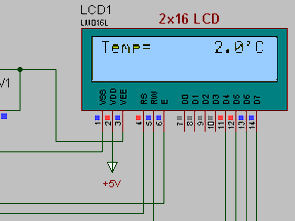
PIC16F877 LM35 LCD TEMPERATURE CIRCUIT SCHEMATIC

LCD TEMPERATURE CIRCUIT SCHEMATIC

PIC16F877 LCD CCS LM35 EXAMPLE TEST

Source: CCS LM35 TEMPERATURE SENSOR EXAMPLE WITH PIC16F877 LCD PIC16F877 LM35 example proteus isis simulation and CCS C source C code: ccs-lm35-temperature-sensor-example-with-pic16f877-lcd

Alternative File Download LINK list (in TXT format): LINKS-25270.zip

The post CCS LM35 TEMPERATURE SENSOR EXAMPLE WITH PIC16F877 LCD appeared first on PIC Microcontroller.

ACEINNA LAUNCHES INDUSTRY’S FIRST HIGH ACCURACY CURRENT SENSORS BASED ON AMR TECHNOLOGY

$
0
0

ACEINNA today announced its new MCx1101 family of ±5A, ±20A, and ±50A Current Sensors for industrial and power supply applications. The first high accuracy wide bandwidth AMR-based current sensors on the market, units and evaluation boards are available now for sampling and volume shipments.

ACEINNA LAUNCHES INDUSTRY’S FIRST HIGH ACCURACY CURRENT SENSORS BASED ON AMR TECHNOLOGY

Our new integrated, AMR based Current Sensor family provides the best performance for the price in the industry,

says Khagendra Thapa, VP Current Sensor Product for ACEINNA.

There are other AMR based current sensing solutions on the market, but they require a great deal of integration to make them work. Ours are plug and play.

The MCx1101 are fully integrated, bi-directional current sensors that offer much higher DC accuracy and dynamic range compared with alternative solutions. For example, the ±20A version has a typical accuracy of ±0.6% and are guaranteed to achieve an accuracy of ±2.0% (max) at 85°C.

These new current sensors also guarantee an offset of ±60mA, or ±0.3% of FSR (max) over temperature, which means that high accuracy can be achieved over a roughly 10:1 range of currents. This is a roughly 10x improvement in dynamic range vs. leading Hall-sensor-based devices.

These devices deliver a unique combination of high accuracy, 1.5MHz signal bandwidth with industry benchmark phase shift vs. frequency and 4.8kV isolation making them ideal for high- and low-side sensing in fast current control loops for high performance power supplies, inverters and motor control applications.

The fast response and high bandwidth of the MCx1101 is also ideal for fast switching SiC and GaN based power stages enabling power system designers to make use of the higher speeds and smaller components enabled by wide band-gap switches. Output step response time is 0.3us. The MCx1101 also provides an integrated over current detection flag to help implement OCP (Over Current Protection) required in modern power systems. Over current detection response time is fast 0.2us.

Read more: ACEINNA LAUNCHES INDUSTRY’S FIRST HIGH ACCURACY CURRENT SENSORS BASED ON AMR TECHNOLOGY

The post ACEINNA LAUNCHES INDUSTRY’S FIRST HIGH ACCURACY CURRENT SENSORS BASED ON AMR TECHNOLOGY appeared first on PIC Microcontroller.
RENESAS ELECTRONICS RAA210925 DC/DC POWER MODULES

$
0
0

Renesas Electronics RAA210925 DC/DC Power Modules with PMBus Interface are pin-strap configurable dual 25A step-down PMBus-compliant DC/DC power supply modules. These power modules integrate a digital PWM controller, power inductor, synchronous MOSFETs, and passive components. The RAA210925 power modules deliver up to 25A of continuous output current without the need for additional heat sinking or airflow. These power modules offer an upgrade to full PMBus configuration through the pin-compatible ISL8274M.

RENESAS ELECTRONICS RAA210925 DC DC POWER MODULES

The RAA210925 power modules feature a unique ChargeMode™ control loop architecture and complete over/undervoltage, current, and temperature protections. The ChargeMode control architecture can support switching frequencies up to 1067kHz and provides a single clock cycle response to an output load step.

Features

  • 25A/25A dual-channel output current4.5V to 14V single rail input voltage
  • Up to 95.5% efficiency
  • Programmable output voltage:0.6V to 5V output voltage settings
  • ±1.2% accuracy over line/load/temperature
  • ChargeMode control loop architecture:296kHz to 1067kHz fixed switching frequency operations
  • No compensation required
  • Fast single clock cycle transient response
  • PMBus interface and/or pin-strap mode:Programmable through PMBus
  • Pin-strap mode for standard settings
  • Real-time telemetry for VIN, VOUT, IOUT, temperature, duty cycle, and fSW
  • Complete over/undervoltage, current, and temperature protections with fault logging
  • PowerNavigator supported
  • Thermally enhanced 18mm x 23mm x 7.5mm HDA package

The RAA210925 power modules are supported by PowerNavigator™ software, a Graphical User Interface (GUI) that configures modules for desired solutions. These power modules are available in a low profile, compact 18mm x 23mm x 7.5mm thermally enhanced HDA package. Typical applications include server, datacom, storage, industrial/ATE and networking equipment, and general purpose power for ASIC, DSP, FPGA, and memory.

Read more: RENESAS ELECTRONICS RAA210925 DC/DC POWER MODULES

The post RENESAS ELECTRONICS RAA210925 DC/DC POWER MODULES appeared first on PIC Microcontroller.


Newly Developed Internal Temperature Sensor For Li-ion Battery Enables 5x Faster Charging

$
0
0

Researchers at the University of Warwick in the UK have developed sensors which measure the internal temperature and electrode potential of Lithium batteries. The technology is being developed by the Warwick Manufacturing Group (WMG) as a part of a battery’s normal operation. More intense testings have been done on standard commercially available automotive battery cells.

Newly Developed Internal Temperature Sensor For Li-ion Battery Enables 5x Faster Charging

If a battery overheats it becomes a risk for critical damage to the electrolyte, breaking down to form gases that are both flammable and can cause significant pressure build-up inside the battery. On the other hand, overcharging of the anode can lead to Lithium electroplating, forming a metallic crystalline structure that can cause internal short circuits and fires. So, overcharging and overheating of a Li-ion battery is hugely damaging to the battery along with the user.

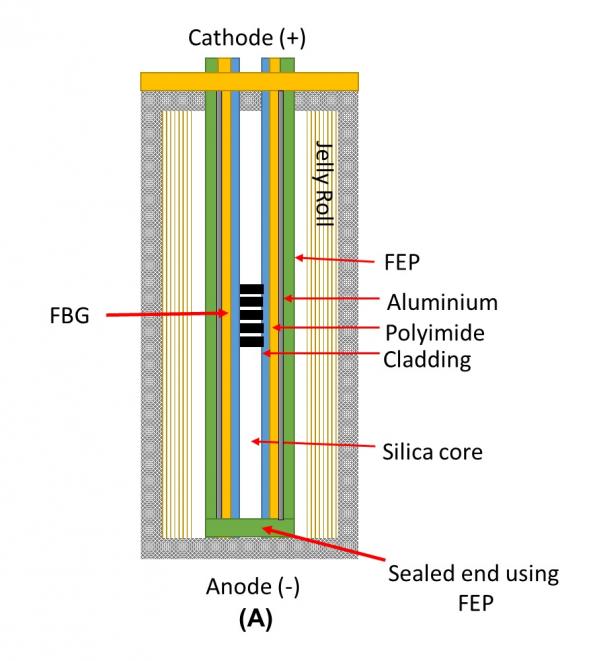
The researchers at Warwick developed miniature reference electrodes and Fiber Bragg Gratings (FBG) threaded through a strain protection layer. An outer coat of Fluorinated Ethylene Propylene (FEP) was applied over the fiber, ensuring chemical protection from the corrosive electrolyte. The end result is a sensor which has direct contact with all the key components of the battery. The sensor can withstand electrical, chemical and mechanical stress faced during the normal operation of the battery while still giving accurate temperature and potential readings of the electrodes.

The device includes an in-situ reference electrode coupled with an optical fiber temperature sensor. The researchers are confident that similar techniques can also be developed for use in pouch cells. WMG Associate Professor Dr. Rohit Bhagat said,

Read more: Newly Developed Internal Temperature Sensor For Li-ion Battery Enables 5x Faster Charging

The post Newly Developed Internal Temperature Sensor For Li-ion Battery Enables 5x Faster Charging appeared first on PIC Microcontroller.

With the WIZ550WEB module you’re immediately on the web

$
0
0

To administrate devices through a web interface is simple, fast and comfortable. Also can be added, that it´s a solution that saves time and money and in a vast majority of cases it´s beneficial for a producer and also a customer. Besides common “network devices” for example for data acquisition (telemetry – when we want a device to send measured data), a network connectivity is still more used at devices, whose functionality is not dependent on a web connection. Usually here belong devices, where this “extra functionality” brings several advantages.

With the WIZ550WEB module you’re immediately on the web

Example of such device can be for example a heating boiler, where a user can comfortably monitor its operation and change temperature and in case of a required service a producer can diagnostic the device remotely – without a costly personal inspection.

Novelty in this field is the WIZ550WEB module based on the W5500 chip (10/100 Mbps) from company Wiznet and the STM32F103RBT6 MCU. Hardwired core is highly stable and resistant to attacks. By means of the WIZ550WEB module you can use 16 digital I/O pins and 4 analogue inputs. It also supports serial configuration via AT commands.

The simplest way to start is to use a rich-featured development board Wiz550WEB-EVB with 8 output relays, 8 digital inputs with optocouplers (TLP290-4) and 4 analogue inputs (0-12V).

Detailed information will provide you documents Wiz550WEB_datasheetWiz550WEB_getting_startedand Wiz550WEB_users_guide. Also useful are Wiz550WEB and EVB kitu schematics.

Latest information and source codes can be found at https://github.com/Wiznet/WIZ550web.
In case of interest, please contact us at info@soselectronic.com.

Advantages / Features:

  1. embedded web server based on the W5500 chip
  2. high stability and security thanks to a hard-wired solution
  3. simply usable module for Ethernet connection
  4. 16 configurable I/O pins and 4 analogue inputs
  5. 4GB microSD card included
  6. also available is a rich-featured evaluation board

For more detail: With the WIZ550WEB module you’re immediately on the web

The post With the WIZ550WEB module you’re immediately on the web appeared first on PIC Microcontroller.

A MINIATURE MICROFLUIDICS HEAT SINK FOR HIGH-PERFORMANCE CHIP COOLING

$
0
0

At the Embedded World Conference 2019, imec, a world-leading research and innovation hub in nanoelectronics and digital technologies, presents a silicon-based compact microchannel heat sink that enables high heat flux dissipation.

A MINIATURE MICROFLUIDICS HEAT SINK FOR HIGH-PERFORMANCE CHIP COOLING

The imec heat sink assembled to a high performance chip for cooling the latter one achieves a low total thermal resistance of 0,34K/W to 0.28K/W at less than 2 W pump power. The advantages of using silicon (Si) technology for fabricating microchannels are reflected in the high quality and low cost of the final devices. Imec’s chip cooler may be the answer for the heat challenge that the new generation of power electronics and systems in a Package are faced with.

The downscaling of integrated chips and their packaging is a major trend in the electronics industry. However, with the resulting ever-increasing power density come detrimental heat effects that impact the reliability and performances of the devices. Liquid is more effective in removing that heat compared to air, because of its higher thermal conductivity and specific heat capacity.  Silicon as a material is a relatively good heat conductor. The use of small, parallel, high-aspect-ratio silicon microchannel structures of 32µm wide and more than 260µm deep in imec’s chip cooler further increases the convective heat transfer surface area and the heat transfer coefficient, enabling high heat flux removal. This makes it possible to dissipate power of more than 600W/cm2 while keeping the component temperature below 100°C.

The key attribute of silicon is that it can realize high-aspect-ratio microstructures at low cost by leveraging massively parallel production processes and is directly integrable in the semiconductor infrastructure. In the current version, the Si-based microchannel heat sinks are fabricated separately and then interfaced to the back side of a heat-dissipating chip. Using an optimized Cu/Sn-Au interface, imec achieves a very low thermal contact resistance between both parts. Finally, since the fluidic performance and thermal behavior can be predicted with high degree of accuracy, imec’s microcooler can also be tailored according to external system constraints such as space and liquid supply.

Read more: A MINIATURE MICROFLUIDICS HEAT SINK FOR HIGH-PERFORMANCE CHIP COOLING

The post A MINIATURE MICROFLUIDICS HEAT SINK FOR HIGH-PERFORMANCE CHIP COOLING appeared first on PIC Microcontroller.
CONGATEC ANNOUNCES A COM EXPRESS TYPE 7 MODULES FOR THE AIRCRAFT INDUSTRY

$
0
0

A new milestone is hit by Congatec, as they recently announced Type 7 modules. Congatec has struggled hard to take Linux friendliness to the very next level and to make server response to quickest possible till date. To do that, two Type 7 modules are introduced to the market which provide support of up to 96GB DDR4 and designed for converged edge servers in aircraft.

CONGATEC ANNOUNCES A COM EXPRESS TYPE 7 MODULES FOR THE AIRCRAFT INDUSTRY

The two modules introduced are:

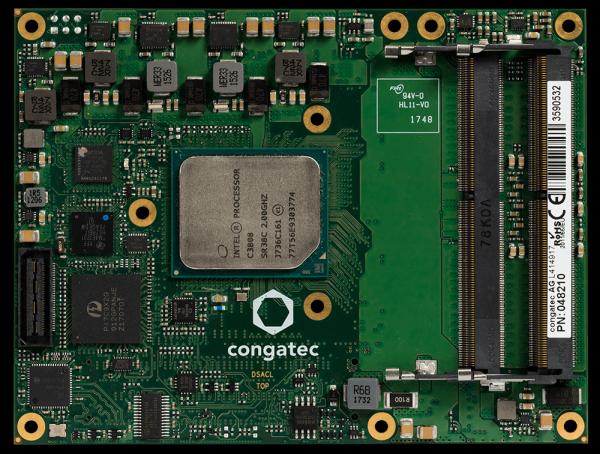
  • Conga-B7XD – Intel Xeon D and Pentium D based Conga-B7XD
  • Conga-B7AC – Intel Atom C3xxx based Conga-B7AC

Congatec has not competed for COM express in the past. But the game is interesting now, as they got themselves prepare for the race. That’s good for inventions. To cope up with the market, they also introduced a Windowssupported version of type 7 module, in addition to the Linux. These are specially designed to run in aircraft computers, to make them extra efficient.

Conga-B7XD & Conga-B7AC COMs

Conga-B7XD board is the first one we will take a look and uses a Xeon D 15xx based core. While, Conga-B7AC, the second one is an Atom C3xxx based. It has an inbuilt memory of DDR4 type, ranging up to 96 GB DDR4 SODIMMs which are available via 3x 32GB-ready sockets. The 12 virtual machines on the system now can use 8GB RAM on each partition.

These new set of modules will excel in applications like augmented reality, airborne platforms for connected aircraft, passenger infotainment, Big Data applications, video surveillance, cloud-based flight data recordings, AI-based virtual assistants for improving pilot productivity and efficiency, and similar because of their demand for higher performance and memory, which is something the new Congatec easily cater for.

Due to its use in highly sophisticated devices, like the cockpit and streaming devices, their durability for temperature ranges and vibrations have builtin. Temperature range is matched from 0 to 60°C or an industrial -40 to 85°C, depending on the processor type. While hard sort of vibration and shockproof material is used, all of this together makes it a powerful device to have.

Read more: CONGATEC ANNOUNCES A COM EXPRESS TYPE 7 MODULES FOR THE AIRCRAFT INDUSTRY

The post CONGATEC ANNOUNCES A COM EXPRESS TYPE 7 MODULES FOR THE AIRCRAFT INDUSTRY appeared first on PIC Microcontroller.

BOURNS LAUNCHES ULTRA-LOW 0.15 PSI PRESSURE SENSOR

$
0
0

Bourns, Inc., a leading manufacturer and supplier of electronic components, today announced the expansion of its line of environmental sensors adding an ultra-low 0.15 to 1.0 PSI pressure sensor. Bourns® Models BPS110/BPS120 pressure sensors are based on state-of-the-art Micro-Electro-Mechanical Systems (MEMS) technology, which provides extremely accurate condition readings in a miniature package size. Designed to deliver superior performance in applications where precision is essential, Models BPS110/BPS120 offer fully calibrated and compensated output for more efficient processes as well as long-term stability for reliable repeatability. These features make Bourns’ new pressure sensor an ideal solution for a range of industrial, consumer and medium/low-risk medical* designs including portable oxygen generators, nebulizers, CPAP equipment, diagnostic spirometers and gas chromatography equipment.

BOURNS LAUNCHES ULTRA-LOW 0.15 PSI PRESSURE SENSOR

What sets Bourns apart is our strict attention to quality and expert technical support all backed by Bourns’ global supply chain,” said Alain Leon, Sensors & Controls Product Line Manager at Bourns, Inc. “Another benefit is we are able to leverage Bourns’ decades of medical market experience in meeting new application needs for highly accurate, miniaturized and sensitive sensor technologies that help designers advance and expand healthcare device and equipment usage.

Bourns Models BPS110/BPS120 feature extreme sensitivity and stability with a Total Error Band (TEB) of 1.5 % FS over a temperature range of 0 °C to +60 °C (Six-Sigma process), and lifetime drift of 0.5 % FS. The new sensor models help to minimize system calibration needs, and help support system uptime. Its compensated plug and play shorten development time, and offers excellent design flexibility for use in either analog (BPS110) or digital systems (BPS120) where an amplified, calibrated pressure signal can be acquired from the digital interface or analog output.

Read more: BOURNS LAUNCHES ULTRA-LOW 0.15 PSI PRESSURE SENSOR

The post BOURNS LAUNCHES ULTRA-LOW 0.15 PSI PRESSURE SENSOR appeared first on PIC Microcontroller.

TDK CLAIMS SMALLEST POINT-OF-LOAD DC-DC CONVERTER

$
0
0

µPOL DC-DC converters bring highest power density to space-constrained apps

TDK Corporation announces the new series of µPOL™ DC-DC converters, the industry’s most compact and highest power density point-of-load solutions for applications such as big data, machine learning, artificial intelligence (AI), 5G cells, IoT and computing enterprise.

TDK CLAIMS SMALLEST POINT-OF-LOAD DC-DC CONVERTER

Rather than using side by side discrete integrated circuit (IC) and discrete inductor (L) the new FS series integrates the IC and inductor in a compact configuration which offers a high-density solution for space-constrained applications requiring a low-profile power source.

At 3.3 x 3.3 x 1.5 mm, they minimize the required external components, retaining the highest possible performance while offering a simplified design for ease of integration. This family can deliver a high density solution of 1 watt per mm3, while offering 50% less solution size than the other products available in its class. As a result, this minimizes system solution cost, reduces board size and assembly costs, as well as BOM and PCB costs. It operates at a broad junction temperature range, from -40 °C to 125 °C. Mass production of FS1406 is expected to begin in Q3 2019.

TDK has been developing patents related to these innovations (US 9,729,059 and US 10,193,442) over several years. µPOL™ were developed by TDK’s group company Faraday Semi. These new solutions incorporate high-performance semiconductors in advanced packaging technologies such as semiconductor embedded in substrate (SESUB) and advanced electronic components to achieve unique system integration in a smaller size and lower profile by 3D integration. This integration allows TDK to deliver higher efficiency and ease of use at a lower total system cost to what is currently available today.

Read more: TDK CLAIMS SMALLEST POINT-OF-LOAD DC-DC CONVERTER

The post TDK CLAIMS SMALLEST POINT-OF-LOAD DC-DC CONVERTER appeared first on PIC Microcontroller.
INFINEON CLAIMS INDUSTRY’S FIRST TRUE 1000A VOLTAGE REGULATOR FOR AI

$
0
0

Adding to its high current system chipset portfolio, Infineon claims to offer the industry’s first 16-phase digital PWM multiphase controller.

INFINEON CLAIMS INDUSTRY’S FIRST TRUE 1000A VOLTAGE REGULATOR FOR AI

The XDPE132G5C extends the existing portfolio which enables currents of 500 to 1000A and above for next generation CPUs, GPUs, FPGA and ASICs used in artificial intelligence (AI) and 5G datacomms applications.

It has been introduced as CPU current requirements increase to enable next-generation AI and networking workloads, DC/DC voltage regulators to deliver more than 500A to the load. The XDPE132G5C has a true 16-phase digital PWM engine and an improved advanced transient algorithm to address these high phase count requirements, says Infineon. The true active current sharing between phases enables a reliable, compact and cost-saving design, with no need for extra logic doubler ICs.

The XDPE132G5C offers fine V out setting in 0.625mV increments to meet the demands of ASICs and FPGAs of V out control in less than 1mV steps, seen in communication systems today. The XDPE132G5C also supports auto-restart for communications with options to reduce remote site maintenance following power or system glitches.

The XDPE132G5C is packaged in a 7.0 x 7.0mm 56-pin QFN to accommodate 16 phases. It employs a full digital and programmable load line and is PMBus 1.3/AVS-compliant.

Infineon advises that it can be paired with TDA21475, the thermally efficient integrated current sense power stage, to efficiently deliver over 1000A.

The 70A-rated TDA21475 power stage is housed in a 5.0 x 6.0mm package. It provides efficiency of more than 95 per cent. The exposed top significantly reduces the R th(j-top) from 19 degrees C/W in the over-moulded package to 1.6 degrees C/W. This removes heat from the top of the package, for voltage regulator power density and optimal phase count and footprint. The TDA21475 also offers smart over-current and over-voltage protection and delivers temperature and current information to the XDPE132G5C controller.

Read more: INFINEON CLAIMS INDUSTRY’S FIRST TRUE 1000A VOLTAGE REGULATOR FOR AI

The post INFINEON CLAIMS INDUSTRY’S FIRST TRUE 1000A VOLTAGE REGULATOR FOR AI appeared first on PIC Microcontroller.


MEC extender – and you’re a level higher

$
0
0

We already know, that Switches MEC Unimec switch in up to eight ways and also that they´re available as momentary or alternate (latching). UNIMEC switches feature perhaps only one “disadvantage” – that on the same PCB no other higher components can be used (which would be higher than the switch).

MEC extender – and you’re a level higher

If you´re satisfied with the UNIMEC features, but despite that you cannot use them in your application right for their (low) height, we have for you a solution. It is based on usage of the „16270 extender“. In combination with any right-angle cap of the 16300 series and with a prolonged bezel 16324 (16325,16326) we gain by this combination a switch higher in 4.5 mm. This simple solution is also suitable for cases don´t have high components on a PCB but from any reason it´s advantageous, when some room will be left between a front panel and a PCB (for cooling, …)

Detailed information will provide you the MEC 16324-16326 brochure and the Unimec datasheet.
Selected types are in stock and upon request we´re able to provide you any other components from MEC. In case of interest, please contact us at info@soselectronic.com

Advantages / Features:

  1. extender 16270 to gain extra 4.5mm to the height of the switch
  2. for all caps of the 16300 series
  3. quality 2-pole switches
  4. 250 mA/120V, 9W AC, 6W DC
  5. 8 ways to connect
  6. gold- or silver-coated contacts
  7. high-temperature version is also available (up to 160°C)
  8. momentary/ latching-alternate version
  9. IP54 protection
  10. with or without LED indication

For more detail: MEC extender – and you’re a level higher

The post MEC extender – and you’re a level higher appeared first on PIC Microcontroller.

HOW TO MAINTAIN A REFLOW OVEN?

$
0
0

Proper reflow oven maintenance can extend its life cycle, keep the machine in good condition, and improve production efficiency and product quality. One of the most important tasks for properly maintaining a reflow oven is remove the built-up flux residue inside the oven’s chamber. Although there is a flux collection system in modern reflow machines, there still is a big probability that flux will adhere to the inert air ventilation pipe and thermal regulator panel. This will cause inaccurate thermal data readings and the thermal controller will make the wrong adjustment instructions.

HOW TO MAINTAIN A REFLOW OVEN

The Following Is A List Of Daily, House-Keeping Tasks To Be Accomplished For Maintaining A Reflow Oven:

  • Clean and wipe down the machine daily. Make a neat workplace.
  • Check conveyor chains, sprockets, mesh and the automatic lubrication system. Add lubricate oil on time.
  • Clean the photoelectric switches which detect whether a board is within or outside of the reflow oven.

Additional Maintenance Tasks Include:

  • Once the chamber temperature decreases to room temperature, open the hood and clean the inside surface of chamber with a proper cleaning agent.
  • Clean the ventilation pipe with a cleaning agent.
  • Vacuum the chamber and remove the flux residue and soldering balls.
  • Check and clean the air blower.
  • Check and replace the air filter.

The Following Table Is A Typical Lubrication Schedule Example:

Description –  Period – Recommended lubricant

  1. Head sprocket, bearings and adjustable chain – Every Month – Calcium-based lubricant ZG-2
  2. Timing chain, bearings, and tension pulley
  3. Guide, mesh, and cylinder bearing
  4. Conveyor bearings
  5. Ball screw
  6. PCB carrier chain – Every day – Dupont Krytox GPL107
  7. Inert ball screw and guider – Every week – Dupont Krytox GPL227
  8. Guider support

Read more: HOW TO MAINTAIN A REFLOW OVEN?

The post HOW TO MAINTAIN A REFLOW OVEN? appeared first on PIC Microcontroller.

SECO “SBC-C43” MODULE FEATURES CORTEX-A72 ENABLED I.MX8.

$
0
0

Seco is developing a 3.5-inch “SBC-C43”, which runs Linux or Android on an up to hexa-core i.MX8, offering up to 8GB soldered DDR4 and 32GB eMMC plus WiFi/BT, 2x GbE, 3x USB, HDMI 2.0 in and out, 2x M.2, and -40 to 85°C support. Seco’s 3.5-inch SBC enables soldered memory and optional industrial temperature support. It’s built to support medical devices, digital signage, edge computing, industrial automation, IoT, smart vision, and vending.

SECO “SBC-C43” MODULE FEATURES CORTEX-A72 ENABLED I.MX8.

There has been a host of compute modules based on the Cortex-A72 enabled i.MX8, like the Variscite’s VAR-SOM-MX8 and SPEAR-MX8, but Seco’s 3.5-inch SBC-C43, is the first SBC we have come a-cross to feature the Cortex-A72 enabled i.MX8. The Seco SBC-C43 enables NXP’s default Yocto Project Linux stack and also Wind River Linux and Android.

The SBC supports all three variants of i.MX8, inclusive of the QuadMax with 2x Cortex-A72 cores and 4x Cortex-A53 cores, the QuadPlus which features a single Cortex-A72 and 4x -A53, and the Quad with no -A72 cores and 4x -A53. The clock rates were not listed but judging from Toradex’s Apalis iMX8 module that clocks the -A72 cores at 1.6GHz and the -A53 cores at 1.26GHz, we can say the SBC-C43 will clocked within that range. The three models also feature 2x Cortex-M4F real-time cores as well as 2x Vivante GPU/VPU cores.

The QuadMax incorporates the GC7000XSVX GPU, but the other two models have the Lite version. The video support is the same, but with 4K30 decoding and the capacity to drive up to 4x displays simultaneously. However, the 4K resolution is being shared between the different outputs. The SBC-C43 enables up to 8GB DDR4 and up to 32GB eMMC, which are soldered to the board for a greater durability.

Read more: SECO “SBC-C43” MODULE FEATURES CORTEX-A72 ENABLED I.MX8.

The post SECO “SBC-C43” MODULE FEATURES CORTEX-A72 ENABLED I.MX8. appeared first on PIC Microcontroller.

CIPOS™ MICRO IPMS ARE QUALIFIED FOR HARSH ENVIRONMENTS

$
0
0

600V intelligent power modules (IPMs) from Infineon make up the CIPOS Micro IPMs. They are qualified for harsh humid environments, passing 1000 hours of high voltage, high temperature and high humidity reverse bias (HV H3TRB) stress testing.

CIPOS™ MICRO IPMS ARE QUALIFIED FOR HARSH ENVIRONMENTS

This makes the energy-efficient IPM suitable for power appliance motor drives particularly in circulator hydronic pumps, drain pumps for washing machines, dishwashers, and kitchen hoods. They can also be used in air conditioning fans, refrigerator compressors, and motorised blinds.

The CIPOS Micro IM231 series features the latest motor drive TrenchStop6 IGBT and optimised switching characteristics for higher efficiency and low EMI. At 2kV, the CIPOS Micro IPMs offer the highest UL1557-certified isolation voltage in its class, claims Infineon.

The series comprises 4A (IM231-M6S1BIM231-M6T2B) and 6 A (IM231-L6S1BIM231-L6T2B) models. The CIPOS Micro IM231 is offered in both, through-hole and surface mount form factors. For a smarter design, says Infineon, there is a built-in UL certified NTC thermistor, anti-shoot through and over-current protection and fault reporting. The IPM can be implemented in applications with or without heatsink, pushing power up to 450W.

The anti shoot-through prevents spurious simultaneous turn on of high and low side IGBTs caused by malfunction of the microcontroller or external noise, explains Infineon. In addition, the integrated current protection has a high accuracy of +/-5 per cent. Above that, multiple markets ranging from 100 to 230V AC can be addressed with the same IPM package and an identical PCB design for an easy design-in and fast time to market.

Read more: CIPOS™ MICRO IPMS ARE QUALIFIED FOR HARSH ENVIRONMENTS

The post CIPOS™ MICRO IPMS ARE QUALIFIED FOR HARSH ENVIRONMENTS appeared first on PIC Microcontroller.

BOXER-8130AI: MACHINE VISION THAT SEES THE WHOLE PICTURE

$
0
0

AAEON, a leading developer in AI and Industry 4.0 solutions, announces the BOXER-8130AI, the newest product in our line of compact, fanless embedded Edge AI systems. Powered by NVidia Jetson TX2, the BOXER-8130AI is perfect for machine vision and AIoT gateway applications.

BOXER-8130AI MACHINE VISION THAT SEES THE WHOLE PICTURE

The BOXER-8130AI features the powerful NVidia Jetson TX2 CPU paired with 8GB LPDDR4 memory and 32GB eMMC storage onboard. With two processors onboard, the Dual Denver 2 and Quad ARM 57 processors, the NVidia Jetson TX2 is capable of supporting up to 256 CUDA cores and supports AI frameworks such as TensorFlow and Caffe. The BOXER-8130AI can even be configured to support a customer’s own AI interface software.

The BOXER-8130AI is built to easily integrate into any environment. Featuring six MIPI CSI-2 interfaces, the BOXER-8130AI can support up to six MIPI cameras. The BOXER-8130AI is also built for easy maintenance, with an SD Card slot, USB OTG, remote ON/OFF and almost all of its I/O ports together on one side. The BOXER-8130AI also features two antenna ports, perfect for mobile or AIoT gateway applications.

The BOXER-8130AI keeps the built tough design that the AAEON BOXER family is built on. It is capable of operating in temperature ranges from –20°C to 55°C and features a wide input voltage range of 9~24 VDC. Its fanless design also keeps dust and other contaminants from affecting operation, perfect for the harsh requirements of industrial embedded applications.

Speaking on the BOXER-8130AI, AAEON Product Manager Ken Pan said,

This is the perfect system for customers who are looking for a compact and rugged embedded AI Edge solution.

Read more: BOXER-8130AI: MACHINE VISION THAT SEES THE WHOLE PICTURE

The post BOXER-8130AI: MACHINE VISION THAT SEES THE WHOLE PICTURE appeared first on PIC Microcontroller.

Viewing all 365 articles
Browse latest View live


<script src="https://jsc.adskeeper.com/r/s/rssing.com.1596347.js" async> </script>