Quantcast
Channel: temperature | Battery Guide
Viewing all 365 articles
Browse latest View live

MEET VAR-SOM-MX8M-MINI; LATEST SOM BASED ON NXP’S I.MX 8M MINI PROCESSOR

$
0
0

Variscite, the popular SOM manufacturer recently announced the launch of their new, NXP’s i.MX 8M Mini processor-powered SOM called; the VAR-SOM-MX8M-MINI System on Module. The new SOM which was designed to suit a wide range of applications, from consumer electronics to industrial automation, offers a low-power and cost-optimized SOM solution with ultimate scalability options that make it suitable for the technical and cost requirements of diverse applications.

MEET VAR-SOM-MX8M-MINI; LATEST SOM BASED ON NXP’S I.MX 8M MINI PROCESSOR

The new SOM was designed as an upgrade to the DART-MX8M-MINI which was released last year and even though it is based on the same processor,  the VAR-SOM Mini comes with some level of difference including a VAR-SOM Pin2Pin Product family compatible form factor to serve customers with flexible size/shape requirements for their final Product.

Thanks to the to 1.8GHz Quad-core ARM Cortex-A53 plus a 400MHz Cortex-M4 real-time processor, the VAR-SOM-MX8M-MINI provides developers with a variety of communication interfaces including; a certified single band 802.11 b/g/n or dual-band 802.11 ac/a/b/g/n, 4.2 Bluetooth/BLE, Gigabit Ethernet, dual USB2.0, CAN bus and LVDS. In addition, the SoM supports a temperature range of -40 to 85°C (which makes it suitable for use in certain industrial settings) and integrates hardware engines to support high level 1080p video encoding and decoding, HQ audio, 2D and 3D graphics, and an integrated resistive touch panel.

A highlight of some of the features of the SOM is provided below:

  • NXP i.MX 8M Mini, up to 1.8GHz Quad-Core Cortex-A53
  • Real-time 400MHz Cortex-M4 co-processor
  • 24-bit LVDS/DSI display
  • 2D/3D graphics acceleration
  • Up to 4GB DDR4, 64GB eMMC, 512 MB NAND
  • 1080p60 H.265/H.264/VP9 Decode, 1080p60 H.264/VP8 Encode
  • HQ audio in/out
  • Gigabit Ethernet, 2x USB 2.0, PCI-E
  • Camera in: 1x MIPI-CSI2
  • Certified single band 802.11 b/g/n or dual-band 802.11 ac/a/b/g/n
  • Digital/Analog Input, CAN Bus, UART, SPI, I2C, SD/MMC, integrated resistive/capacitive touch
  • Temperature range -40 to 85° C
  • OS: Linux, Android

Read more: MEET VAR-SOM-MX8M-MINI; LATEST SOM BASED ON NXP’S I.MX 8M MINI PROCESSOR

The post MEET VAR-SOM-MX8M-MINI; LATEST SOM BASED ON NXP’S I.MX 8M MINI PROCESSOR appeared first on PIC Microcontroller.


3D SILICON-INTEGRATED MICROCAPACITORS HAVE UNPRECEDENTED PERFORMANCE

$
0
0

Picosun Group, global provider of leading AGILE ALD® (Atomic Layer Deposition) thin film coating solutions, reports record performance of silicon-integrated, three-dimensional deep trench microcapacitors manufactured using its ALD technology.

3D SILICON-INTEGRATED MICROCAPACITORS HAVE UNPRECEDENTED PERFORMANCE

Increasing efficiency and performance demands of portable and wearable electronics, along with their shrinking size in accordance with the Moore’s law, set new challenges to the power management of these devices as well. A solution is further integration of the devices’ key components into so-called SiP (systems-in-package) or SoC (systems-on-chip) architectures, where everything, including the energy storage such as batteries or capacitors, is packed close to each other into one compact, microscale-miniaturized assembly. This calls for novel techniques to increase the performance and shrink the size of the energy storage unit as well. Three-dimensional, high aspect ratio and large surface area deep trench microcapacitors where ultra-thin, alternating layers of conducting and insulating materials form the energy storing structure, provide a potential solution.

Picosun’s ALD technology has now realized unprecedented performance of these 3D microcapacitors. PICOSUN® ALD equipment were used to deposit film stacks of conductive TiN and insulating dielectric Al2O3 and HfAlO3 layers into high aspect ratio (up to 100) trenches etched into silicon. Up to 1 µF/mm2 areal capacitance was obtained, which is the new record for this capacitor type. Also power and energy densities, 566 W/cm2 and 1.7 µWh/cm2, were excellent and surpassing the values achieved with the most of the other capacitor technologies. The ALD microcapacitors showed also outstanding voltage and temperature stability, up to 16 V and 100 oC, over 100 hours continuous operation (*).

These excellent performance indicators pave the way to industrial applications of this capacitor technology. This is further facilitated by ALD’s mature position in modern semiconductor industries, where the technology is already integrated into practically all advanced microchip component manufacturing lines.

Read more: 3D SILICON-INTEGRATED MICROCAPACITORS HAVE UNPRECEDENTED PERFORMANCE

The post 3D SILICON-INTEGRATED MICROCAPACITORS HAVE UNPRECEDENTED PERFORMANCE appeared first on PIC Microcontroller.
MURATA ANNOUNCES SMALLEST PTC THERMISTORS FOR SMARTPHONES AND WEARABLES

$
0
0

Murata has successfully commercialized the world’s smallest PTC thermistor (resettable fuse) with part number PRG03BC181QB6RL, in a 0201-inch size (0.6 x 0.3 x 0.3mm) package targeted for mobile devices. With an operating temperature from -20 deg C to 60 deg C the new PTC can provide excellent long term stability in high-temperature environments.

MURATA ANNOUNCES SMALLEST PTC THERMISTORS FOR SMARTPHONES AND WEARABLES

They has succeeded in commercializing the world’s smallest1 PTC thermistor2 (commonly known as a resettable fuse*3) in the 0201 inch size (0.6×0.3×0.3mm) for mobile devices, and has recently begun mass production of this device under the part number PRG03BC181QB6RL.

As smartphones and mobile devices become increasingly multifunctional and more compact, demand is growing for smaller components that protect small electronic circuits and ensure device stability. PTC thermistors exhibit a rapid increase in electrical resistance when their temperature rises beyond a certain point, allowing them to protect circuits and components from damage. By identifying overcurrent in circuits that may occur during assembly or when a device is dropped or receives a sudden impact, PTC thermistors work to prevent abnormalities and failures in mobile devices.

Drawing on process technology originally developed by Murata based on its mainstay multilayer ceramic capacitors and multilayer devices, the PRG03BC181QB6RL has achieved an approx. 80% smaller volume and an approx. 70% smaller footprint than the company’s previous PTC thermistor (the 0402 inch size, 1.0×0.5×0.5mm). Built using Murata’s unique ceramic materials, the new product maintains its stable properties for a long time, thereby contributing to improving the safety of electronic devices.

Read more: MURATA ANNOUNCES SMALLEST PTC THERMISTORS FOR SMARTPHONES AND WEARABLES

The post MURATA ANNOUNCES SMALLEST PTC THERMISTORS FOR SMARTPHONES AND WEARABLES appeared first on PIC Microcontroller.

DSPIC30F2012 ELECTRONIC STETHOSCOPE AMPLIFIES

$
0
0

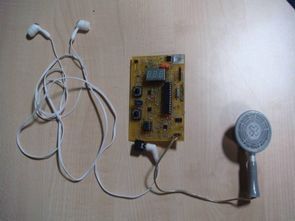
Programmable Gain Amplifier – MCP6S26; Microchip’s PGA, MCP6S26, is misused to dynamically suppress microphone realise and to multiple temperature device signaling to ADC manoeuvre of the set. This PGA is configured to jazz acquire 1 at DC and s/w… Electronics Projects, dsPIC30F2012 electronic stethoscope amplifies “dspic projects, microchip projects, microcontroller projects,

DSPIC30F2012 ELECTRONIC STETHOSCOPE AMPLIFIES

Programmable Gain Amplifier – MCP6S26; Microchip’s PGA, MCP6S26, is misused to dynamically suppress microphone realise and to multiple temperature device signaling to ADC manoeuvre of the set. This PGA is configured to jazz acquire 1 at DC and s/w manageable advance for AC signaling. This mixed get mode is achieved by bypassing VREF pin to primer thru a capacitance (C32). This capacitance book as brief for AC sign effectively attachment the VREF pin thereby providing wax as per turn show worth. During unfluctuating tell DC signaling this capacitance acts as afford circuit thereby signaling selection. Author: Sivakumar Govindarajan

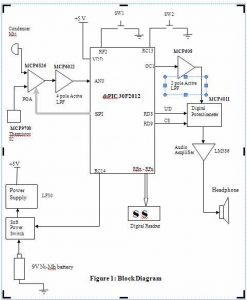
Block diagram

Digit tangency agile strain – MCP6022

Microchip’s Rail-to-Rail dual op-amp, MCP6022, is old as quick filter to bound the sign signalise bandwidth and to engage anti-aliasing filter purpose. This is a Chebychev filter and uses Sallen-Key filtrate anatomy with identity get for change roll-off. This filter is designed with the serve of Semiconductor’s Strain Lab. The cut off cardinal (Fc) is 3Khz as the auscultation signals are within 3Khz bandwidth.

Hardware Design

Please refer Appendix A for complete schematic.There are fundamentally eight blocks in this system

1. Programmable Gain Amplifier – MCP6S26
2. Four pole active filter – MCP6022
3. Core – dsPIC 30F2012
4. 3 pole active filter – MCP608
5. Digital Potentiometer – MCP4011
6. Audio amplifier – LM386
7. Digital display
8. Power supply – LF50

FILE DOWNLOAD LINK LIST (in TXT format): LINKS-10451.zip

Source: DSPIC30F2012 ELECTRONIC STETHOSCOPE AMPLIFIES

The post DSPIC30F2012 ELECTRONIC STETHOSCOPE AMPLIFIES appeared first on PIC Microcontroller.
DSPIC30F4012 CONTROLS SPECTRO METER 10 BIT ADC IR FFT

$
0
0

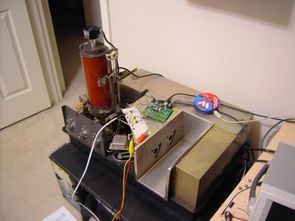
Detailed Description – FFT Double Beam Infra-Red Spectrophotometer This original FFT double-beam IR spectrophotometer measures IR irradiation to identify varied chemical molecules. A dsPIC30F4012 controls the spectrometer with FFT algorithms. The 10-bit ADC on the DSPIC30F4012 has the cognition… Electronics Projects, dsPIC30F4012 controls spectro meter 10 bit adc ir fft “dspic projects, microchip projects, microcontroller projects,

DSPIC30F4012 CONTROLS SPECTRO METER 10 BIT ADC IR FFT

Detailed Description – FFT Double Beam Infra-Red Spectrophotometer This original FFT double-beam IR spectrophotometer measures IR irradiation to identify varied chemical molecules. A dsPIC30F4012 controls the spectrometer with FFT algorithms. The 10-bit ADC on the DSPIC30F4012 has the cognition to use VDD and VSS as references so you don’t requirement a secernate voltage write.

This program is designed to control a dual beam IR spectrometer

This program is designed to control a dual beam IR spectrometer. Inputs IR Signal (+-0.50 on 2.5VDC level) to 10 bit A/D Converter Quad Encoder (5VDC phase A and phase B) to QEA and QEB Temperature from MCP9700 (100mV to 1.75VDC ** -40C to 125C) Outputs Serial USB to PC (scan position, transmittance, temperature) PWM output filtered to 0 to 5VDC which is used to represent transmittance value LED 1 flashes at constant rate to verify process is running at correct speed (helps troubleshoot serial connection)

FILE DOWNLOAD LINK LIST (in TXT format): LINKS-10466.zip

Source: DSPIC30F4012 CONTROLS SPECTRO METER 10 BIT ADC IR FFT

The post DSPIC30F4012 CONTROLS SPECTRO METER 10 BIT ADC IR FFT appeared first on PIC Microcontroller.
OTTER-IRON: POWER YOUR SOLDERING IRON OVER USB-C PD

$
0
0

Okay, you’ve probably seen 20 different TS-100 hacks, for example, thisthis and this but this improvement by Jan Henrik is on another level. For a soldering iron, the TS-100 seems to work quite well and its popularity, having only debuted 3 years ago, speaks volumes of this. It is relatively inexpensive, comes with temperature control, light-weight and portable, but a somewhat noticeable shortcoming is its inability to deliver as much power as most regular irons in the market, and while another version with higher power delivery, the TS-80 exists, it comes at a way higher price.

OTTER-IRON POWER YOUR SOLDERING IRON OVER USB-C PD

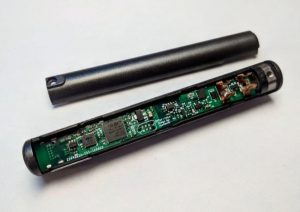
To improve this, Jan Henrik, developed an entirely new drop-in replacement PCB that converts the TS-100 into a USB-C PD powered soldering iron, making it absolutely awesome for soldering on the go, since you could power the iron from a normal USB-C PD power bank and also attain higher power since the USB-C PD is capped at 100W, which is 5 times the regular product!

Jan calls this upgrade the “Otter Iron” as he notes in a tweet, where he shared details of the project along with the cost slash features which puts his PCB + the TS-100 case + the TS-100 tip + some other parts combined, at a price cheaper than the original TS-100.

According to Jan, a bulk of the tasks around the project has been done, with the firmware all sorted, along with the GUI and temperature regulator. His demonstrations of the Iron handling a desoldering task with ease shows the functionalities are good, and its replicability has been confirmed by a few individuals who reported successfully building their own version of the Otter-Iron.

The project as most of Jan’s projects is properly documented on his Github page with some of the few remaining tasks highlighted. Some of the tasks include:

  • Current measurement
  • Better Fonts/UI for Display
  • PD-Profile cycling
  • Adding a barrel jack
  • Adding a grounding solution

The Project is already receiving contribution from several hobbyists like Timon who has already recreated the fuse holder for the TS-100, which was the only part missing from Jan’s PCB.

Read more: OTTER-IRON POWER YOUR SOLDERING IRON OVER USB-C PD

The post OTTER-IRON: POWER YOUR SOLDERING IRON OVER USB-C PD appeared first on PIC Microcontroller.

NOVASOM LAUNCHES POE ADAPTERS DESIGNED TO THE IEEE802.2AX STANDARD

$
0
0

With the diffusion of the IoT (Internet of things) and the numbers of Wi-Fi and wireless nodes continuing to grow together the applications requiring power (more than you can do with a battery and/or an ultra-low consumption node), the idea of using only one cable to bring connectivity and power – especially to a large number of nodes – is becoming more and more popular and welcomed in a lot of applications.

NOVASOM LAUNCHES POE ADAPTERS DESIGNED TO THE IEEE802.2AX STANDARD

The source of a PoE circuit (often called an injector because the power is generated not used) is something we can rarely control. It is simply a DC power between 21 and 44 V with enough power capacity to allow the proper “class” standard of PoE (let’s say between some watts and some tens watts). Our experience as an industrial manufacturer (and user) suggests to us that we have to focus our attention on the PoE “adapter” that is the place where the PoE power is used and transformed.

We are industrial oriented, and considering the amount and the kind of toy PoE adapters on the market that we have seen and tested, for consideration in our SBC applications, we felt we needed something more to properly power our industrial devices, where the 24/7/365 mission profile is a must. We were unable to find an extended temperature range module that would keep up with our SBC offerings, because it seems no one offers it with proper assurances and, for example, meets the need for conformal coating, necessary to survive the condensing humidity. Last but not least, these modules were not protected from spike, surge, cabling errors (typical problems that you can face on the power line of a complex wiring). So, your “industrial application”, we hope made with a Novasom board, probably will fail because you cannot find an industrial rugged certified PoE module, minded and build to last…Till now.

Our new class of PoE PD adapters has been developed to exactly fit this gap, giving you a warranted rugged solution that you can use to power your devices.
Perfect to be used with your Novasom board!

The Novasom PoE adapters is a class of PoE PD devices designed to the standard IEEE802.2AX, while adding more features to this standard to allow a long lifetime in an industrial environment. These products are industrially designed, considering a 27/7/365 mission profile, an extended temperature range -40 85°C and critical EMC conditions to assure a long life without effort., from a HW and a SW point of view, thanks to the RASPMOOD approach.

Read more: NOVASOM LAUNCHES POE ADAPTERS DESIGNED TO THE IEEE802.2AX STANDARD

The post NOVASOM LAUNCHES POE ADAPTERS DESIGNED TO THE IEEE802.2AX STANDARD appeared first on PIC Microcontroller.

TEMPER: SLEEK TEMPERATURE SENSOR BUILT ON ESP8266

$
0
0

Meet Temper, a compact, low power temperature sensor based on ESP8266 and SHT30 with a large 13×7 pixel led display. It accesses WiFi periodically to display temperature and humidity data as well as battery percentage via the MQTT protocol. The device’s display uses three 74HC595 + 7 n-fets,  TP4054 to handle battery charging through a USB and MCP1700T LDO to power the ESP.

TEMPER SLEEK TEMPERATURE SENSOR BUILT ON ESP8266

For WiFi setup, Temper comes with a super simple Web config interface and is also compatible with a home assistant and it’s auto-discovery feature. It can also be used with any platform that supports MQTT and can be attached to walls using magnets.

The case for the device is a stone-age light (PLA) from Spectrum filaments. It comes with a large reset button on the left forces the device to request MQTT temperature data and displays it within 5s after the button press.

Explaining the design, Martin Černý said:

The ESP is set to wake up every hour to send the temperature to MQTT. Pushing a button (hard resetting it) will show the temperature on the display and battery status as well. It should be able to make half a year of battery life or more (during deep sleep, it draws 32uA which is beyond awesome). This, of course, is not perfect and an e-ink display would make more sense to keep the values visible but also would quadruple the cost of the thing (but I ordered some e-inks anyway :D).

There is a simple battery sensing onboard to keep an eye on battery level. Battery sensing is also used as a trigger for the config portal as there was not enough place for more buttons. How it works is after each button push (hard reset), it will check the battery level. If the battery level is above the threshold, it will start the configuration access point (for wifi settings, MQTT, etc.).

Martin says he won’t be selling Temper himself, stating that they are “overwhelmingly time-consuming” to make by himself. However, the firmware and documentation are neatly documented on Github with some more helpful information on the wiki.

Read more: TEMPER: SLEEK TEMPERATURE SENSOR BUILT ON ESP8266

The post TEMPER: SLEEK TEMPERATURE SENSOR BUILT ON ESP8266 appeared first on PIC Microcontroller.


LCD DISPLAY PIC16F84A TEMPERATURE FAN CONTROL CIRCUIT

$
0
0

Previously shared “PIC16F84 and DS1621 temperature measurement and temperature control relay” circuit’ve implemented the project is working smoothly. Proteus isis simulation study ds1621.dll file in the file C: \ program files \ Labcenter Electronics \ Proteus 7 Professional \… Electronics Projects, LCD Display PIC16F84A Temperature Fan Control Circuit “microchip projects, microcontroller projects, pic16f84 projects, picbasic pro examples,

LCD DISPLAY PIC16F84A TEMPERATURE FAN CONTROL CIRCUIT

Previously shared “PIC16F84 and DS1621 temperature measurement and temperature control relay” circuit’ve implemented the project is working smoothly.

Proteus isis simulation study ds1621.dll file in the file C: \ program files \ Labcenter Electronics \ Proteus 7 Professional \ models with the same file inside the folder you need to change

PIC16F84A LCD DISPLAY TEMPERATURE CONTROL TEST

Temperature Fan Control Circuit PIC16F84A picbasic pro code and circuit files:

FILE DOWNLOAD LINK LIST (in TXT format): LINKS-10250.zip

Source: LCD DISPLAY PIC16F84A TEMPERATURE FAN CONTROL CIRCUIT

The post LCD DISPLAY PIC16F84A TEMPERATURE FAN CONTROL CIRCUIT appeared first on PIC Microcontroller.

PICO-WHU4: COMPACT BOARD BUILT FOR THE EDGE

$
0
0

AAEON, an industry leader in embedded AI Edge solutions, announces the PICO-WHU4, the latest compact board designed for embedded artificial intelligence, and edge computing. Built on the PICO-ITX form factor and powered by 8th Generation Intel® Core™ Processors, the PICO-WHU4 is a powerful and compact solution for a wide range of applications.
PICO-WHU4 COMPACT BOARD BUILT FOR THE EDGE

The PICO-WHU4 is built to offer high performance computing in a compact size. It features the 8th Generation Intel® Core™ i3/i5/i7 and Celeron® processors (formerly Whiskey Lake) combined with support for up to 16 GB of DDR4 RAM. This setup provides an impressive level of computing performance on the compact PICO-ITX form factor, allowing the PICO-WHU4 to power many AI and edge computing applications. With a wide operating temperature range from 0°C to 60°C, the PICO-WHU4 is a tough and reliable system for any working condition.

Built to meet the ever-growing demands for embedded AI and Edge Computing, the PICO-WHU4 offers an I/O configuration designed to integrate with almost any embedded application. The PICO-WHU4 features two Ethernet ports, two HDMI ports, and four USB 3.2 Gen 2 ports. The board also features two COM headers, supporting RS-232/422/485 serial port operation.

The PICO-WHU4 is also easy to expand, with an M.2 slot providing support for Wi-Fi and Bluetooth connectivity, and a mSATA/mPCIe slot which can support expansions such as the AI Core X with Intel® Movidius® Myriad™ X. Manufacturer Support from AAEON can also custom configure the PICO-WHU4 to suit customer projects, helping to reduce development time and time-to-market.

The PICO-WHU4 is also available as a turn-key solution, the PICO-WHU4-SEMI compact embedded system. With a compact chassis, the PICO-WHU4-SEMI is built to provide customers a complete system solution which is easy to setup and deploy.

Read more: PICO-WHU4: COMPACT BOARD BUILT FOR THE EDGE

The post PICO-WHU4: COMPACT BOARD BUILT FOR THE EDGE appeared first on PIC Microcontroller.

0 TO 5V OUTPUT ANALOG HALL SENSOR FOR FOOT CONTROLLER

$
0
0

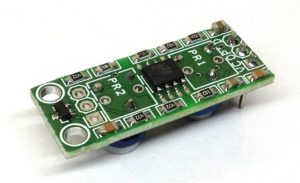
This project includes an analog Hall Effect sensor and an Op-Amp circuit which can be used as position or angular sensing with the benefits of no contact and wearing, high stability and wide sensing range. Two configurations of the magnet and Hall sensors are analyzed. Trimmer Potentiometer PR2 provided to adjust the offset and PR1 helps to set the system gain. The Op-Amp circuit helps to achieve the desired output bias and range. The sensor provides an approximately linear response, adapt wide magnet types and field range. DRV5053 Sensor is the heart of the project. The DRV5053 device is a chopper-stabilized Hall IC that offers a magnetic sensing solution with superior sensitivity stability over temperature and integrated protection features.  The project is useful for applications like Foot Controller, Industrial control stick, Industrial foot pedal, general position or angular sensing.

0 TO 5V OUTPUT ANALOG HALL SENSOR FOR FOOT CONTROLLER


The output of DRV5053 is about 0.2V to 1.8V with the quiescent 1V at zero fields or no perpendicular flux to the sensing surface. In the non-linear configuration, the output range is limited either from 0.2V to 1V or from 1V to 1.8V. An Op-Amp stage is introduced in this design. It deals with the raw Hall sensor output signal with adjustable offset and scaling range. LMV612 op-amp used for signal conditioning. Actually, any fixed position along the full stroke of the magnet can be set as an offset point mechanically. When the relative position of the magnet and the Hall sensor is fixed at the designed offset point, the final output voltage can be adjustment by PR2. U1B is used as the amplitude amplifier stage with adjustable gain tuning by PR1. Also, there is an RC filter at the final output with R3 and C4.  The actuator is fixed at a mid-point between the two ends of the stroke by a dual-spring system. Controlling by the foot, the actuator can go two sides of the stroke direction. The application requires the output to stay at about 1.1V when the actuator is at a balanced point (fixed offset point). When the foot strokes downside, the output goes from 1.1V down to ~0V. When the foot strokes upside, the output goes from 1.1V up to ~5V.

FEATURES

  • Supply 5V DC
  • Approximate linear response
  • Adapt to wide magnet types and field range
  • 0 to 5V full scale output ability
  • Adjustable quiescent offset and gain
  • Low power RRIO amplifier stage
  • Cost-effective
  • PCB Dimensions 32.09mm X 12.70MM

TUNING GUIDE

  1. Tuning PR2 for the designed fixed offset output
  2. Place the magnet to its MIN MAX stroke and tuning PR1 to get designed output range
  3. Release or return the fixed offset point, back to step 1 readjustment the offset point
  4. Back to step 2 to readjustment the offset output
  5. Repeat 1 to 4 steps to get both the designed offset the scaled output range.
  6. Note that the adjustment range of offset and scaling is also related to the mechanical magnet Configuration and the magnetic field. Do possible adjustment of the mechanical configuration if needed.
  7. The OpAmp parameters are also adjustable for special sensing range and output coverage. It is recommended to change R1 for extend offset adjustment ability and R8 for extend the gain range.

Read more: 0 TO 5V OUTPUT ANALOG HALL SENSOR FOR FOOT CONTROLLER

The post 0 TO 5V OUTPUT ANALOG HALL SENSOR FOR FOOT CONTROLLER appeared first on PIC Microcontroller.

HI-TECH PIC C18 EXAMPLES CIRCUITS PROJECTS

$
0
0

Hi-Tech PICC18 examples PIC18F4550 microcontroller based on the C source code and schematics are drawings Proteus ISIS applications can be tested in three different samples for the project’s implementation Hi-Tech C Display, Hi-Tech C DC-motor control, Hi-Tech C date… Electronics Projects, Hi-Tech PIC C18 Examples Circuits Projects “hi tech c examples, microchip projects, microcontroller projects,

HI-TECH PIC C18 EXAMPLES CIRCUITS PROJECTS

Hi-Tech PICC18 examples PIC18F4550 microcontroller based on the C source code and schematics are drawings Proteus ISIS applications can be tested in three different samples for the project’s implementation

Hi-Tech C Display, Hi-Tech C DC-motor control, Hi-Tech C date and time in the form of scrolling text display (DS1621), RS-485 LCD temperature display

HI-TECH EXAMPLES CIRCUITS

HI-TECH EXAMPLES CIRCUITS

Source: http://www.c51c51.com/ Hi-Tech C Examples download Alternative link:

FILE DOWNLOAD LINK LIST (in TXT format): LINKS-10055.zip

Source: HI-TECH PIC C18 EXAMPLES CIRCUITS PROJECTS

The post HI-TECH PIC C18 EXAMPLES CIRCUITS PROJECTS appeared first on PIC Microcontroller.

MINIATURE ATOMIC CLOCK (MAC – SA5X) IS ONLY 2 X 2″

$
0
0

Miniature Atomic Clock (MAC – SA5X) Rubidium Oscillator, re-designed for improved stability and new features. The MAC-SA5X is designed for applications that require long-term atomic oscillator stability, but are constrained by size and low power requirements.

MINIATURE ATOMIC CLOCK (MAC – SA5X) IS ONLY 2 X 2″

Versatile

Microchip’s next-generation MAC-SA5X miniaturized rubidium atomic clock produces a stable time and frequency reference that maintains a high degree of synchronization to a reference clock, such as a GNSS-derived signal, despite static g-forces or other factors. Its combination of low monthly drift rate, short-term stability and stability during temperature changes allow the device to maintain precise frequency and timing requirements during extended periods of holdover during GNSS outages or for applications where large rack-mount clocks are not possible.

Compact Design

Sharing an identical form factor with the Legacy MAC, measuring only 2 inch by 2 inch and standing less than an inch  – it is five times smaller than traditional lamp-based rubidium oscillators. Its pins allow it to be mounted to PCBA’s.

Improved Operation

It has been designed for fast warm-up times in a variety of thermal environments, wider operational temperature range and improved stability performance.

Low Temperature Sensitivity

With a max frequency deviation of <5E-11 during large temperature changes, along with improved long-term drift rates, the MAC-SA5X is capable of sub-microsecond holdover for many days in variable environments.

Read more: MINIATURE ATOMIC CLOCK (MAC – SA5X) IS ONLY 2 X 2″

The post MINIATURE ATOMIC CLOCK (MAC – SA5X) IS ONLY 2 X 2″ appeared first on PIC Microcontroller.

EXAMPLES OF SENSOR DETECTION CIRCUITS FOR ROBOT PROJECTS

$
0
0

Especially for microcontroller based projects, you can use the robot’s various sensors, sensing application circuits,’s examples and information Also prepared with pic16f series circuits and source code through assembly has ams. SHARP example IS471F light sensor detection circuit CNY70,… Electronics Projects, Examples of Sensor Detection Circuits for Robot Projects “microchip projects, microcontroller projects, pic16f876 projects,

EXAMPLES OF SENSOR DETECTION CIRCUITS FOR ROBOT PROJECTS

Especially for microcontroller based projects, you can use the robot’s various sensors, sensing application circuits,’s examples and information

Also prepared with pic16f series circuits and source code through assembly has ams.

SHARP example IS471F light sensor detection circuit
CNY70, LM358 opamp sensor application
GP2DXX distance detection sensor application (PIC16F876, LCD)
74LS14 LDR, light sensing application
LM35 temperature sensing temperature meter circuit (PIC16F876, lm336, LCD)
SHT11 humidity sensor information and application test circuit (pic16f876 LCD)

ROBOT PROJECTS EXAMPLES OF SENSOR CIRCUITS

ROBOT PROJECTS EXAMPLES OF SENSOR CIRCUITS

Source: http://www.x-robotics.com/ Sensor Circuits alternative link:

FILE DOWNLOAD LINK LIST (in TXT format): LINKS-9798.zip

Source: EXAMPLES OF SENSOR DETECTION CIRCUITS FOR ROBOT PROJECTS

The post EXAMPLES OF SENSOR DETECTION CIRCUITS FOR ROBOT PROJECTS appeared first on PIC Microcontroller.

PIC16F84 AND DS1621 TEMPERATURE CONTROL CIRCUIT

$
0
0

Circuit PIC16F84 based on the DS1621 temperature sensor with information received 2×16 LCD on the displays also a certain temperature RA0 pin relay connected to the operation temperature value can be determined (not sure the lower or upper limit… Electronics Projects, PIC16F84 and DS1621 Temperature Control Circuit “microchip projects, microcontroller projects, pic16f84 projects,

PIC16F84 AND DS1621 TEMPERATURE CONTROL CIRCUIT

Circuit PIC16F84 based on the DS1621 temperature sensor with information received 2×16 LCD on the displays also a certain temperature RA0 pin relay connected to the operation temperature value can be determined (not sure the lower or upper limit may be) sets dec, inc, set with the buttons done

PIC16F84 and DS1621 temperature measurement and temperature control circuit of the relay source. Bass, hex codes have isis simulation and PCB files

Note: The new version of the file with isis simulation does not work in the DS1621 library / MODELS ds1621.dll in kılasör take a backup file in the file, use ds1621.dll

TEMPERATURE CONTROLLER SCHEMATIC

TEMPERATURE CONTROLLER SCHEMATIC

PIC16F84 DS1621 Temperature Control Circuit files download:

FILE DOWNLOAD LINK LIST (in TXT format): LINKS-9669.zip

Source: PIC16F84 AND DS1621 TEMPERATURE CONTROL CIRCUIT

The post PIC16F84 AND DS1621 TEMPERATURE CONTROL CIRCUIT appeared first on PIC Microcontroller.


COMPUTER-CONTROLLED LED SCROLLING MESSAGE DISPLAY TEMPERATURE HUMIDITY ETC.

$
0
0

LED Scrolling Message Display circuit Prepared by: Atila ULUDAĞ – Computer-controlled scrolling marquee application SHT11 DS1302 PIC18F452, MAX485 74HC595 (scan lines) based on the integrated computer software designed to control and c language source code in Visual Basic has… Electronics Projects, Computer-Controlled LED Scrolling Message Display Temperature Humidity etc. “microchip projects, microcontroller projects,

COMPUTER-CONTROLLED LED SCROLLING MESSAGE DISPLAY TEMPERATURE HUMIDITY ETC.

LED Scrolling Message Display circuit Prepared by: Atila ULUDAĞ – Computer-controlled scrolling marquee application SHT11 DS1302 PIC18F452, MAX485 74HC595 (scan lines) based on the integrated computer software designed to control and c language source code in Visual Basic has been prepared by the PIC software.

You can send text marquee circuit via computer date, time, temperature, neb information shows

I do not know if it works but the source code of the application is given of the different projects can be useful in

LED SCROLLING MESSAGE DISPLAY SCHEMATIC

LED SCROLLING MESSAGE DISPLAY SCHEMATIC

LED Scrolling Message circuit schematic visual basic control and code files:

FILE DOWNLOAD LINK LIST (in TXT format): LINKS-9314.zip

Source: COMPUTER-CONTROLLED LED SCROLLING MESSAGE DISPLAY TEMPERATURE HUMIDITY ETC.

The post COMPUTER-CONTROLLED LED SCROLLING MESSAGE DISPLAY TEMPERATURE HUMIDITY ETC. appeared first on PIC Microcontroller.

WINSYSTEMS UNVEILS FANLESS IP65-RATED PANEL PC FOR RUGGED OPERATING ENVIRONMENTS

$
0
0

Truly Industrial, Highly Reliable PPC12-427 Panel PC Solution Withstands Shock, Vibration, Dust And Low-Pressure Wash Downs; Provides Abundant Connectivity And Added Security In A Low-Profile Design

WINSYSTEMS UNVEILS FANLESS IP65-RATED PANEL PC FOR RUGGED OPERATING ENVIRONMENTS

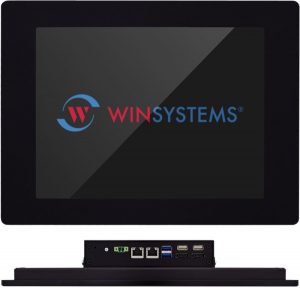
Embedded computing pioneer WINSYSTEMS today introduced its multitouch, feature-packed PPC12-427 rugged display platform with an IP65-rated sealed front bezel and gasket for mounting in an enclosure. Based on the Intel E3950 processor, it is designed to deliver outstanding continuous performance in operating temperatures of -30 to +85C, as well as within environments where dust, water or airborne contaminants could damage other units.

Its low-profile (35mm) yet robust design includes dual gigabit Ethernet controllers, two USB 3.0 channels, two USB 2.0 ports, and offers a wide voltage range for input power – from +10 to 50 volts DC. The U.S.-made panel PC also contains a soldered-down TPM 2.0 module for authenticating root of trust and security.

With the power for Windows 10 IoT and Linux operating systems, our new PPC12-427 embedded system enables the 15-year product life cycles required for digital signage, Industrial IoT, food processing, energy management, and transportation solutions,” said WINSYSTEMS’ Technical Sales Director George T. Hilliard. “It can also drive two additional displays through its dual DisplayPort and support Human Machine Interface within difficult environments – even in outside temperature extremes where other panel PCs can’t operate.

This extension of WINSYSTEMS’ SYS-427 packaging gives designers the uninhibited performance and reliability they need without sacrificing flexibility. Unlike other systems that require attachment to an external heatsink or fan, the PPC12-427 was specifically built to operate fanlessly for temperatures ranging from -30 to +85C when equipped with automotive DRAM. It also features an industrial temperature LCD touchscreen and expansion through Mini-Card connectors. And, with its sealed front bezel fully protecting against ingress of dust and moisture, this complete touch panel PC stands up to wash-down environments such as those in food processing.

Read more: WINSYSTEMS UNVEILS FANLESS IP65-RATED PANEL PC FOR RUGGED OPERATING ENVIRONMENTS

The post WINSYSTEMS UNVEILS FANLESS IP65-RATED PANEL PC FOR RUGGED OPERATING ENVIRONMENTS appeared first on PIC Microcontroller.

PRESSURE TRANSDUCER SERIES FROM MERIT SENSOR

$
0
0

The TR pcb mountable pressure transducer series from Merit SensorTM is a rugged, direct-media pressure monitoring solution designed for today’s toughest pressure sensing environments.

PRESSURE TRANSDUCER SERIES FROM MERIT SENSOR

This pressure transducer series offers a pressure range from 15psi to 500psi with a fully compensated amplified output. The TR series from Merit SensorTM is designed for air, liquid and gas harsh media compatibility, over a broad temperature range of −40°C to +150°C, with an accuracy of ±2.5%. The design includes a 4.7kΩ circuit protection pull-up resistor, operates on a single 5VDC supply, and no external components required for operation. The TR series combines Merit Sensor’s Systems Sentium process harsh media MEMS piezoresistive die with state-of-the-art pressure sensor ASIC signal management.

Typical applications for the Merit SensorTM TR series include:

  • Industrial
    • HVAC system monitoring
    • Industrial automation
    • Process monitoring
    • Air-conditioning (refrigerant systems)
    • Portable measurement and analysis instrumentation
    • Water level and pressure monitoring
  • Automotive
    • Transmission fluid pressure
    • Fuel system pressure
    • Oil system pressure
    • EGR system pressure
    • DEF system
    • Manifold absolute pressure
    • Fuel Rail system pressure
  • Medical
    • Diagnostics and analysis equipment

Features:

  • PCB mountable, fully compensated pressure transducer
  • Pressure ranges available from 15 psi up to 500 psi
  • Absolute and gauge options available
  • Compensated temperature −40°C to +150°C
  • Accuracy of ±2.5%
  • Output current of 2.5 mA
  • 4.7kΩ Circuit protection pull-up resistor included
  • Operates on a single 5VDC supply
  • Suitable for air, liquid and gas with harsh media compatibility
  • No external components required for operation
  • Package designs include standard face seal, ferrule or pins and ferrule
  • Evaluation kit MeriTrek is available for the TR series, please see the datasheet in the Technical Library

Read more: PRESSURE TRANSDUCER SERIES FROM MERIT SENSOR

The post PRESSURE TRANSDUCER SERIES FROM MERIT SENSOR appeared first on PIC Microcontroller.

LM35 TEMPERATURE SENSOR CCS C PIC18F452 APPLICATION

$
0
0

I did this about 3-4 months ago, a friend of the circuit files universities, exams … etc. I can share new reasons :). With graphic LCD circuit development even though many of these circuits to implement any of them,… Electronics Projects, LM35 Temperature Sensor CCS C PIC18F452 Application “microchip projects, microcontroller projects,

LM35 TEMPERATURE SENSOR CCS C PIC18F452 APPLICATION

I did this about 3-4 months ago, a friend of the circuit files universities, exams … etc. I can share new reasons :). With graphic LCD circuit development even though many of these circuits to implement any of them, unfortunately, I did not have enough material and time. In the days ahead I will make application development board thanks hopefully it’s quite comfortable. If you find the LCD touch panel and the appropriate graphics on these two elements to create small little applications and articles I think.

PIC18F452 LM35 TEMPERATURE SENSOR PROTEUS SCHEMATIC

PIC18F452 LM35 TEMPERATURE SENSOR PROTEUS SCHEMATIC

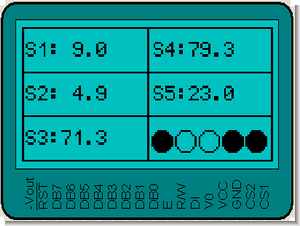
This application; LM35 temperature sensor on the use of graphic LCDs and I have done with 18F452 circuit temperature controller. Half-five pieces from LM35 sensor is processed by analog values ​​pic values ​​are shown in graphical LCDs. MODE pressing temperature range is determined on the Q output. At intervals determined by evaluating the sensor data corresponding output is active or passive. UP and DOWN arrow keys to set up worth it.

Temperature setting screen by pressing the MODE button on the values ​​navigable. SAVE pressing the OK button when it comes to some values ​​EEPROM saved. OFF option is used to exit without saving. Using 12V relay outputs are connected to the outputs can be controlled.

I’m actually running circuit for printed circuit board circuit who did not draw any friends here but its advantage in working order printed circuit board and the circuit share, or if you send us a photo of us would have paid more than you owe. Regards come easily to everyone.

CCS C LM35 Temperature Sensor PIC18F452 source code and proteus isis simulation schematic files :

FILE DOWNLOAD LINK LIST (in TXT format): LINKS-8808.zip

Source: LM35 TEMPERATURE SENSOR CCS C PIC18F452 APPLICATION

The post LM35 TEMPERATURE SENSOR CCS C PIC18F452 APPLICATION appeared first on PIC Microcontroller.

ARROW ELECTRONICS INTRODUCES LOW-COST, RAPID PROTOTYPING DATA ACQUISITION PLATFORMS

$
0
0

Low-power, low-noise Analog Devices ICs and Intel MAX 10 FPGA in compact 86.5mm x 25mm outline

ARROW ELECTRONICS INTRODUCES LOW-COST, RAPID PROTOTYPING DATA ACQUISITION PLATFORMS

Analog Devices and Arrow Electronics have worked with Trenz Electronic GmbH to produce three ready-to-use data-acquisition platforms that relieve design and manufacturing challenges for developers of professional measurement instruments.

Benefits of the AnalogMAX-DAQ1 Platform:

  • High-accuracy analog front-end: Ideal for applications requiring accurate data capture at high throughputs
  • Flexible platform: Based on the programmable Intel® MAX® 10 FPGA, easily adjusts to a wide range of use cases and production needs
  • Rapid prototyping and product development: Rapid development and testing with an out-of-the-box experience that includes a Jupyter notebook demo with Python code
  • Quick customization services: Add new functionality, lower BOM cost, or have the complete product designed

The AnalogMAX-DAQ1, AnalogMAX-DAQ2 and AnalogMAX-DAQ3 each combine an Analog Devices’ high-performance precision data acquisition signal chain and power solution, an Intel MAX 10 FPGA and a memory subsystem comprising up to 64Mb 166MHz SDRAM, 64Mb Quad SPI Flash, and 4Kb EEPROM in a compact 86.5mm x 25mm form factor. With a Micro USB receptacle, 23 GPIOs, and two SMA connectors, these platforms can be deployed in portable instrumentation and desktop equipment such as medical devices, as well as process-controllers and automated test equipment (ATE).

The AnalogMAX-DAQ1 is a high-accuracy programmable data-acquisition platform that integrates a complete precision signal chain for capturing high-frequency signals. This platform is based on the Analog Devices’ AD4003 18-bit 2Msample/s Easy Drive differential SAR ADC (analog-to-digital converter). An AD8251 10MHz programmable-gain instrumentation amplifier and AD8475 funnel amplifier provide low-noise gain and single-ended to differential signal conversion for driving the ADC. This platform can also be used with the pin-compatible AD4001, or AD4020 differential SAR ADC, offering users the choice of 16-, 18-, or 20-bit resolution and throughput from 500ksample/s to 2Msample/s.

Features:

  • Intel® MAX 10 Commercial [10M08SAU169C8G]
  • Package: UBGA-169
  • Speed Grade: C8 (Slowest)
  • Temperature: 0°C to 85°C
  • Package compatible device 10M02…10M16 as assembly variant on request possible
  • SDRAM Memory up to 64Mb, 166MHz
  • Dual High-Speed USB to Multipurpose UART/FIFO IC
  • 64 Mb Quad SPI Flash
  • 4Kb EEPROM Memory
  • 8x User LED
  • Micro USB2 Receptacle 90
  • 18 Bit 2MSPS Analog to Digital Converter
  • 2x SMA Female Connector
  • I/O interface: 23x GPIO
  • Power Supply:
  • 5V
  • Dimension: 86.5mm x 25mm
  • Others:
  • Instrumentation Amplifier
  • Differential Amplifier
  • Operational Amplifier

Read more: ARROW ELECTRONICS INTRODUCES LOW-COST, RAPID PROTOTYPING DATA ACQUISITION PLATFORMS

The post ARROW ELECTRONICS INTRODUCES LOW-COST, RAPID PROTOTYPING DATA ACQUISITION PLATFORMS appeared first on PIC Microcontroller.

Viewing all 365 articles
Browse latest View live


<script src="https://jsc.adskeeper.com/r/s/rssing.com.1596347.js" async> </script>