Quantcast
Channel: temperature | Battery Guide
Viewing all 365 articles
Browse latest View live

ADS131M08 8-CHANNEL SIMULTANEOUS SAMPLING DELTA-SIGMA (ΔΣ) ADC

$
0
0

Texas Instruments’ 24-bit, 32 kSPS ADC is optimized for cost-sensitive applications that require simultaneous sampling

ADS131M08 8-CHANNEL SIMULTANEOUS SAMPLING DELTA-SIGMA (ΔΣ) ADC

Texas Instruments’ ADS131M08 8-channel, simultaneously-sampling, 24-bit ΔΣ ADC offers wide dynamic range, low power, and energy-measurement-specific features. These features make the device ideal for energy metering, power metrology, and circuit breaker applications. The ADC inputs can be directly interfaced with a resistor-divider network or a power transformer to measure voltage or to a current transformer or a Rogowski coil to measure current.

The individual ADC channels can be independently configured depending on the sensor input. A low-noise programmable gain amplifier (PGA) provides gains ranging from 1 to 128 to amplify low-level signals. This device integrates channel-to-channel phase calibration and offset and gain calibration registers to help remove signal-chain errors.

Features

  • Eight simultaneously sampling differential inputs
  • Programmable data-rate up to 32 kSPS
  • Programmable gain up to 128
  • Noise performance:
    • Dynamic ranges: 102 dB (gain = 1, 4 kSPS), 80 dB (gain = 64, 4 kSPS)
  • High-impedance inputs for direct sensor connection:
    • Input impedance for gains of 1, 2, and 4 (330 kΩ), 8, 16, 32, and 64 (1 MΩ)
  • Programmable channel-to-channel phase delay calibration:
    • 244 ns resolution, 8.192 MHz fCLKINTotal harmonic distortion: -100 dB
  • Current-detect mode allows for extremely low power tamper detection
  • Fast startup: first data within 0.5 ms of the supply ramp
  • Integrated negative charge pump allows input signals below ground
  • Crosstalk between channels: -120 dB
  • Low-drift internal voltage reference
  • CRC on communications and the register map
  • Analog and digital supplies: 2.7 V to 3.6 V
  • Low power consumption: 6.0 mW at 3 V AVDD and DVDD
  • Package: 32-pin TQFP or 32-pin WQFN
  • Operating temperature range: -40°C to +125°C

Read more: ADS131M08 8-CHANNEL SIMULTANEOUS SAMPLING DELTA-SIGMA (ΔΣ) ADC

The post ADS131M08 8-CHANNEL SIMULTANEOUS SAMPLING DELTA-SIGMA (ΔΣ) ADC appeared first on PIC Microcontroller.

LM35 PIC16F877 TEMPERATURE MEASUREMENT AND GRAPHIC LCD MENU DESIGN

$
0
0

These circuits using CCS C Compiler and use of LM35 temperature sensor includes menu design on Graphic LCD. Menu selection, etc., especially on graphic LCD. one of the rare examples of issues on the Internet. (I call this menu… Electronics Projects, LM35 PIC16F877 Temperature Measurement and Graphic LCD Menu Design “ccs c examples, microchip projects, microcontroller projects, pic16f877 projects,

LM35 PIC16F877 TEMPERATURE MEASUREMENT AND GRAPHIC LCD MENU DESIGN

These circuits using CCS C Compiler and use of LM35 temperature sensor includes menu design on Graphic LCD. Menu selection, etc., especially on graphic LCD. one of the rare examples of issues on the Internet. (I call this menu control in this manner until the time that I could not find a sample circuit 😀 hdm64gs12.c Driver did some changes in the file if a problem during operation of the CCS C program files directory, copy the Drivers folder.

Unfortunately, only measure the temperature and the menu shows the code block can share the screen. Other parts can program it yourself or you can remove from the menu.

LM35 PIC16F877 TEMPERATURE GRAPHIC LCD

LM35 PIC16F877 TEMPERATURE GRAPHIC LCD

LM35 PIC16F877 Graphic LCD thermometer project schematic source code files:

FILE DOWNLOAD LINK LIST (in TXT format): LINKS-7813.zip

Source: LM35 PIC16F877 TEMPERATURE MEASUREMENT AND GRAPHIC LCD MENU DESIGN

The post LM35 PIC16F877 TEMPERATURE MEASUREMENT AND GRAPHIC LCD MENU DESIGN appeared first on PIC Microcontroller.
CISSOID ANNOUNCES 3-PHASE SIC MOSFET INTELLIGENT POWER MODULE FOR E-MOBILITY

$
0
0

CISSOID, the leader in high temperature semiconductors for the most demanding markets, announces today a new 3-Phase SiC MOSFET Intelligent Power Module (IPM) platform for E-mobility. This new IPM technology offers an all-in-one solution including a 3-Phase water-cooled SiC MOSFET module with built-in gate drivers.

CISSOID ANNOUNCES 3-PHASE SIC MOSFET INTELLIGENT POWER MODULE FOR E-MOBILITY

Co-optimizing the electrical, mechanical and thermal design of the power module and its proximity control, this new scalable platform will improve time-to-market for Electric Car OEMs and electric motor manufacturers willing to rapidly adopt SiC-based inverters for more efficient and compact motor drives. With this SiC-based IPM solution, CISSOID maintains its focus on addressing challenges for automotive and industrial markets.

The first product out of this scalable platform, a 3-Phase 1200V/450A SiC MOSFET IPM, features low conduction losses, with 3.25mOhms On resistance, and low switching losses, with respectively 8.3mJ turn-on and 11.2mJ turn-off energies at 600V/300A. It reduces losses by at least a factor 3 with respect to state-of-the-art IGBT power modules. The new module is water-cooled through a lightweight AlSiC pin-fin baseplate for a junction-to-fluid thermal resistance of 0.15°C/W. The power module is rated for junction temperature up to 175°C. The IPM withstands isolation voltages up to 3600V (50Hz, 1min).

 The built-in gate driver includes three on-board isolated power supplies (one per phase) delivering each up to 5W allowing to easily drive the power module up to 25KHz and at ambient temperatures up to 125°C. Peak gate current up to 10A and immunity to high dV/dt (>50KV/µs) enable fast switching of the power module and low switching losses. Protection functions such as Undervoltage Lockout (UVLO), Active Miller Clamping (AMC), Desaturation Detection and Soft-Shut-Down (SSD) ensure the safe drive and reliable operation of the power module in case of fault events.

Read more: CISSOID ANNOUNCES 3-PHASE SIC MOSFET INTELLIGENT POWER MODULE FOR E-MOBILITY

The post CISSOID ANNOUNCES 3-PHASE SIC MOSFET INTELLIGENT POWER MODULE FOR E-MOBILITY appeared first on PIC Microcontroller.
ADC0831 8051 LM35 TEMPERATURE CONTROL WITH LCD SCREEN

$
0
0

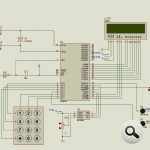
Adc 0831 with 8051 lm 35 temperature sensor, and a detailed project examples for the use of inverters. author :Özer Deniz Objective: LM 35 temperature sensor dealt with 0831 ADC analog-to-digital conversion of knowledge, and expression of this information… Electronics Projects, ADC0831 8051 LM35 Temperature Control with LCD Screen “avr project, microcontroller projects,

ADC0831 8051 LM35 TEMPERATURE CONTROL WITH LCD SCREEN

Adc 0831 with 8051 lm 35 temperature sensor, and a detailed project examples for the use of inverters. author :Özer Deniz

Objective: LM 35 temperature sensor dealt with 0831 ADC analog-to-digital conversion of knowledge, and expression of this information as the temperature on the LCD display.

Abstract: In our program; 8-bit temperature data from ADCs continuously scanned and converted into ASCII code is displayed on the LCD. Ambient temperature monitoring any change LM35 temperature sensor and the voltage at the output of digital information at the output of the ADC is displaced.

8051 TEMPERATURE CONTROL

8051 TEMPERATURE CONTROL

Methods: ADC0831 series 8-bit output, which is an analog-digital converter to receive data sent to the ADC has produced eight clock pulses. After each clock pulse information received from the serial output of the ADC batteries and accumulators given to the low-valent a bit shifted to the left.

Thus, at the end of a loop 8 clock’luk desired digital information is stored in the accumulator. ADC must be switched off after every 8 clock’luk cycle and should be ready to receive a new 8-bit data. For this, the ADC’s CS ‘end of cycle beginning “low”, at the end of the cycle “high” was made.


ADC0831 8051 LM35 Temperature Control with LCD Screen schematic proteus isis source code files

FILE DOWNLOAD LINK LIST (in TXT format): LINKS-6941.zip

Source: ADC0831 8051 LM35 TEMPERATURE CONTROL WITH LCD SCREEN

The post ADC0831 8051 LM35 TEMPERATURE CONTROL WITH LCD SCREEN appeared first on PIC Microcontroller.

FOTRIC 226B THERMAL CAMERA FOR AUTOMATED, NON-CONTACT PERSONNEL TEMPERATURE SCREENING

$
0
0

The Fotric 226B’s AI algorithm automatically detects and assesses the temperatures of passing humans to provide instant fever alarms

FOTRIC 226B THERMAL CAMERA FOR AUTOMATED, NON-CONTACT PERSONNEL TEMPERATURE SCREENING

Saelig Company, Inc. has introduced the Fotric 226B Infrared Thermal Imager, a standalone infrared camera and PC software combination that provides safe, non-contact measurement of passing human traffic, without requiring person-to-person contact, ensuring the safety of the detection personnel themselves.  It has a millisecond response time which automatically locks on to facial outlines to give accurate non-contact temperature measurements. This fast response means that it does not affect traffic flow or behavior habits, yet can quickly detect people with potential health issues.  When the Fotric 226B detects a face with an above-normal body temperature, an audible alarm is immediately triggered, a red box is placed on the PC image of the target face, and a high quality image is captured with the accurate body temperature overlaid.  WLIR software then automatically emits a buzzer alarm to alert support personnel.

The Fotric 226B’s Polysilicon-FPA sensor provides a thermal image of up to 110k pixels of effective temperature measurement points.  The WLIR software provided has a built-in AI face-shape detection algorithm that detects facial temperatures with a 100% success rate. A built-in AI temperature calibration algorithm within the software automatically locks onto face shapes and rejects other high temperature sources in the field of view.  The Fotric 226B has been designed for excellent measurement stability, with automatic correction for ambient changes to avoid false alarms.  The WLIR software utilizes a body temperature calibration algorithm which automatically collects face temperatures in different scenarios for self-learning.  It adjusts the body temperature alarm threshold in real-time by adapting to ambient changes, preventing alarms for body temperature variations due to morning or night differences.  The WLIR software can automatically count the number of screened personnel and the number of suspected abnormal body temperature alarms during a screening process, which is helpful for statistics, and for epidemic prevention and control.

Read more: FOTRIC 226B THERMAL CAMERA FOR AUTOMATED, NON-CONTACT PERSONNEL TEMPERATURE SCREENING

The post FOTRIC 226B THERMAL CAMERA FOR AUTOMATED, NON-CONTACT PERSONNEL TEMPERATURE SCREENING appeared first on PIC Microcontroller.

PIC16F877 LCD DIGITAL THERMOMETER CIRCUIT DS18B20

$
0
0

PIC16F877 microcontroller and a digital thermometer DS18B20 temperature sensor with LCD display has all the details of the construction of software in C language (mikroC in microelectronics) can be prepared samples for temperature sensing projects can get enlightened. In… Electronics Projects, PIC16F877 LCD Digital Thermometer Circuit DS18B20 “microchip projects, microcontroller projects, pic16f877 projects,

PIC16F877 LCD DIGITAL THERMOMETER CIRCUIT DS18B20

PIC16F877 microcontroller and a digital thermometer DS18B20 temperature sensor with LCD display has all the details of the construction of software in C language (mikroC in microelectronics) can be prepared samples for temperature sensing projects can get enlightened.

In this study using electronic circuits and micro-controller is intended to design a thermo meters. In the study, varying depending on the sensed temperature and perceived temperature by burning LEDs showing digital device working principle is based LCDs. In this method, the body temperature is examined.

37C is a normal human body temperature generally increases the temperature at the onset of many diseases in some diseases is the body temperature drops. Therefore for the understanding of diseases called body temperature measuring devices are designed and thermometer.

DS18B20 DIGITAL TEMPERATURE SENSOR

DS18B20 DIGITAL TEMPERATURE SENSOR

THERMOMETER CIRCUIT DIAGRAM

THERMOMETER CIRCUIT DIAGRAM

PIC16F877 LCD Digital Thermometer Circuit DS18B20 schematic proteus isis simulation source code files:

FILE DOWNLOAD LINK LIST (in TXT format): LINKS-6931.zip

Source: PIC16F877 LCD DIGITAL THERMOMETER CIRCUIT DS18B20

The post PIC16F877 LCD DIGITAL THERMOMETER CIRCUIT DS18B20 appeared first on PIC Microcontroller.

EV54Y39A PIC-IOT WA DEVELOPMENT BOARD

$
0
0

The EV54Y39A from Microchip is a secure Amazon Web Services (AWS) Cloud IoT development solution

EV54Y39A PIC-IOT WA DEVELOPMENT BOARD

Microchip Technology’s EV54Y39A PIC-IoT WA Development Board and AWS provide users with an ideal foundation for building their next cloud-connected design. Combining powerful microcontrollers, a CryptoAuthentication™ secure element, and a fully certified Wi-Fi® network controller, these boards offer the simplest and most effective way to connect embedded applications to the AWS Cloud platform. Leveraging the Microchip Trust Platform, each board comes pre-provisioned and ready to upload light and temperature sensor data to the free sandbox account, ready to be visualized in real-time on a dedicated web page.

The IoT development board features the PIC24FJ128GA705 eXtreme Low Power (XLP) microcontroller. This powerful and efficient MCU allows users to intelligently bring their data to the Cloud. Using these scalable MCUs allows for the expansion of the IoT functionality and the addition of customized sensors into the application. For rapid prototyping, the IoT development board is supported by the MPLAB X IDE as well as the graphical development tool MPLAB Code Configurator (MCC). These tools simplify connecting existing applications to the cloud or developing new IoT designs. The on-board mikroBUS™ connector allows for both the seamless integration of any MIKROE® Click™ boards and the ability to quickly interface with other sensors or actuators that support the popular footprint. With over 700 click boards to choose from, this board can rapidly be made into an IoT enabled motion detector, heart rate monitor, or another device the user imagines. The EV54Y39A AWS sensor node is ideal for smart home, smart city, medical, and industrial control/sensing applications.

  • Easy migration to the cloud for PIC-based embedded applications
    • Embedded sensors, actuators, or mechatronic applications
    • Easy to add cloud connection to a huge install base of PIC MCU applications
  • Smart: PIC24FJ128GA705 XLP MCU
    • 128 KB Flash and 16 KB RAM
    • Ideal for low power, smart sensors
  • Connected: WINC1500 Wi-Fi
    • Running TCP/IP and TLS connection to Amazon Cloud
  • Secure: ATECC608
    • Key storage, authentication, crypto
    • Secure device authentication to AWS IoT Core
    • Pre-provisioned for easy connection
  • Rapid prototyping for IoT sensor nodes
    • Includes light and temperature sensors
    • Custom landing page at PIC-IoT.com
    • Add more sensors: choose from 500+ click boards
    • Easy drag and drop programmer/debugger

Read more: EV54Y39A PIC-IOT WA DEVELOPMENT BOARD

The post EV54Y39A PIC-IOT WA DEVELOPMENT BOARD appeared first on PIC Microcontroller.

LAIRD RELEASES NEW BLUETOOTH 5.1 MODULE

$
0
0

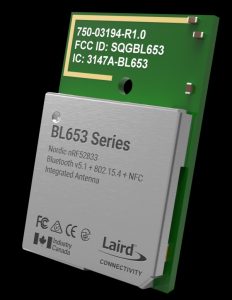
Laird Connectivity released the new BL653 embedded Bluetooth 5.1 module series which enables industrial OEMs to implement longer range BLE applications in the harshest industrial operating environments. The BL653 is a complete multi-protocol embedded wireless offering with processing capability, Bluetooth 5.1 direction finding with angle of arrival (AoA) and angle of departure (AoD), and extended temperature range ideal for challenging RF environments and wireless industrial IoT applications.

LAIRD RELEASES NEW BLUETOOTH 5.1 MODULE

Powered by the Nordic nRF52833 silicon, the small form factor BL653 modules and development kits provide a BLE and Cortex-M4F CPU for any OEM’s product design. The BL653 provides programming options for the Nordic SDK or Zephyr RTOS, a AT command set, or Laird Connectivity’s own smartBASIC environment.

The BL653 series utilizes the nRF52833 hardware features and capabilities including USB access, up to +8 dBm transmit power, and up to 5.5V supply range. In addition to the Bluetooth 5.1 features, the BL653 also has the potential to be Bluetooth 5.2 capable and has hardware support for NFC and 802.15.4 (Thread and Zigbee).

According to the company, the BL653 enables industrial applications previously challenged in supporting wireless connectivity. With Bluetooth meshing capabilities, OEMs can create wireless mesh networks, which extend the reach of messages by relaying them from node to node in a large group of connected devices. Mesh networks are well suited for smart lighting and factory automation applications, which also benefit from the BL653’s operating temperature range (up to 105°C).

Read more: LAIRD RELEASES NEW BLUETOOTH 5.1 MODULE

The post LAIRD RELEASES NEW BLUETOOTH 5.1 MODULE appeared first on PIC Microcontroller.


PIC18F452 CCS C RF HUMIDITY TEMPERATURE CIRCUIT (ADDITION TO CALENDAR, CLOCK)

$
0
0

Feature a very high level transmitter and receiver circuit consists of two parts of a project are provided with the main control PIC18F452 PIC16F84 sensors are connected to the transmitter circuit based on the information received from sensors on… Electronics Projects, PIC18F452 CCS C RF Humidity Temperature Circuit (addition to calendar, clock) “microchip projects, microcontroller projects,

PIC18F452 CCS C RF HUMIDITY TEMPERATURE CIRCUIT (ADDITION TO CALENDAR, CLOCK)

Feature a very high level transmitter and receiver circuit consists of two parts of a project are provided with the main control PIC18F452 PIC16F84 sensors are connected to the transmitter circuit based on the information received from sensors on the lcd screen is displayed as text and graphical

MPX4115 pressure sensor TC77 SPI temperature sensor H1 humidity sensor wireless RF communication RX + TX433 modules used also DS1307 RCT and 24C256 i2c EPROM entegreleri in the project used the software CCS C (PCWH CCS compiler) prepared with source c code eagle pcb schema files located in the heat, humidity , pressure calibration settings explained.

This project uygulamasa your hardware, software, a very good example for the use of the sensor can be integrated

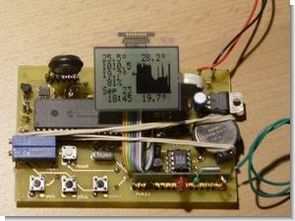
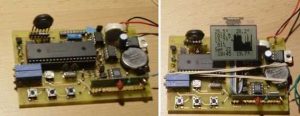
Pressure reading, relative humidity, temperature and away off the outer display.both Celsius or Fahrenheit & mbar / hPa or mm Hg supported weather station. With calendar and clock. Easy three button user menu. 42-hour history display (curve). Automatic memory and to show all the high and low values. PIC 18F452 4 MHz, works in sleep mode to save power. Sensors is only open when needed ..

PIC18F452 RF HUMIDITY TEMPERATURE PROJECT

PIC18F452 RF HUMIDITY TEMPERATURE PROJECT

Now this was a great project! I’ve tried various LCDs currently testing all the sensors had to be a complete, wireless communication has to be perfect. Still, here’s the result: I hope you enjoy it! Circuit 9V battery can power a small, but more want to get a good pair of AA-size batteries. 6-pack will last a few months. Consumption for base station and about 8 9 mA in sleep mode when enabled only 2 to 3 m (LCD remains are.) Transmitter is slightly less.

Receiver (base station) is active for 5 seconds and then goes to sleep for 45 seconds. The transmitter takes a nap every 30 seconds or so. In the Menu mode “buttons” menu pushing (what a name is entered?) For 1 second. Scan and changes the value of “min” and “plus” buttons are made. When in normal mode (for example, in the picture above) and “minute” and “plus” buttons with different backgrounds can browse. All of these controls if the processor is in sleep mode wakes up will be.

In the left hand side we have the LCD (top-down 🙂 Return Temperature, Relative Humidity, Calendar and Clock in the outside temperature, pressure,. Correct: Last 42 hours of high-value, bar chart, histogram (right most recent value), is a low value. All sensors are read and the LCD (left side) is updated every 50 seconds. The histogram on the clock (for example, 10h00, 17h00, 22h00, …). All data is stored in EEPROM and power up when installed will be updated. In case of a power outage (or), no data (nor will be the date) battery replacement lost.

PIC18F452 CCS C RF Humidity Temperature Circuit schematic pcb ccs c source code files

FILE DOWNLOAD LINK LIST (in TXT format): LINKS-6568.zip

Source: PIC18F452 CCS C RF HUMIDITY TEMPERATURE CIRCUIT (ADDITION TO CALENDAR, CLOCK)


The post PIC18F452 CCS C RF HUMIDITY TEMPERATURE CIRCUIT (ADDITION TO CALENDAR, CLOCK) appeared first on PIC Microcontroller.
WINMATE IP70 IS A MINI-ITX BOARD EQUIPPED WITH APOLLO LAKE PENTIUM

$
0
0

Taiwan based company called Winmate recently released a new board. The new board is equipped with a quad0core 1.1GHz/2.5GHz Apollo Lake Pentium N420 processor. It is rated an industrial thin Mini ITX board with operating temperature support from -20 to 60°C and the storage temperature is -40 to 70⁰ C.

WINMATE IP70 IS A MINI-ITX BOARD EQUIPPED WITH APOLLO LAKE PENTIUM

The Winmate board is equipped with up to 8GB dual-socket, 1866MHz DDR3L and comes with 4 USB 3.0 ports, 2 GbE ports, and 2 SATA interfaces. The board is currently called the Winmate IP70 and it currently has no operating system information however, a similar board released by the company runs on Linux and Windows. So there is a high probability that this board will also support Linux and Windows.

Winmate IP70 comes with different peripherals, some of which are: an audio jack,  a single DP 1.2 (4096 x 2160 @60Hz), 1x HDMI 1.4b (3840 x 2160 @ 30Hz), 1 Power jack, a 1 x 3-pin digital panel for controlling brightness and even a 1 x 7-pin inverter. Dimensions of the board are 170 mm by 170 mm are also available along with an On-Screen-Display (OSD) membrane control.

Also, there is an M.2 slot for Wi-Fi and an optional PCIe 2.0 expansion slot on the Winmate IP70 board. One of the two SATA presents will not be available when the M.2 SATA is being used. This is because SATA 2 and M.2 SATA cannot be used concurrently.

For graphics, there is an Intel HD Graphics 505 which supports DirectX 12 and OpenGL4.3. The audio controller is a Realtek HD codec and it accepts 12V Single Voltage Power input.

Read more: WINMATE IP70 IS A MINI-ITX BOARD EQUIPPED WITH APOLLO LAKE PENTIUM

The post WINMATE IP70 IS A MINI-ITX BOARD EQUIPPED WITH APOLLO LAKE PENTIUM appeared first on PIC Microcontroller.
CAR THERMOMETER PROJECT PICBASIC PRO DS18B20 PIC16F628

$
0
0

PIC16F628 DS18B20 thermometer circuit that you can use in your car, inside and outside temperature thermometer circuit is a circuit that shows up on the LCD isis proteus ares pcb and simulation software available in source and hex pbp… Electronics Projects, Car Thermometer Project PicBasic Pro DS18B20 PIC16F628 “microchip projects, microcontroller projects, pic16f628 projects, picbasic pro examples,

CAR THERMOMETER PROJECT PICBASIC PRO DS18B20 PIC16F628

PIC16F628 DS18B20 thermometer circuit that you can use in your car, inside and outside temperature thermometer circuit is a circuit that shows up on the LCD isis proteus ares pcb and simulation software available in source and hex pbp PicBasic pro

CAR THERMOMETER CIRCUIT PIC16F628

CAR THERMOMETER CIRCUIT PIC16F628


Car thermometer Project PicBasic Pro source code DS18B20 PIC16F628 proteus isis schematic pcb files

FILE DOWNLOAD LINK LIST (in TXT format): LINKS-5558.zip

Source: CAR THERMOMETER PROJECT PICBASIC PRO DS18B20 PIC16F628

The post CAR THERMOMETER PROJECT PICBASIC PRO DS18B20 PIC16F628 appeared first on PIC Microcontroller.
PIC16F877 SERIES I/O CIRCUIT ANALOG CONTROL SYSTEM PLC SAMPLER

$
0
0

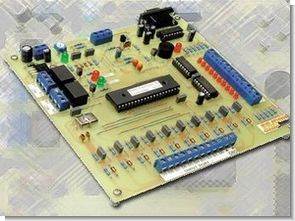
I/O control analog sampler plc system based on microchip pic16f877 circuit output serial rs232 pc connection is used the uln2003 in max232 IC with sag. pcb diagram 32-bit windows control program in other drawings, and is written in the… Electronics Projects, PIC16F877 Series I/O Circuit Analog Control System PLC Sampler “microchip projects, microcontroller projects, pic assembly example, pic16f877 projects,

PIC16F877 SERIES I O CIRCUIT ANALOG CONTROL SYSTEM PLC SAMPLER

I/O control analog sampler plc system based on microchip pic16f877 circuit output serial rs232 pc connection is used the uln2003 in max232 IC with sag. pcb diagram 32-bit windows control program in other drawings, and is written in the source files, pressing the hex.

PIC16F877 I/O PROJECT

PIC16F877 I O PROJECT

rugget 10 bit digital input port (0-16volt) 0-5volt and 0-25volt analog voltaga inputs temperature and light sensing (ldr) inputs high current 10 bit digital output port closed loop control using two relays serial interfaca (2400 bits/s, inverted)

temperature accuacy: +- 1 c on board system timers plus buzzer 32 bit windows based software full function spreadsheet logger CRO-style analog graph plotter combination I/O “and or” logic

Source: http://www.siliconchip.com.au/cms/A_105433/article.html

PIC16F877 Series I/O Circuit Analog Control schematic pcb source code alternative links:

FILE DOWNLOAD LINK LIST (in TXT format): LINKS-5530.zip

Source: PIC16F877 SERIES I/O CIRCUIT ANALOG CONTROL SYSTEM PLC SAMPLER

The post PIC16F877 SERIES I/O CIRCUIT ANALOG CONTROL SYSTEM PLC SAMPLER appeared first on PIC Microcontroller.

DS1820 TEMPERATURE SENSOR CIRCUIT PIC16F84 ASSEMBLY

$
0
0

DS1820 sensor designed for use with assembly language PIC16F84 on a circuit board data is displayed via 2 x 16 LCD mplab working on the code you can see step by step. cod file, including all source code available… Electronics Projects, DS1820 Temperature Sensor Circuit PIC16F84 Assembly “microchip projects, microcontroller projects, pic assembly example, pic16f84 projects,

DS1820 TEMPERATURE SENSOR CIRCUIT PIC16F84 ASSEMBLY

DS1820 sensor designed for use with assembly language PIC16F84 on a circuit board data is displayed via 2 x 16 LCD mplab working on the code you can see step by step. cod file, including all source code available

TEMPERATURE SENSOR SCHEMATIC

DS1820 Reader This code reads a single dallas DS1820 temperature sensor and displays both the raw data, and the high resolution temperature on the LCD. (2 lines x 20 characters, or larger, character display) for example

The first line on the LCD is the family code (10) and serial number with a CRC byte + either a tick if the CRC is right or cross if the CRC is wrong. The second line on the LCD gives data bytes 0, 1, 6 & 7 of the scratch pad and either the high resolution temperature & tick to show the CRC is correct or only a cross to show the CRC is wrong

DS1820 PIC16F84 Temperature Sensor Assembly source code schematic and other files:

FILE DOWNLOAD LINK LIST (in TXT format): LINKS-5476.zip

Source: DS1820 TEMPERATURE SENSOR CIRCUIT PIC16F84 ASSEMBLY

The post DS1820 TEMPERATURE SENSOR CIRCUIT PIC16F84 ASSEMBLY appeared first on PIC Microcontroller.

PIC16C74 NTC THERMOMETER CIRCUIT

$
0
0

A simple thermometer circuit display used to display the value of the temperature sensing for 10 k ntc also relay output the relay can be backed by sustained with the transistor has very little material can be accomplished with… Electronics Projects, PIC16C74 NTC Thermometer Circuit “microchip projects, microcontroller projects, pic assembly example,

PIC16C74 NTC THERMOMETER CIRCUIT

A simple thermometer circuit display used to display the value of the temperature sensing for 10 k ntc also relay output the relay can be backed by sustained with the transistor has very little material can be accomplished with

THERMOMETER CIRCUIT SCHEMATIC

THERMOMETER CIRCUIT SCHEMATIC

THERMOMETER CIRCUIT ASSEMBLY CODE

list    p=pic16c74
        __config h'3ffa'        ;HS crystal, 20Mhz
        include 
;
temp    equ     0x20
target  equ     0x21            ;target temp value to trigger relay
targdly equ     0x22            ;used to pause display when setting target
flag    equ     0x23
cntr    equ     0x24
;
        org     0               ;reset vector
        goto    start           ;go to beginning of program on reset
;
        org     4
        btfsc   PIR1,TMR1IF     ;timer 1 overflowed?
        goto    timer1
        retfie
;
start   movlw   0xbf            ;'-' segment value
        movwf   PORTB           ;set output
        movwf   PORTD           ;latches to initial value
        clrf    PORTA           ;clear port a latches
        bsf     STATUS,RP0      ;select register bank 1
        clrf    PIE1            ;disable all peripheral interrupts
        bsf     TRISC,0         ;RC0 needs to be input for osc to function
        bsf     PIE1,TMR1IE     ;enable TMR1 int
        movlw   b'00000011'     ;RA0=A/D input, RA1=A/D input, RA2=Relay output
        movwf   TRISA           ;porta all input/analog
        clrf    TRISB           ;PORTB/PORTD output to 7-segment LEDs
        clrf    TRISD
        movlw   0x04            ;RA0 and RA1 Analog, RA2 Digital, Vref=Vdd
        movwf   ADCON1          ;set
        bcf     STATUS,RP0      ;select register bank 0
        bcf     T1CON,TMR1ON    ;timer 1 not on
        movlw   0x80            ;TIM1H:TIM1L = 0x8000 = 1sec
        movwf   TMR1H
        clrf    TMR1L
        clrf    INTCON          ;disable all interrupts
        clrf    PIR1            ;clear all falgs
        movlw   0x0e            ;T1CKPS1 (Prescale) = 1, T1OSCEN (osc shutoff) = enabled
        movwf   T1CON           ;T1SYNC (ext clk input) = no sync, TMR1CS = external
        bsf     INTCON,PEIE     ;enable peripheral interrupts
        bsf     INTCON,GIE      ;enable global ints
        call    getAD1          ;get target temp value
        movwf   target          ;save for compare
        clrf    targdly         ;clear target display counter
        clrf    flag            ;to tell which a/d to perform, RA0 or RA1
        bsf     T1CON,TMR1ON    ;turn timer on
        sleep
        goto    $-1
;
timer1  bcf     PIR1,TMR1IF     ;clear flag
        bcf     INTCON,GIE      ;disable all ints
        movlw   0x01            ;halfadd value
        xorwf   flag,1          ;compute operation to perform
        movf    flag,0
        addwf   PCL,1           ;go to proper routine
        goto    trgsamp
        goto    temsamp
trgsamp call    getAD1          ;get target value
        movwf   temp
        subwf   target,0        ;check it
        btfsc   STATUS,Z        ;zero set if equal, same target
        goto    timerx
        movf    temp,0          ;get new target value
        movwf   target
        movlw   0x01
        movwf   flag            ;do trigger sample next go around also
        goto    dispit
temsamp call    getAD0          ;get RA0 thermister value
        movwf   temp
        subwf   target,0
        btfss   STATUS,C
        bsf     PORTA,2         ;trigger relay, temp has reached goal
dispit  movlw   .186
        subwf   temp,0          ;end of table values
        btfsc   STATUS,C
        goto    valerr          ;error, value out of range
        movlw   .98             ;base of table values
        subwf   temp,0
        btfss   STATUS,C        ;if carry clear then
        goto    valerr          ;error, value out of range
        call    temptab         ;convert to temp
setleds movwf   temp
        andlw   0x0f
        call    ledtab
        movwf   PORTB
        swapf   temp,0
        andlw   0x0f
        call    ledtab
        movwf   PORTD
timerx  bcf     PIR1,TMR1IF     ;clear flag
        movlw   0x80
        movwf   TMR1H
        clrf    TMR1L
        retfie                  ;enable ints and return to sleep
valerr  movlw   0xaa            ;0x0a is disp in ledtab to special out of range value
        goto    setleds

getAD0  movlw   b'10000001'     ;fosc/32, chan0 (RA0),  ADON
adconv  movwf   ADCON0
        clrf    cntr
        decfsz  cntr,1
        goto    $-1
        clrf    cntr
        decfsz  cntr,1
        goto    $-1
        bsf     ADCON0,GO
        btfsc   ADCON0,NOT_DONE  ;check if A/D complete
        goto    $-1
        movf    ADRES,0
        clrf    ADCON0          ;clear reg and shutdown AD logic
        return
getAD1  movlw   b'10001101'     ;fosc/32, chan1 (RA1), GO, ADON
        goto    adconv
;
; 7-segment conversion
;
ledtab  addwf   PCL,1
        retlw   0xc0    ;0
        retlw   0xfc    ;1
        retlw   0x92    ;2
        retlw   0x98    ;3
        retlw   0xac    ;4
        retlw   0x89    ;5
        retlw   0x81    ;6
        retlw   0xdc    ;7
        retlw   0x80    ;8
        retlw   0x8c    ;9
        retlw   0xbf    ;-
;
;tempature table
;
temptab addwf   PCL,1
        retlw   0x99    ;98
        retlw   0x98    ;99
        retlw   0x98    ;100
        retlw   0x97    ;101
        retlw   0x96    ;102
        retlw   0x95    ;103
        retlw   0x94    ;104
        retlw   0x93    ;105
        retlw   0x93    ;106
        retlw   0x92    ;107
        retlw   0x91    ;108
        retlw   0x90    ;109
        retlw   0x89    ;110
        retlw   0x89    ;111
        retlw   0x88    ;112
        retlw   0x87    ;113
        retlw   0x86    ;114
        retlw   0x86    ;115
        retlw   0x85    ;116
        retlw   0x85    ;117
        retlw   0x84    ;118
        retlw   0x83    ;119
        retlw   0x82    ;120
        retlw   0x81    ;121
        retlw   0x80    ;122
        retlw   0x80    ;123
        retlw   0x79    ;124
        retlw   0x78    ;125
        retlw   0x78    ;126
        retlw   0x77    ;127
        retlw   0x76    ;128
        retlw   0x76    ;129
        retlw   0x75    ;130
        retlw   0x74    ;131
        retlw   0x73    ;132
        retlw   0x72    ;133
        retlw   0x71    ;134
        retlw   0x70    ;135
        retlw   0x70    ;136
        retlw   0x69    ;137
        retlw   0x69    ;138
        retlw   0x68    ;139
        retlw   0x67    ;140
        retlw   0x67    ;141
        retlw   0x66    ;142
        retlw   0x65    ;143
        retlw   0x64    ;144
        retlw   0x63    ;145
        retlw   0x62    ;146
        retlw   0x62    ;147
        retlw   0x61    ;148
        retlw   0x60    ;149
        retlw   0x59    ;150
        retlw   0x59    ;151
        retlw   0x58    ;152
        retlw   0x58    ;153
        retlw   0x57    ;154
        retlw   0x56    ;155
        retlw   0x55    ;156
        retlw   0x54    ;157
        retlw   0x53    ;158
        retlw   0x53    ;159
        retlw   0x52    ;160
        retlw   0x51    ;161
        retlw   0x51    ;162
        retlw   0x50    ;163
        retlw   0x49    ;164
        retlw   0x49    ;165
        retlw   0x48    ;166
        retlw   0x47    ;167
        retlw   0x46    ;168
        retlw   0x45    ;169
        retlw   0x44    ;170
        retlw   0x44    ;171
        retlw   0x43    ;172
        retlw   0x42    ;173
        retlw   0x41    ;174
        retlw   0x40    ;175
        retlw   0x39    ;176
        retlw   0x39    ;177
        retlw   0x38    ;178
        retlw   0x37    ;179
        retlw   0x37    ;180
        retlw   0x36    ;181
        retlw   0x35    ;182
        retlw   0x34    ;183
        retlw   0x33    ;184
        retlw   0x32    ;185
        retlw   0x32    ;186
        end


Source: PIC16C74 NTC THERMOMETER CIRCUIT

The post PIC16C74 NTC THERMOMETER CIRCUIT appeared first on PIC Microcontroller.

PIC16F84 DS1920 SCROLLING TEMPERATURE DISPLAY MAX7219 CCS C

$
0
0

Pic16f84 LED display with temperature measuring software compiled with CCS C Scrolling Temperature Display. -55 – 100C (-67 – 212F) range 4 digit LED display compile-time animation options This project shows a temperature readout on a 4-digit LED display…. Electronics Projects, PIC16F84 DS1920 Scrolling Temperature Display MAX7219 CCS C “ccs c examples, microchip projects, microcontroller projects, pic16f84 projects,

PIC16F84 DS1920 SCROLLING TEMPERATURE DISPLAY MAX7219 CCS C

Pic16f84 LED display with temperature measuring software compiled with CCS C

Scrolling Temperature Display. -55 – 100C (-67 – 212F) range 4 digit LED display compile-time animation options

This project shows a temperature readout on a 4-digit LED display. The temperature shown scrolls between Centigrade and Farenheit; compile time options allow for a display which scrolls in one direction or “bounces” from side to side.

Parts list:

R1 1k
R2 39k
C1,C2 22pF ceramic disc capacitor
X1 4 MHz crystal
D1 1N4148
D2 4 digit 7-segment LED display
IC1 DS1820 (or DS1920 iButton, plus mounting)
IC2 PIC16F84
IC3 MAX7219

PIC16F84 SCROLLING DS1920 TEMPERATURE DISPLAY HARDWARE

The circuit is based around a PIC 16F84 microcontroller, running at 4MHz. Temperature information is provided by a DS1820 “1- Wire” digital thermometer chip. This can be located remotely via a twisted-pair lead. A MAX7219 serial LED display driver is used to drive a 4 digit 7-segment LED display. The display is mounted with the decimal points along the top, to give degree symbols.

If you,re building the circuit on a solderless breadboard, its worth getting the 7219/display combination up and running before you add the rest of the circuit. This way you can manually clock the 7219 (refer to the Maxim datasheet) to check the display is wired up correctly. Additionally, if you,re going to program the C in-situ, slip some sleeving over R1 to keep the programming voltage away from the rest of the circuit.

PIC16F84 DS1920 SOFTWARE

The PIC code was written in C using the CCS C PCM compiler from Computer System Services. This is available in the UK from Maplin or Farnell, as are the electronic components used. This compiler actually includes 1-wire routines, but I wrote my own so I could redistribute them.

The C listing, along with assembly and hex files, are included in the project download package.

I used Bryan Rentoul,s PIC Programmer – it works great and has really nice software. If you build this though, check the voltage regulator pinouts as I found mine differed from what was shown on the schematic.

Temperature Display CCS C source codes;

FILE DOWNLOAD LINK LIST (in TXT format): LINKS-5326.zip

Source: PIC16F84 DS1920 SCROLLING TEMPERATURE DISPLAY MAX7219 CCS C

The post PIC16F84 DS1920 SCROLLING TEMPERATURE DISPLAY MAX7219 CCS C appeared first on PIC Microcontroller.

PIN-TYPE LI-ION BATTERY MAINTAINS 80% CAPACITY AFTER 5000 CYCLES

$
0
0

The CT04120 from Murata is a small form factor lithium-ion battery that can support 10C Charging rates without the need for a battery controller IC. Continuous discharge at a 10C rate is also supported by these rechargeable batteries.

PIN-TYPE LI-ION BATTERY MAINTAINS 80% CAPACITY AFTER 5000 CYCLES

In addition, since the internal resistance is low and the voltage drop is small, stable discharge is possible even under a large peak load or low temperature.

These devices have a diameter of 4mm and maintain 80% of their initial capacity even after 5000 cycles. Since these rechargeable batteries are based on lithium titanite, there is no possibility of thermal runaway.

Applications are expected to fall into three general categories including: small devices such as electric pens, styluses and wearables; back-up power in handy terminals, barcode readers, point of sales equipment and so on; and energy storage in energy harvesting powered devices such as solar battery powered equipment and wireless sensor nodes with various energy harvesting power sources.

Benefits And Applications

Small power equipment

  • Quick charge with High rate charge (10C) is available
  • Constant voltage charge is available
  • Able to use many times due to long cycle life
  • High safety and small weight saving

Backup power supply

  • System backup even when the main battery is replaced or the battery is disconnected
  • High power discharge is available
  • Constant voltage charge is available
  • Charge control IC is unnecessary

Energy harvesting system

  • Chargeable/dischargeable in wide rate ranges
  • Long operating time due to low leakage current
  • High power output is available
  • Resistant to over discharge
  • Operation temperature is wide

Read more: PIN-TYPE LI-ION BATTERY MAINTAINS 80% CAPACITY AFTER 5000 CYCLES

The post PIN-TYPE LI-ION BATTERY MAINTAINS 80% CAPACITY AFTER 5000 CYCLES appeared first on PIC Microcontroller.

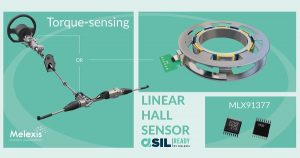
MELEXIS INTRODUCES HIGH-LINEARITY, LOW-DRIFT LINEAR HALL SENSOR FOR SAFETY-CRITICAL AUTOMOTIVE TORQUE-SENSING APPLICATIONS

$
0
0

ASIL-Ready MLX91377 For Steering-Torque And General Automotive Sensing.

MELEXIS INTRODUCES HIGH-LINEARITY, LOW-DRIFT LINEAR HALL SENSOR FOR SAFETY-CRITICAL AUTOMOTIVE TORQUE-SENSING APPLICATIONS

Melexis announces the MLX91377 ASIL-ready Hall sensor IC suitable for use in safety-critical automotive systems such as electric power-assisted steering (EPAS).

With an ambient operating temperature up to 160°C and combining high linearity with excellent thermal stability, including low offset and sensitivity drift, the MLX91377 supports accurate, dependable torque sensing in EPAS systems to enable safe control in conventional and autonomous driving.

Developed as a Safety Element Out of Context (SEooC), the MLX91377 complies with the ISO 26262 standard and is qualified to AEC Q-100 Grade 0. Supporting functional safety level ASIL-C in digital (SENT or SPC) mode and ASIL-B in analog mode, the MLX91377 offers a high level of functional safety, per die, and can detect internal failures and enter a safe state to prevent unintended vehicle behavior. The available dual die TSSOP-16 package further expands this by offering two fully redundant dies to enable support for safety critical applications like steering and braking systems.

In addition to functional-safety applications, the MLX91377 satisfies a wide variety of automotive and industrial contactless position-sensing use cases including steering torque sensors, acceleration, brake, or clutch pedal sensors, absolute linear position sensors, float-level sensors, non-contacting potentiometers, small-angle position sensors and small stroke position sensors.

The programmable measurement range and multi-point calibration enhance flexibility for designers, and the variety of output protocols enables one IC to be used in multiple applications reducing requalification efforts and costs. The Short PWM Code (SPC) protocol permits measurements to be taken and transmitted upon detection of a trigger pulse. Thus up to four MLX91377 sensors can be synchronized up to 2 kHz, enabling simultaneous magnetic measurements with deterministic latency to ensure high accuracy. In addition, the low-noise and high refresh rate allow high control-loop speeds enabling systems to deliver fast response times with minimal filtering.

Read more: MELEXIS INTRODUCES HIGH-LINEARITY, LOW-DRIFT LINEAR HALL SENSOR FOR SAFETY-CRITICAL AUTOMOTIVE TORQUE-SENSING APPLICATIONS

The post MELEXIS INTRODUCES HIGH-LINEARITY, LOW-DRIFT LINEAR HALL SENSOR FOR SAFETY-CRITICAL AUTOMOTIVE TORQUE-SENSING APPLICATIONS appeared first on PIC Microcontroller.

SCIENTISTS DEVELOP SAFER LEAD-BASED PEROVSKITE SOLAR CELL STRUCTURE

$
0
0

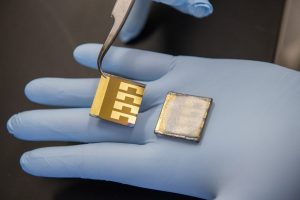
Researchers at Northern Illinois University and the U.S. Department of Energy’s (DOE) National Renewable Energy Laboratory (NREL) in Golden, Colorado, reported in the journal Nature on a potential breakthrough in the development of hybrid perovskite solar cells.

SCIENTISTS DEVELOP SAFER LEAD-BASED PEROVSKITE SOLAR CELL STRUCTURE

Considered rising stars in the field of solar energy, perovskite solar cells convert light into electricity. They’re potentially cheaper and simpler to produce than traditional silicon-based solar cells and, on a small scale in laboratory settings at least, have demonstrated comparable efficiency levels. But key challenges remain before they can become a competitive commercial technology.

One major challenge is the use of lead. Most top-performing hybrid perovskite solar cells contain water-dissolvable lead, raising concerns over potential leakage from damaged cells.

Led by Tao Xu of NIU and Kai Zhu of NREL, a team of scientists has developed a technique to sequester the lead used to make perovskite solar cells and minimize potential toxic leakage by applying lead-absorbing films to the front and back of the solar cell.

The lead toxicity issue has been one of the most vexing, last-mile challenges in the perovskite solar cell field,” said Xu, an NIU professor of chemistry. “We think we have a highly promising remedy to this problem—and it could be a game-changer.

“In the event of a damaged cell, our device captures the great majority of the lead, preventing it from leaching into groundwater and soils. The films that we use are insoluble in water.

Under conditions of severe solar cell damage in a lab setting, the lead-absorbing films sequestered 96% of lead leakage, the scientists said. Their experiments further indicate the lead-absorbing layers do not negatively impact cell performance or long-term operation stability.

Perovskite solar cells are so named because they use a class of crystal structures similar to that found in the mineral known as perovskite. The perovskite-structured compound within these solar cells is most commonly a hybrid organic-inorganic lead halide-based material.

Scientists began to study these crystal structures for use in solar cells only about a decade ago and have rapidly increased their solar energy conversion efficiency. Whereas traditional silicon solar cells are produced with precise processes using high temperatures, perovskites can be made using room-temperature chemical solutions.

The newly developed “on-device sequestration approach” can be readily incorporated with current perovskite solar cells configurations, Xu said.

Read more: SCIENTISTS DEVELOP SAFER LEAD-BASED PEROVSKITE SOLAR CELL STRUCTURE

The post SCIENTISTS DEVELOP SAFER LEAD-BASED PEROVSKITE SOLAR CELL STRUCTURE appeared first on PIC Microcontroller.

BMR481 48 V-TO-LOAD DIRECT CONVERSION DC/DC CONVERTERS

$
0
0

Flex Power Modules’ converters are first generation direct conversion products

BMR481 48 V-TO-LOAD DIRECT CONVERSION DC DC CONVERTERS

Flex Power Modules’ BMR481 DC/DC converter addresses the growing need for higher energy efficiency levels in datacenters and cloud computing infrastructures. This converter offers an input range of 40 V to 60 V targeting 48 V to 54 V nominal supplies and a programmable 0.5 V to 1.35 V output. The 12 mm x 27.7 mm footprint of the main module provides a maximum output current of 70 A and incorporates a digital interface for monitoring, configuration, and control purposes. This main unit can then be supported by up to five additional ‘satellite’ modules resulting in a total current rating that reaches 420 A.

The single-stage BMR481 provides an ideal alternative to the conventional two-stage intermediate bus converter (IBC) and point-of-load (POL) architecture which requires an extra conversion step, taking up more space and impacts operational performance. This groundbreaking direct conversion module presents engineers with a more streamlined and economical solution. The converter can achieve up to 92% efficiency from a 1 V output at 53 VIN which is 2% to 3% higher than what the equivalent IBC-based deployment can deliver. The BMR481 reduces board area by up to 50%. MTBF is more than 8.7 Mhrs for the main module.

Optimized efficiency is achieved by automatic enabling and disabling of phases/satellite modules depending on the required load, along with dynamic voltage adjustment to provide optimum supply rails to the connected ICs. Output ripple and noise is an extremely low 1 mVp-p (typical) due to the zero voltage/zero current switching employed. Load and line regulation are typically kept at 1 mV. At 53 V input and 0.5 V output, the full 70 A output current is available from the main module to over +75°C ambient temperature with 0.5 m/s airflow and over +90°C with 2 m/s airflow. Full digital control is implemented with a PMBus v1.3 interface compliant with PMBus or AVS/SVID. Isolation is rated at 1,500 VDC (functional).

Features

  • 48 V-to-load direct conversion technology addresses demands of data centers
  • Enables more compact, higher-efficiency, and cost-effective power system implementations
  • Compliant with PMBus, AVSBus, and Intel SVID
  • Supporting tools: Flex Power Designer Tool

Read more: BMR481 48 V-TO-LOAD DIRECT CONVERSION DC/DC CONVERTERS

The post BMR481 48 V-TO-LOAD DIRECT CONVERSION DC/DC CONVERTERS appeared first on PIC Microcontroller.

TS-7100 – FEATURE DENSE EMBEDDED SOLUTION WITH OPTIONAL 2.8″ TOUCH SCREEN

$
0
0

A full featured, compact embedded computer with optional 2.8″ touch LCD and DIN-mountable enclosure that measures 2.4″ by 3.6″ by 1.7″. It packs in industry standard interfaces including Ethernet, USB, RS-232, RS-485, and CAN, and bunch of I/0.

TS-7100 – FEATURE DENSE EMBEDDED SOLUTION WITH OPTIONAL 2.8″ TOUCH SCREEN

Make It Smaller

Time and again at customer visits, Technologic Systems heard the same thing, “We love your single board computers, but make them smaller! They have to go inside this cabinet, and we need room for everything!” We listened. Technologic Systems is proud to introduce the TS-7100, our smallest single-board computer in an optional DIN-mountable enclosure that measures 2.4″ by 3.6″ by 1.7″, powered by the ARM iMX6 UltraLite CPU. It ships with industry-standard interfaces, including Ethernet, USB, RS-232, RS-485, and CAN. For wireless connectivity, the TS-7100 comes with WiFi and Bluetooth module, as well as a NimbeLink/Digi cellular modem and mesh network socket.

With all of these features packed into a smaller footprint, not only will the TS-7100 fit in your cabinet, but it can also help to replace other peripherals and modules to free up even more space and get more done. Combining all of these components into one small DIN mounted unit, we provide the ability to promote hot swapping in the field, limiting costly technician time and troubleshooting.

Each component on the TS-7100 has been carefully chosen to ensure reliable operation in the field and maximum product lifespan for 10+ years. The fanless design of the TS-7100 paired with the low cost enclosure is able to withstand high vibration, debris, and a wide temperature range of -40 °C to 85 °C.

Additional Features Include:

  • NXP i.MX 6UltraLite 696 MHz ARM CPU with FPU
  • 512 MB RAM
  • 4 GB eMMC Flash Storage
  • 2 KB FRAM Storage
  • 802.11 b/g/n WiFi and Bluetooth BT4 LE Radio
  • 3″ 16-bit 240×360 Resistive Touchscreen Display
  • TS-SILO Super Capacitor Power Reserve Solution
  • Preloaded Debian 10 “Buster” Distribution, Linux Kernel v4.9
  • 1x microSD Card Socket
  • 2x 10/100 Ethernet Ports
  • 2x USB Host Ports
  • 2x Serial Ports
  • 1x RS-485 Ports
  • 1x CAN Port
  • Industrial Temperature Range (-40 °C to 85 °C)

Read more: TS-7100 – FEATURE DENSE EMBEDDED SOLUTION WITH OPTIONAL 2.8″ TOUCH SCREEN

The post TS-7100 – FEATURE DENSE EMBEDDED SOLUTION WITH OPTIONAL 2.8″ TOUCH SCREEN appeared first on PIC Microcontroller.

Viewing all 365 articles
Browse latest View live


<script src="https://jsc.adskeeper.com/r/s/rssing.com.1596347.js" async> </script>