There is a multitude of process parameters nowadays that need to be measured in the industrial environment (temperature, pressure, humidity, force etc.). Out of these, undoubtedly the most common one is temperature, as it influences most manufacturing parameters. It is no wonder then that many solutions have been developed over time to measure it. There are a few general categories any industrial temperature sensor will fall into: thermocouples, RTDs (Resistance Temperature Detectors), thermistors and integrated silicon sensors. There is no “best sensor” rather they all have pros and cons which need to be individually evaluated for each application.
1. Introduction
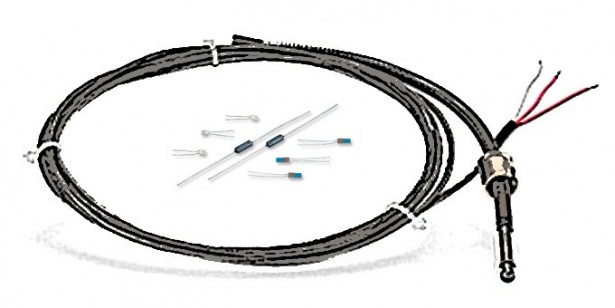
The RTDs are the most expensive, but they also provide best accuracy and best resolution for the measurement. This, however, only if appropriate analogue circuitry will be used (which of course will add cost to the already high price of the sensor itself). The appropriate analogue circuitry constitutes the subject of this article. RTDs are regarded as the best quality temperature sensors (when it is worth paying for them). They provide accurate and stable measurements over time, and, most important, they provide a linear resistance-temperature characteristic. In the figure 1 is shown the resistance-temperature characteristic of the most common RTD, the PT100, which gives 100Ohms at a temperature of 0 Celsius degrees.
For more detail: Howto Measure RTD (Resistance Temperature Detectors) over long distances
The post Howto Measure RTD (Resistance Temperature Detectors) over long distances appeared first on PIC Microcontroller.